opera and theatre works
Stage director and designer for opera/music theatre and theatre productions and experimental transdisciplinary forms
PLANKTON
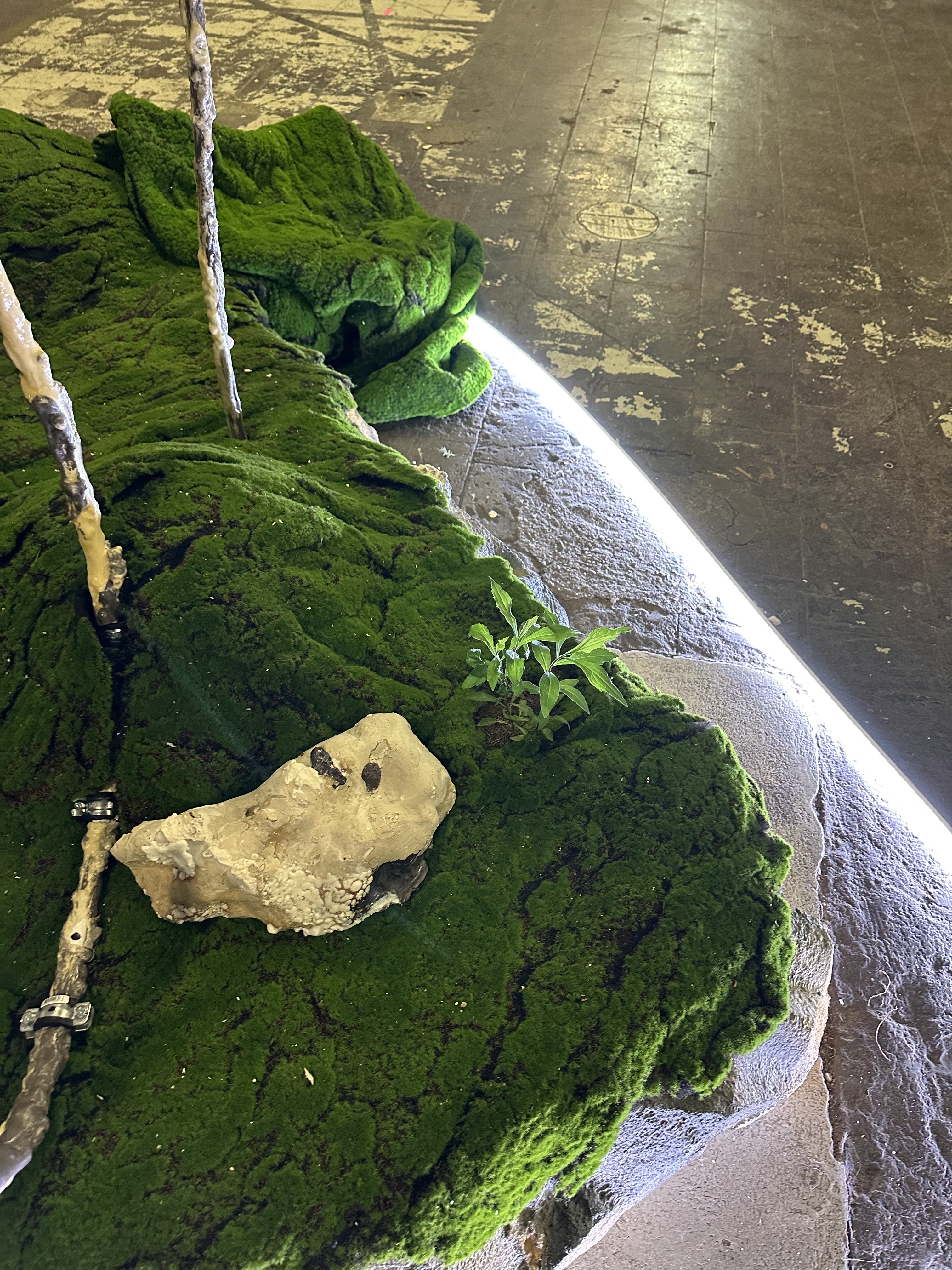

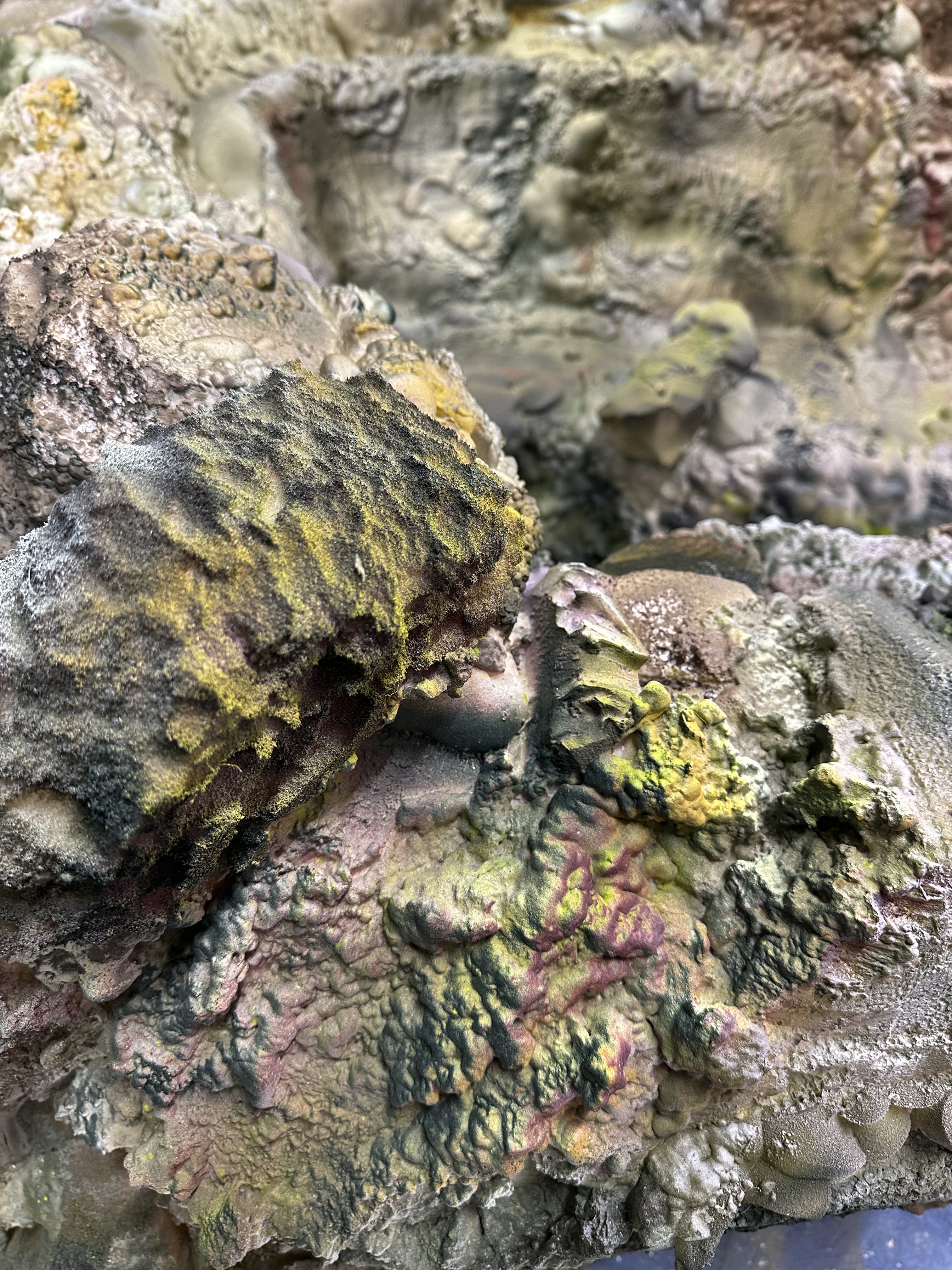
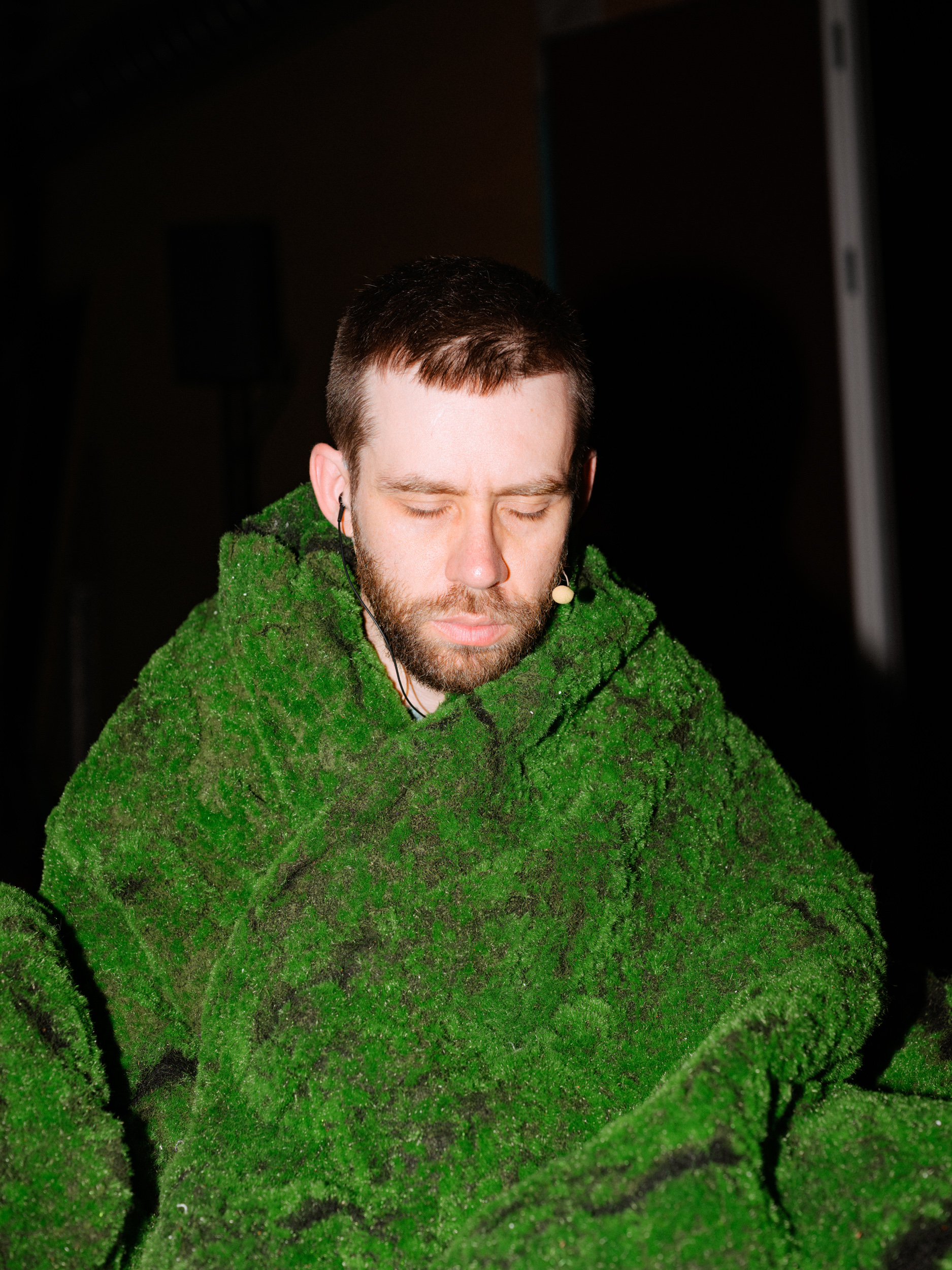

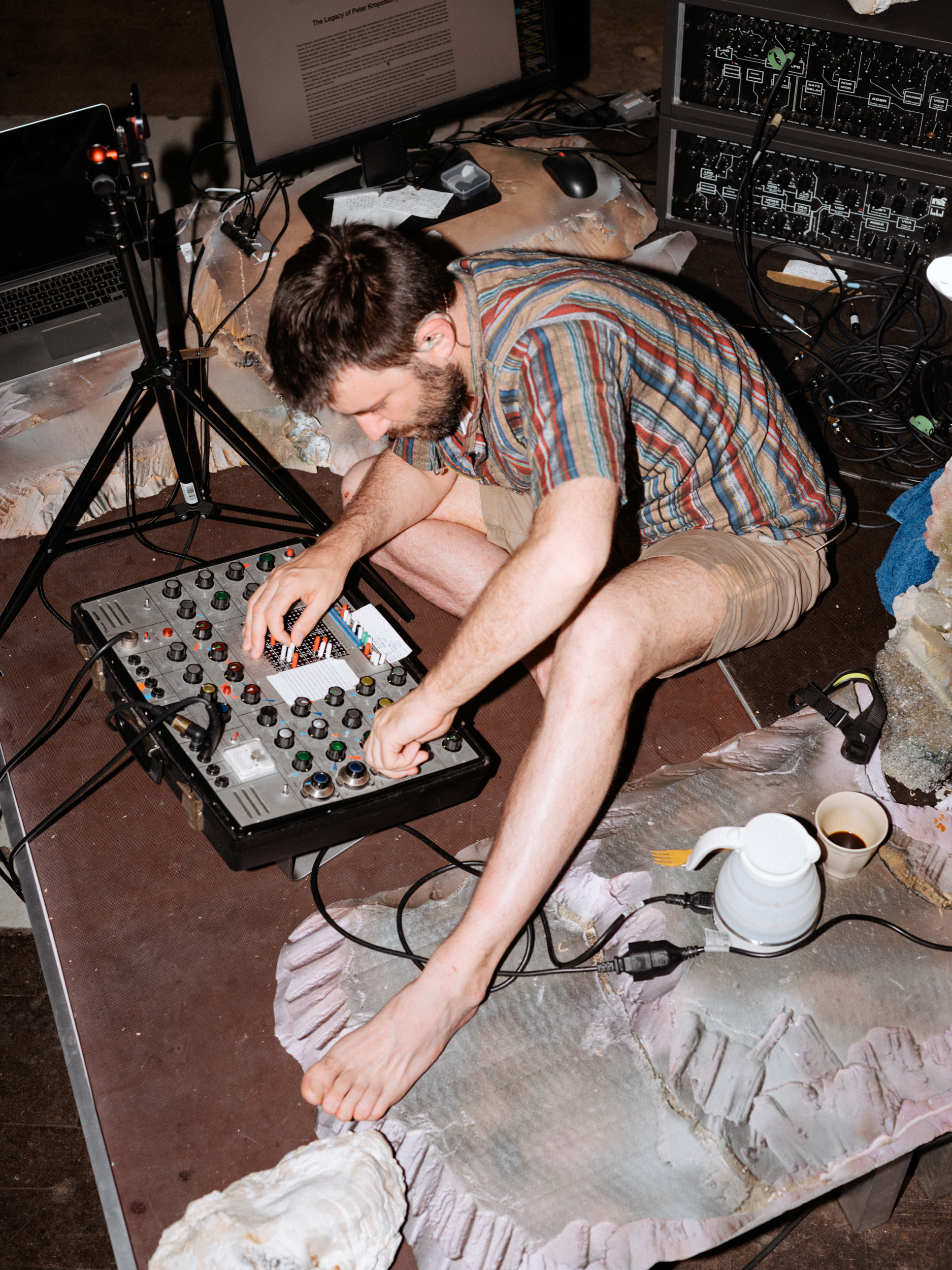

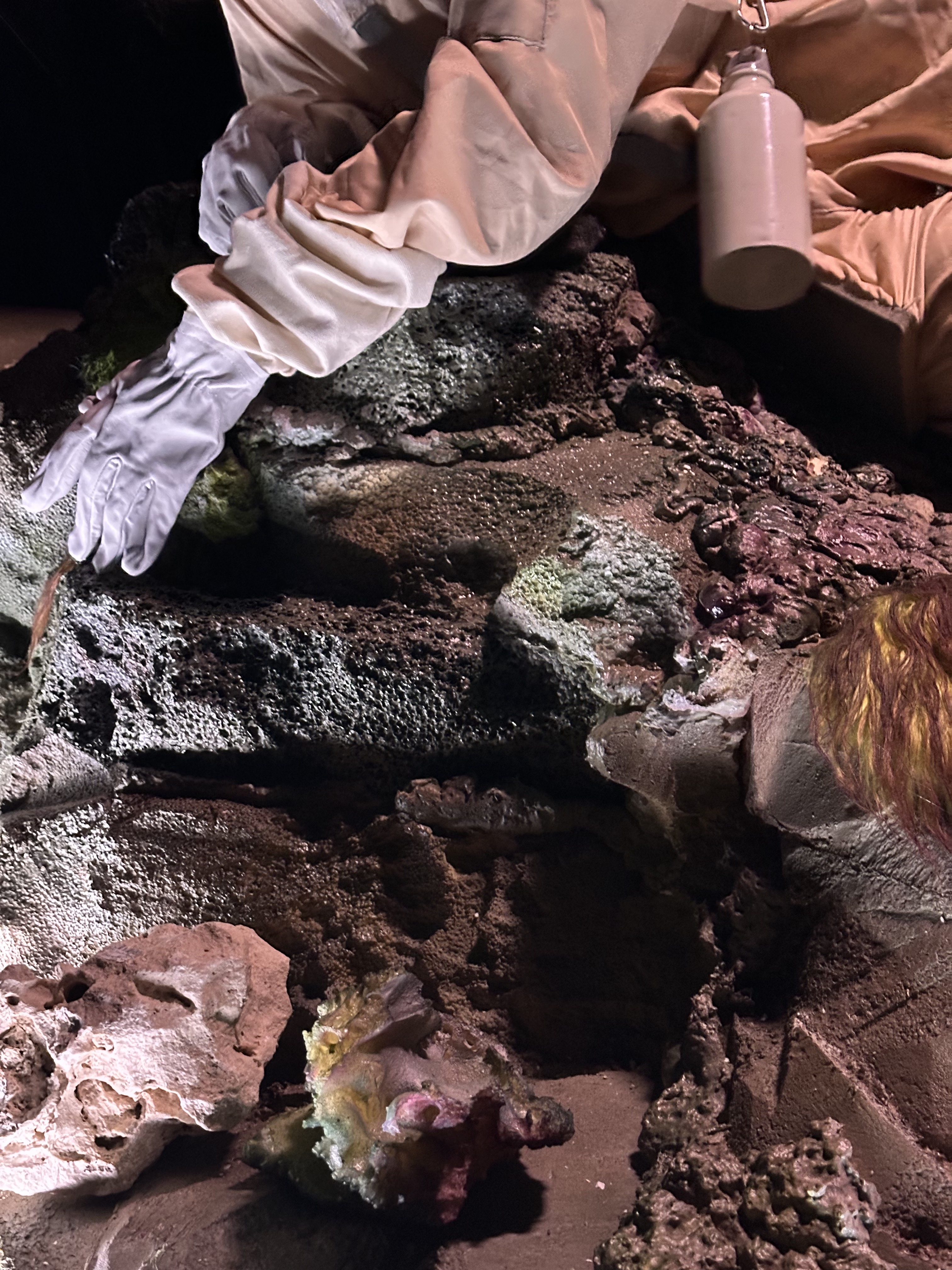
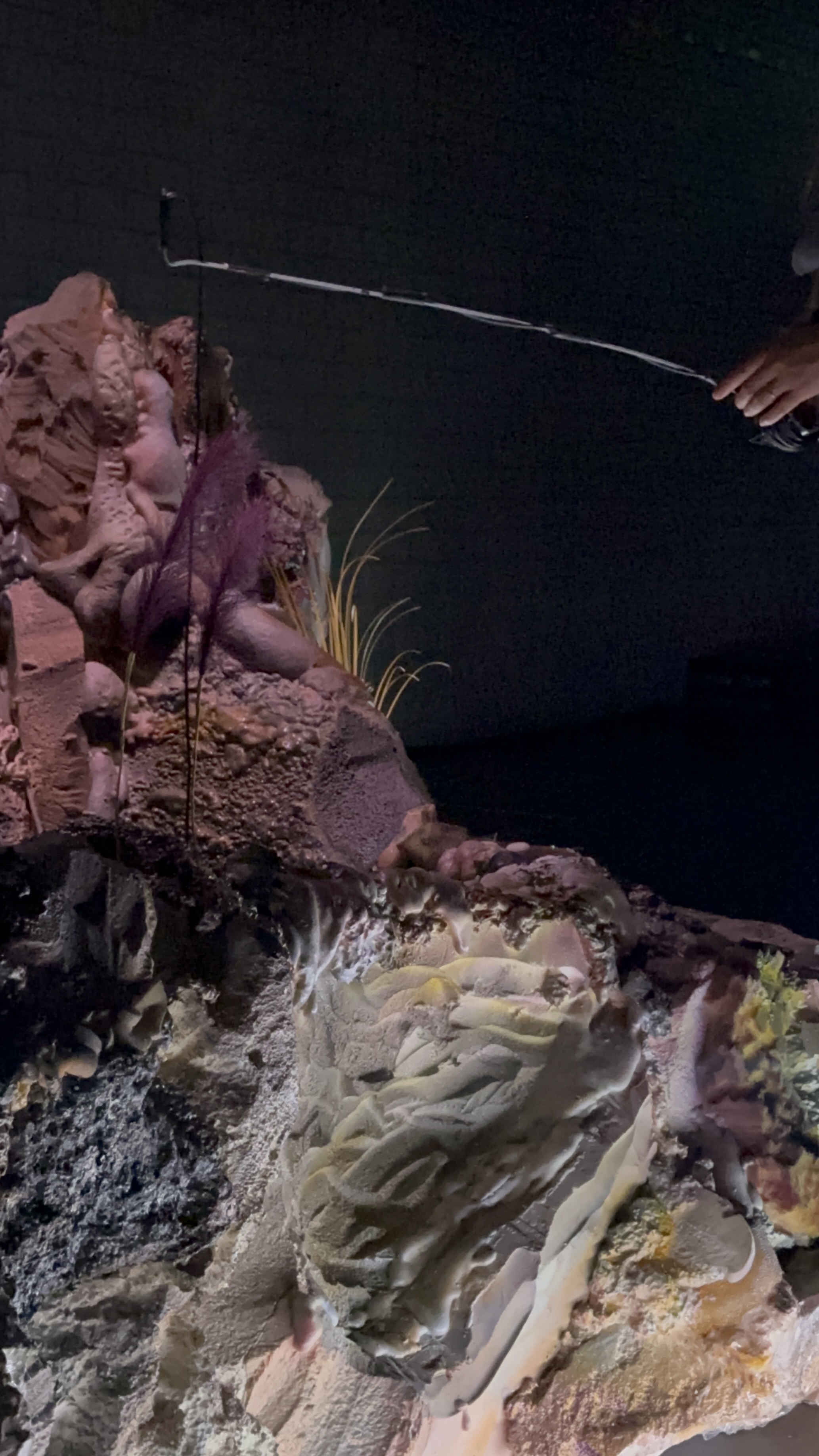

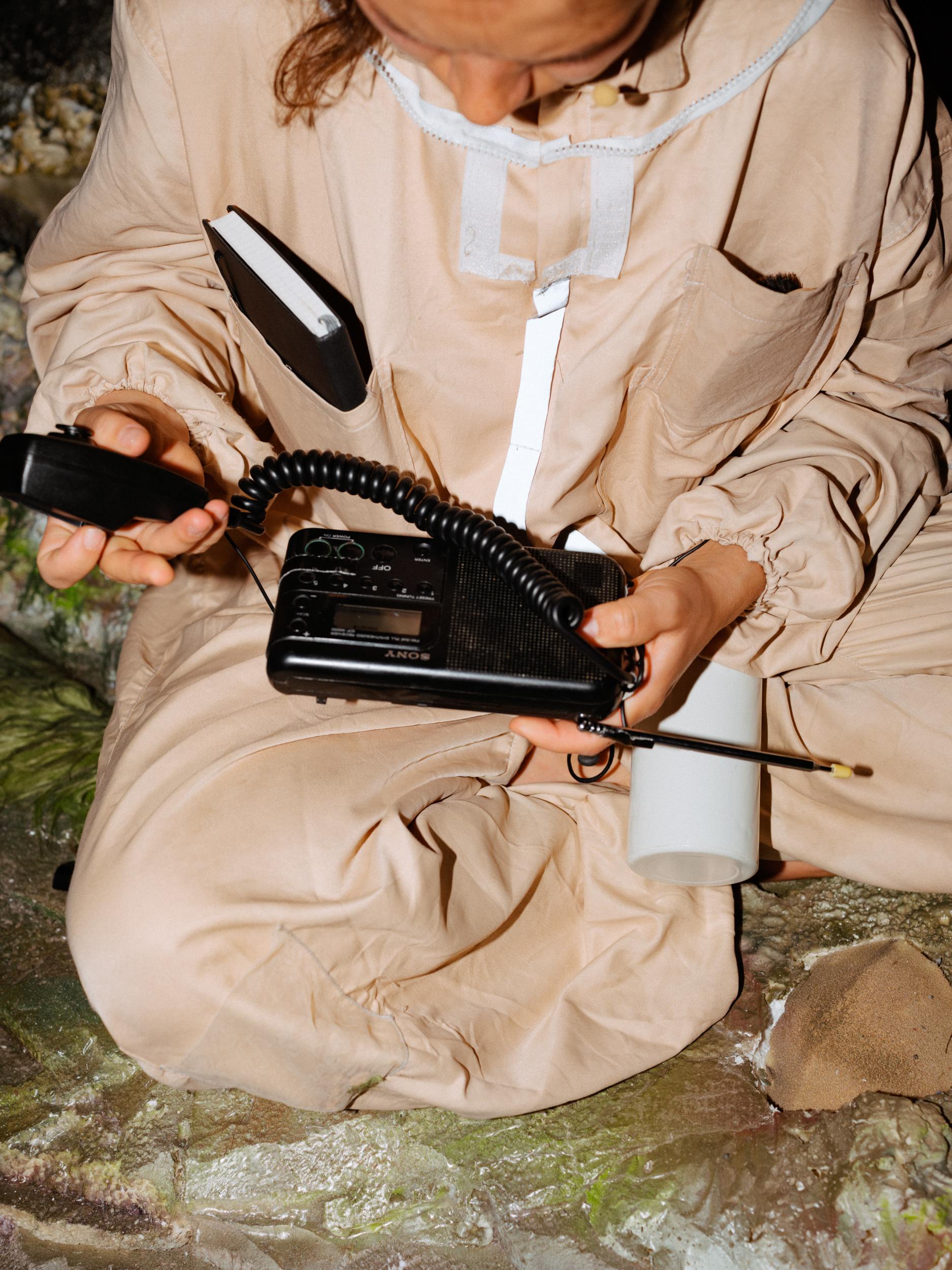
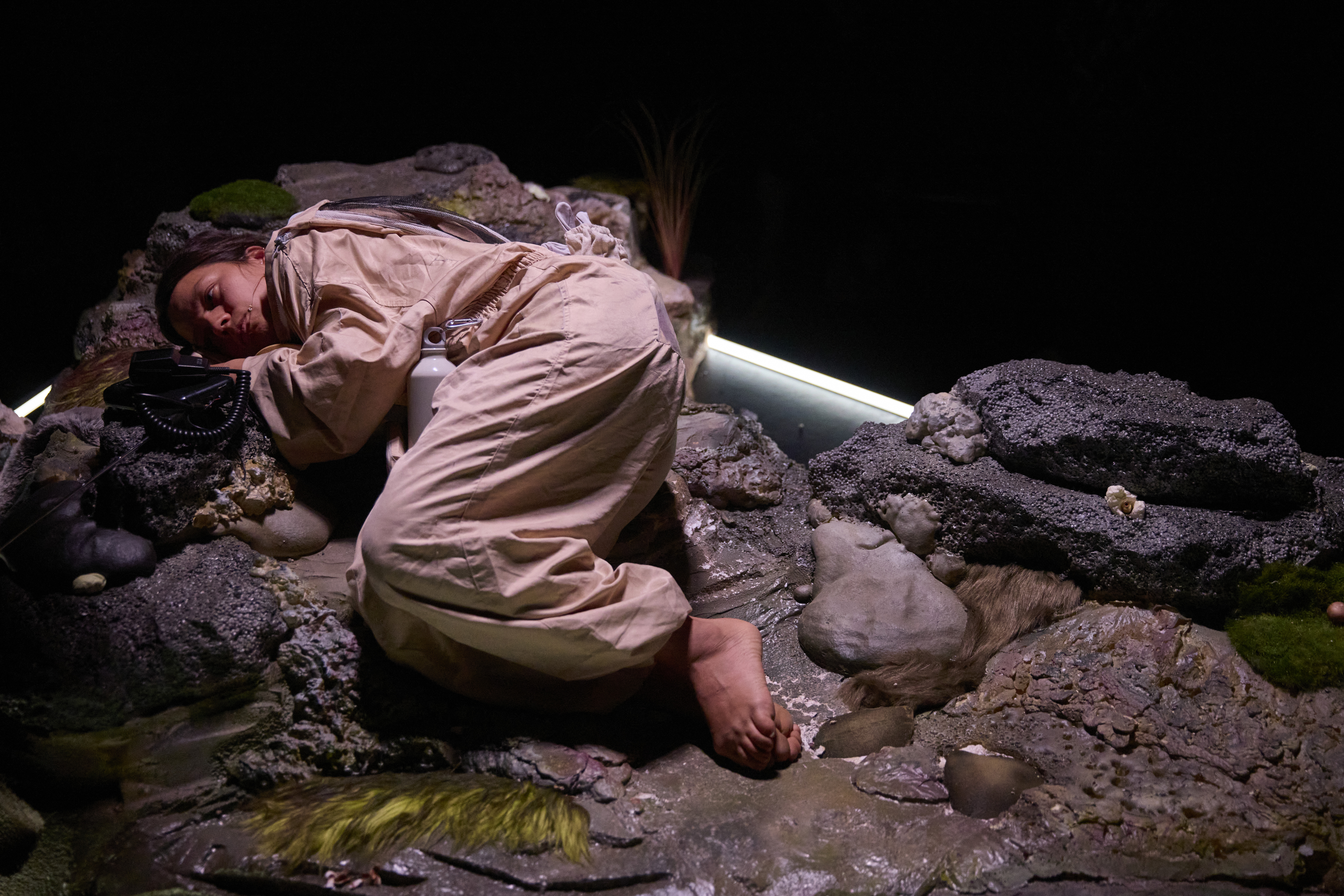
Plankton [2025, Zurich, Bern, Basel and on tour; KIT production]
concept, writing, stage director, set design, sculpture, construction
is a transdisciplinary music-theatre project about contemporary disappearance: four figures, each alone in a different place (Alaska, Siberia, China, a hidden electrostation near a military zone), drift into hermitism for radically different reasons—burnout, exile, ecological refusal, survival. They never meet: their dialogues happen in parallel timelines and symbolic connections, like signals crossing in a shared mental forest. Languages overlap (English, Russian, French, Chinese), and the piece moves like a living archive—half documentary, half dream—of what it means to resist visibility, productivity, and “connection,” while still needing contact.
The audience moves through the space like in a museum, witnessing intimate daily rituals, detailed monologues, and parallel storylines that resonate rather than literally meet—characters connected by a shared mental/symbolic forest more than by geography. Sound is central: electromagnetic microphones, feedback, field recordings, chimerical self-built instruments, modular synth, radio/sonar attempts at contact, and a distant “village” orchestra.
Upcoming date Gare du Nord Basel 2026
ÇA DISPARAIT
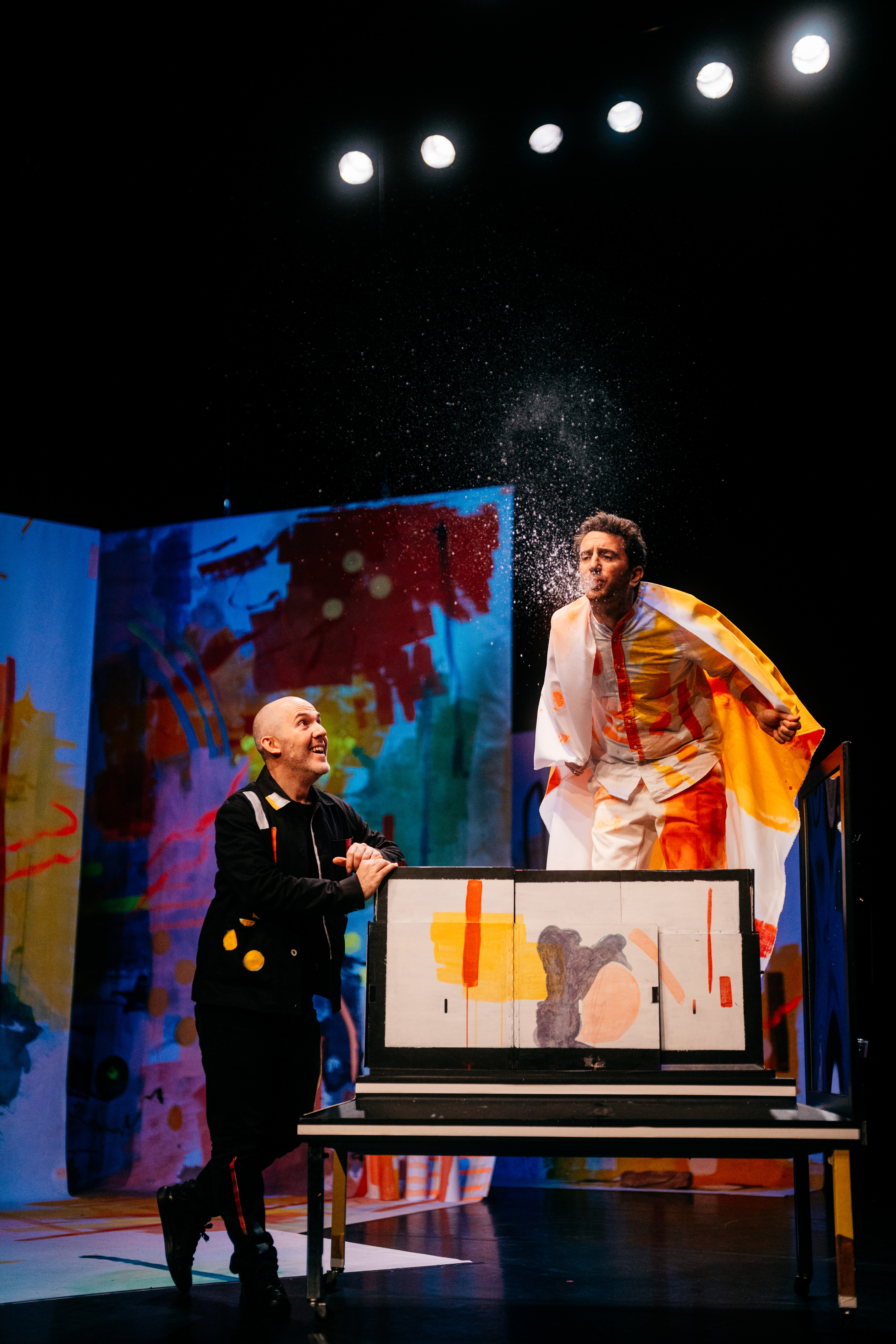
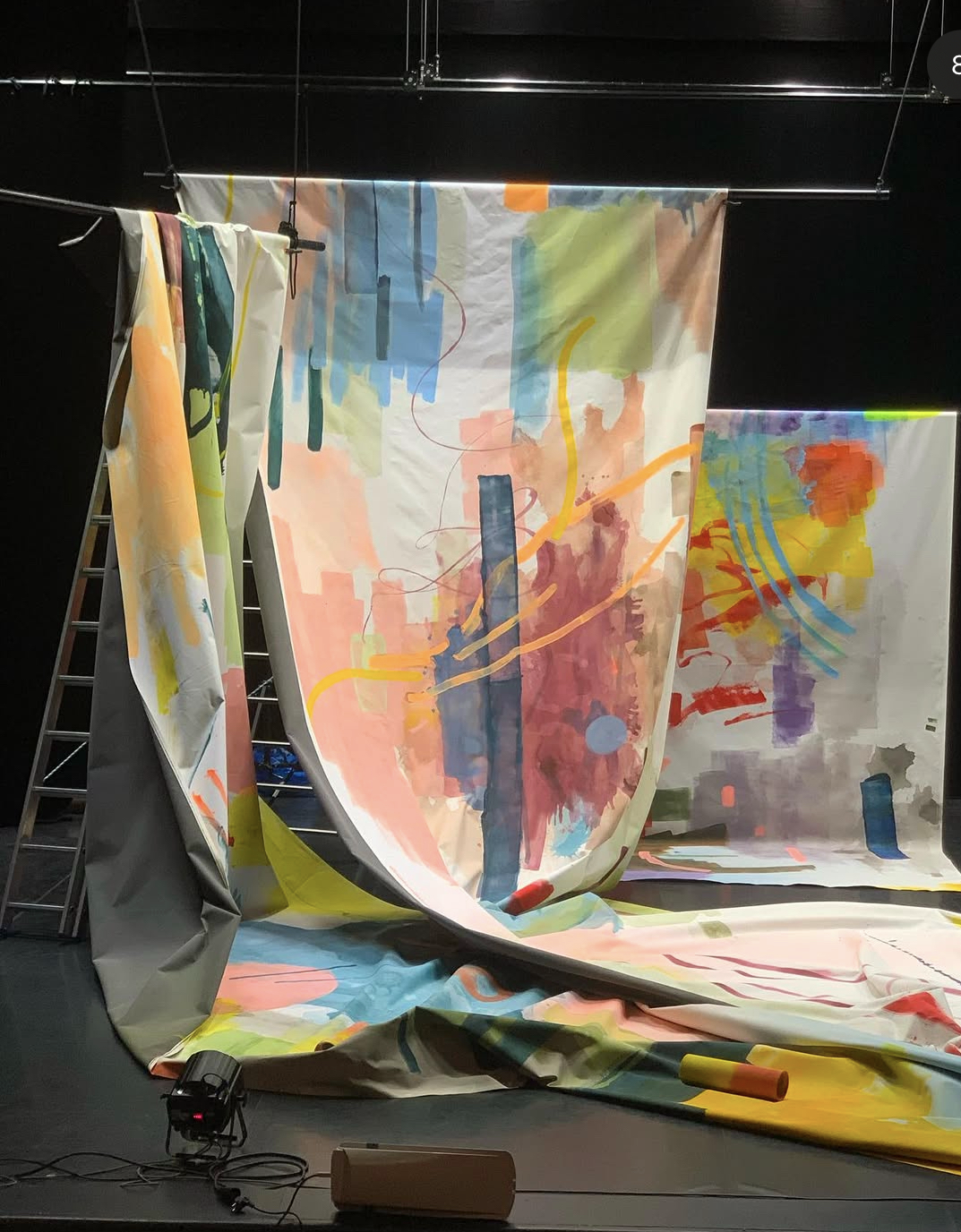
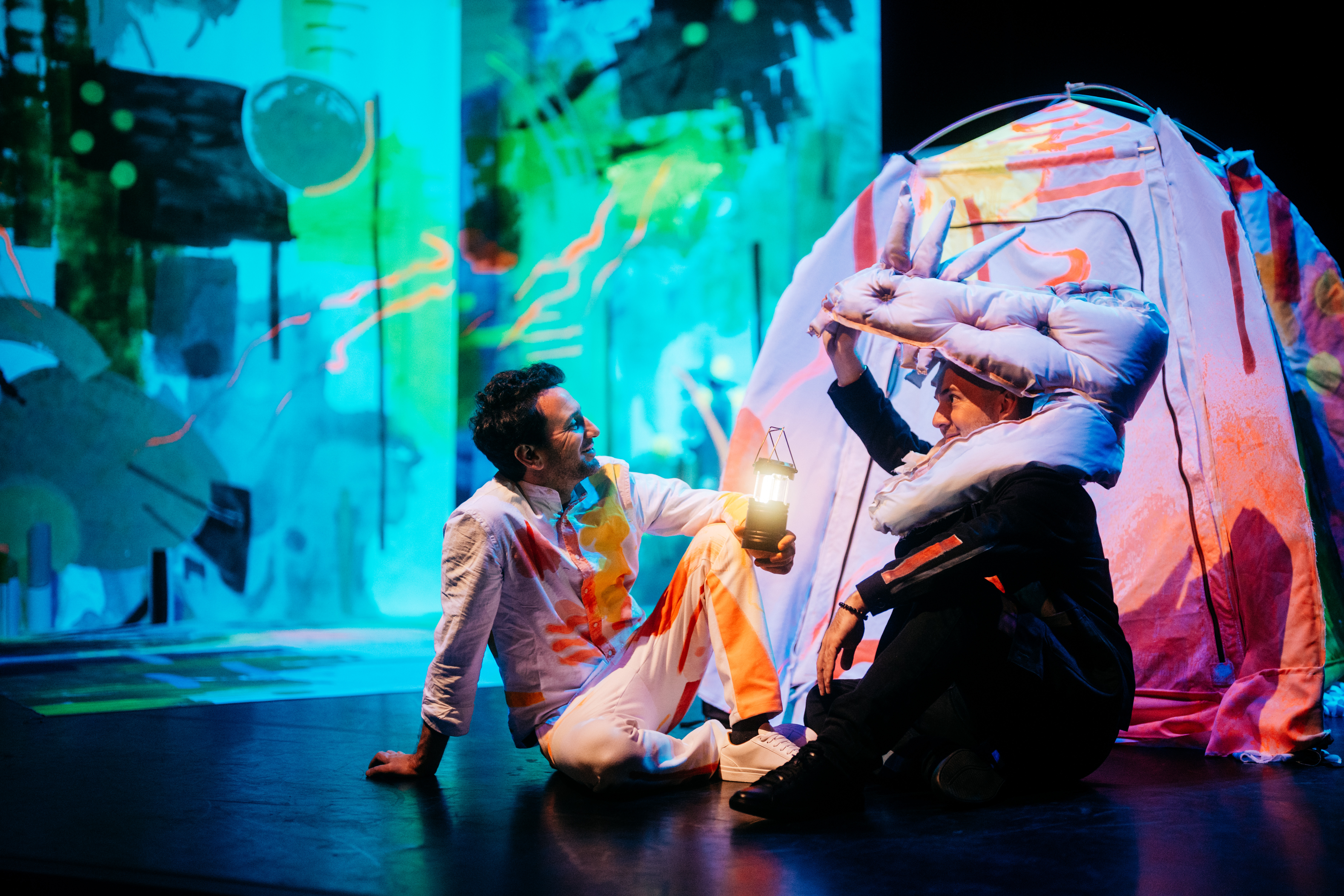
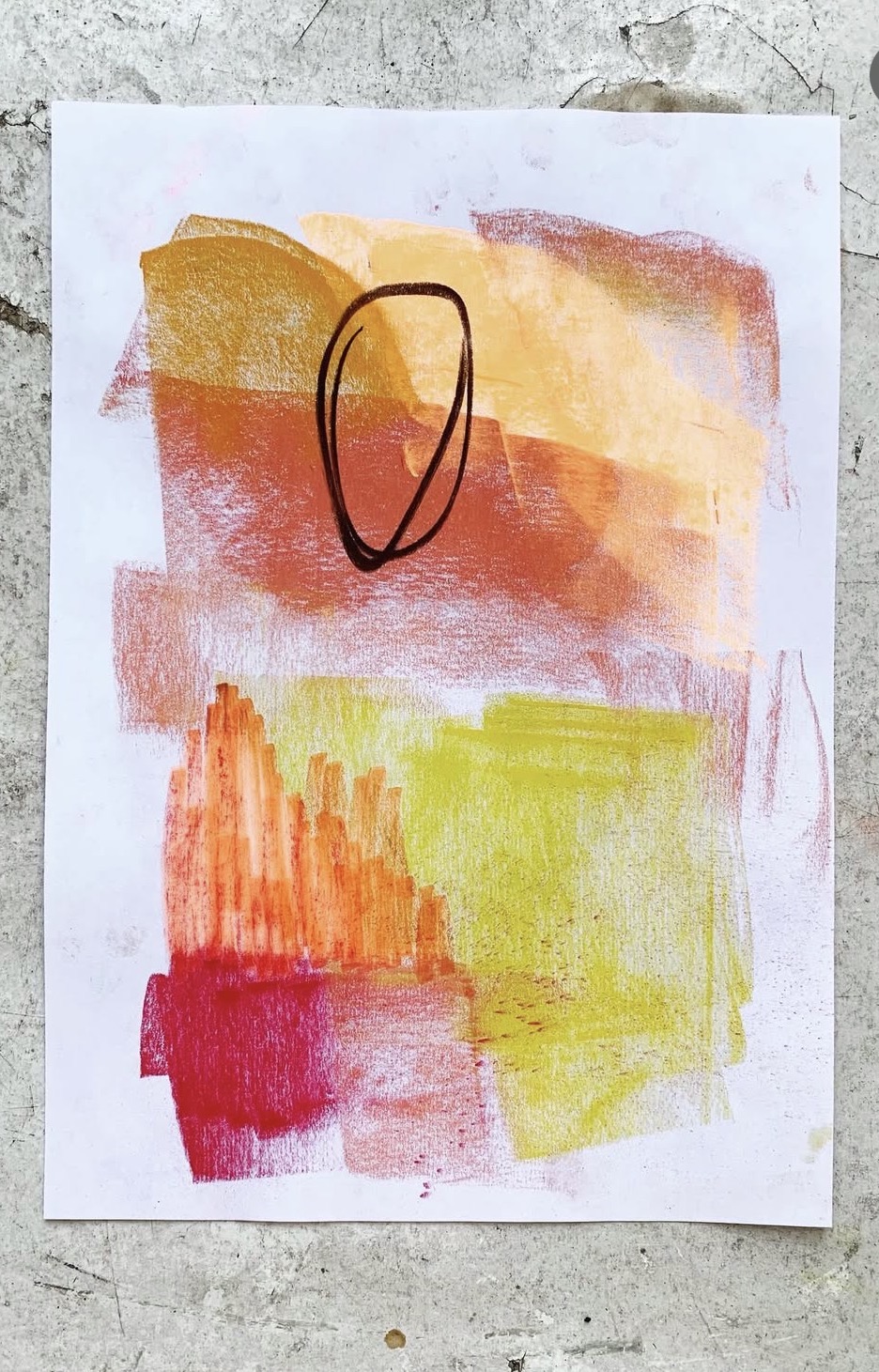


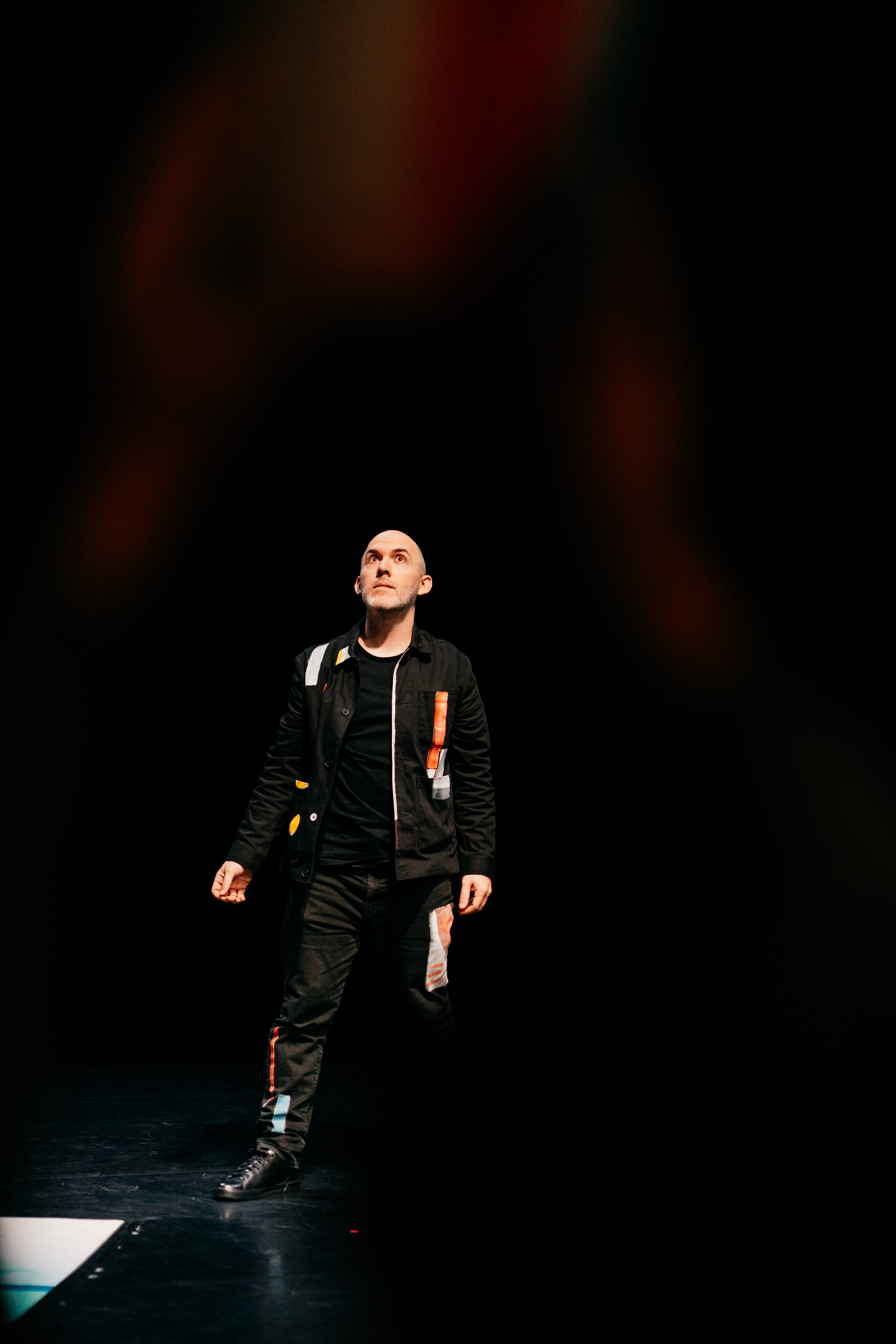
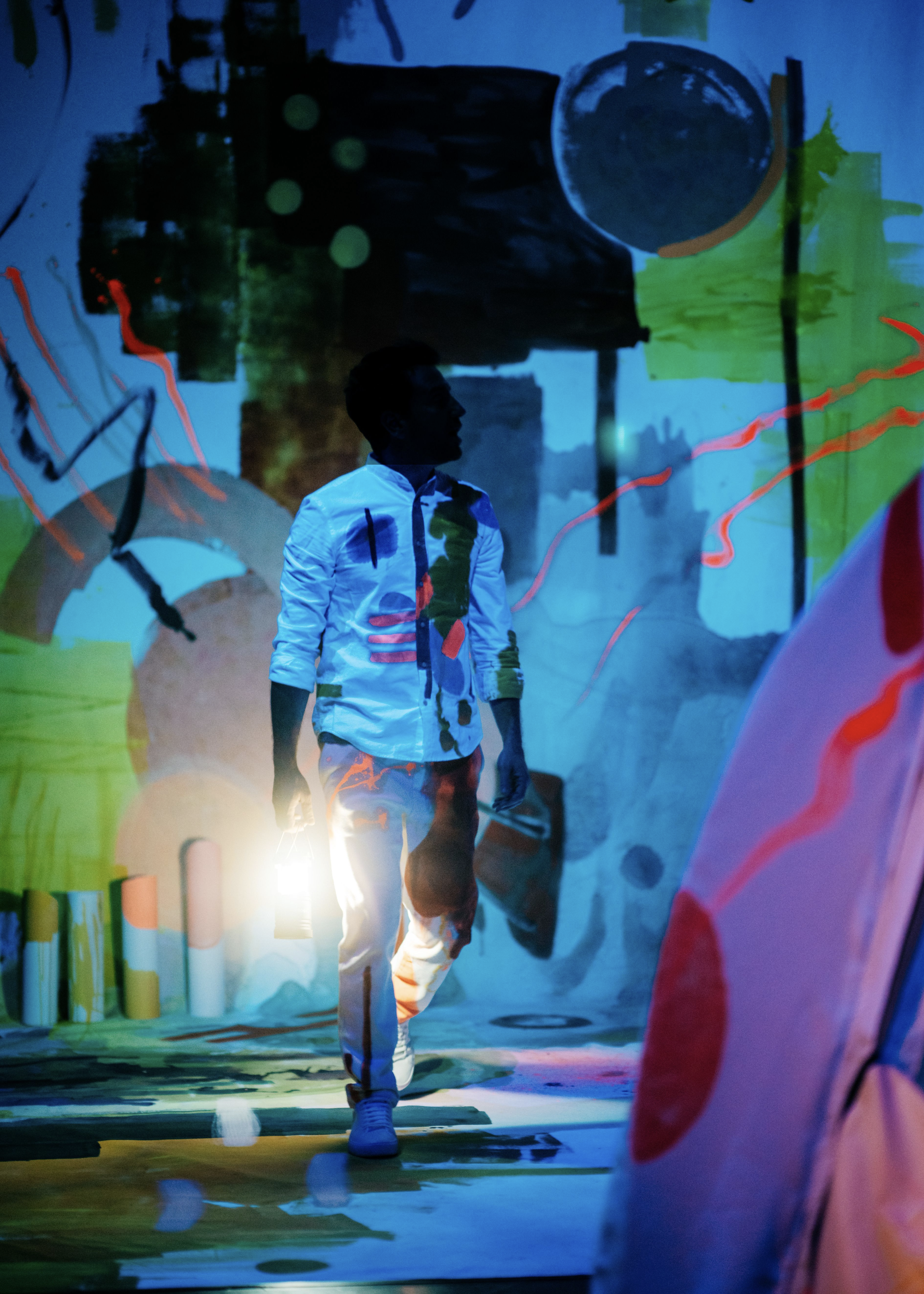
Ça disparaît ? [2023, over 200 shows and still touring]
set designer
is a magic-theatre show for young audiences (from age 6–7) built around a deceptively simple question: where do things go when they disappear? On stage, two illusionists make objects appear, vanish, transform and “teleport,” while disagreeing—playfully and philosophically—about what disappearance really means, from a missing sock to the loss of a species.
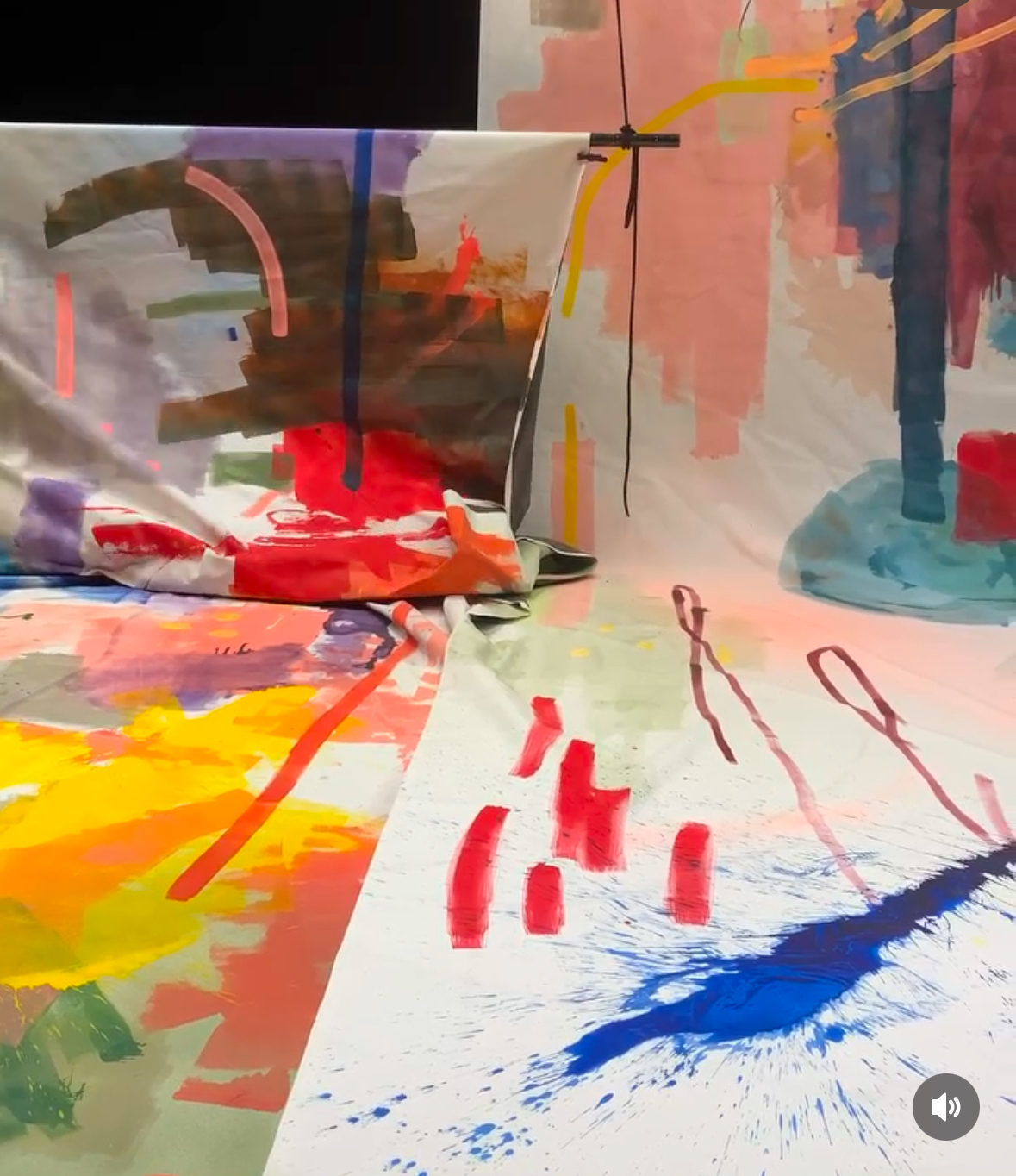
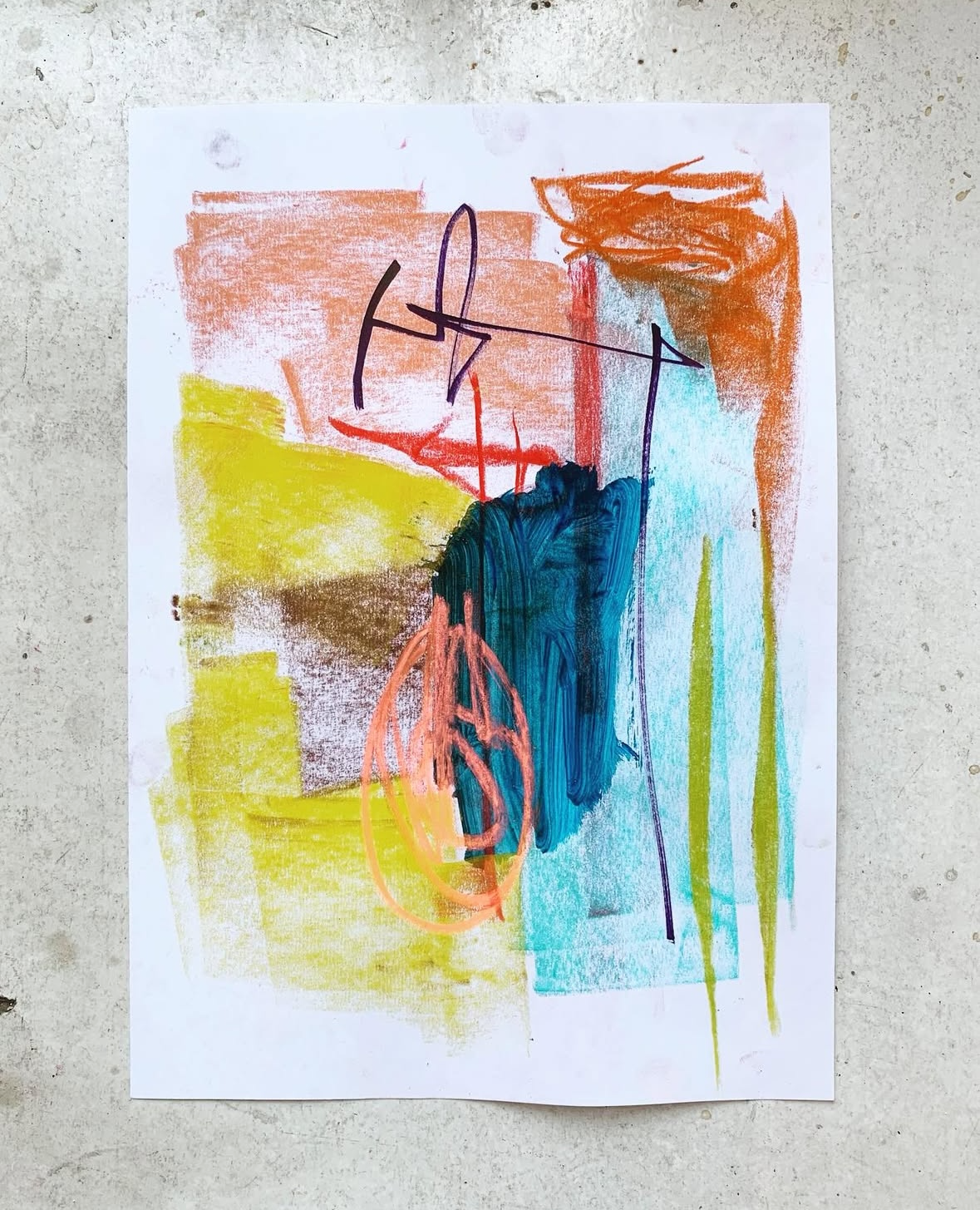
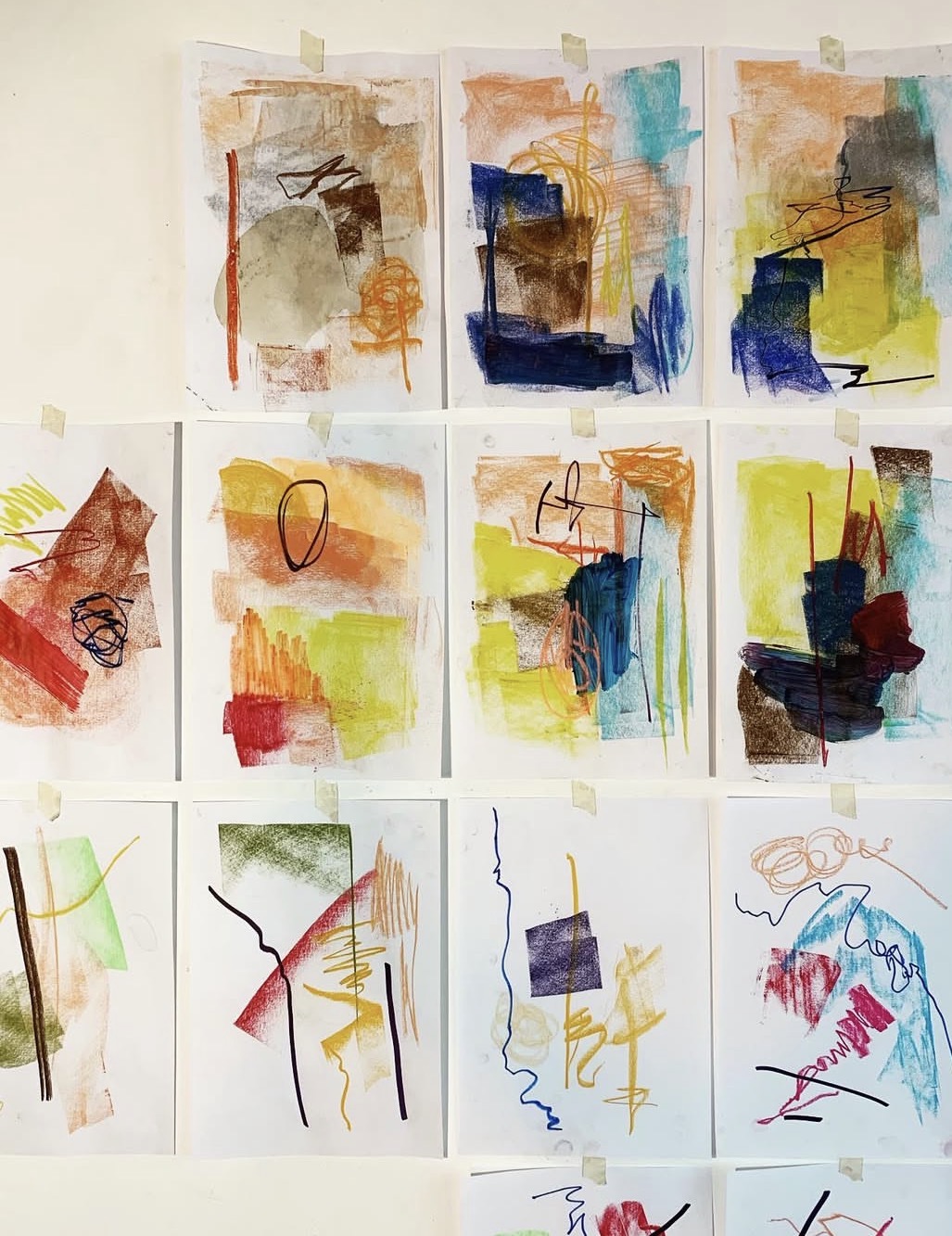
The set design was developed from a series of “memory drawings”: figurative memories gradually dissolving into abstraction. That visual research became the scenographic language—surfaces and a color palette designed so that certain images, textures, or fragments disappear under specific lighting conditions, echoing the show’s central mystery.
Coproductions : La Garance – scène nationale de Cavaillon, Le Théâtre de Rungis, Le Totem – scène conventionnée d’intérêt nationale Art, Enfance, Jeunesse, Avignon, Initiatives d’artistes – La Villette, Paris
PTITECOUTI
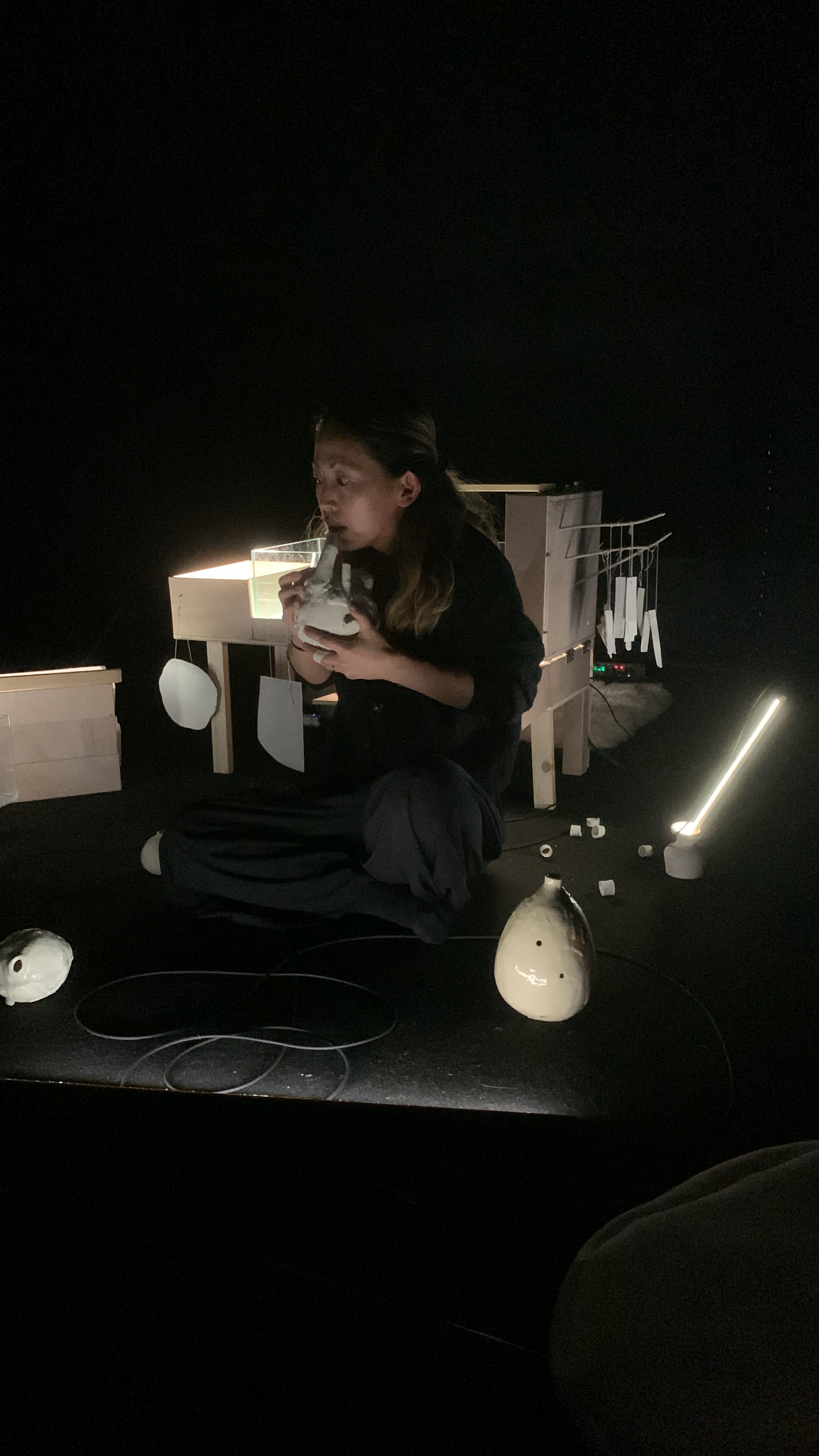
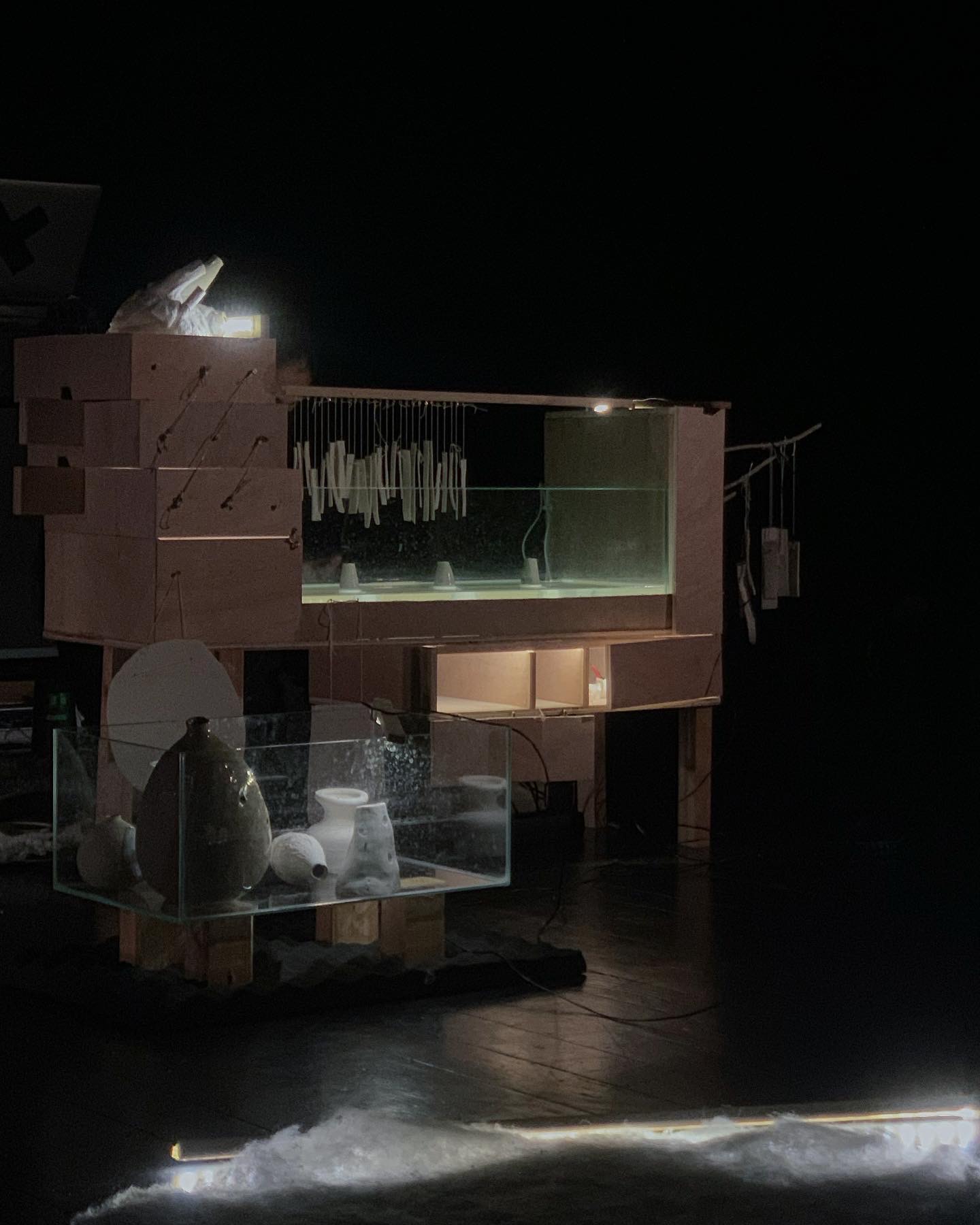
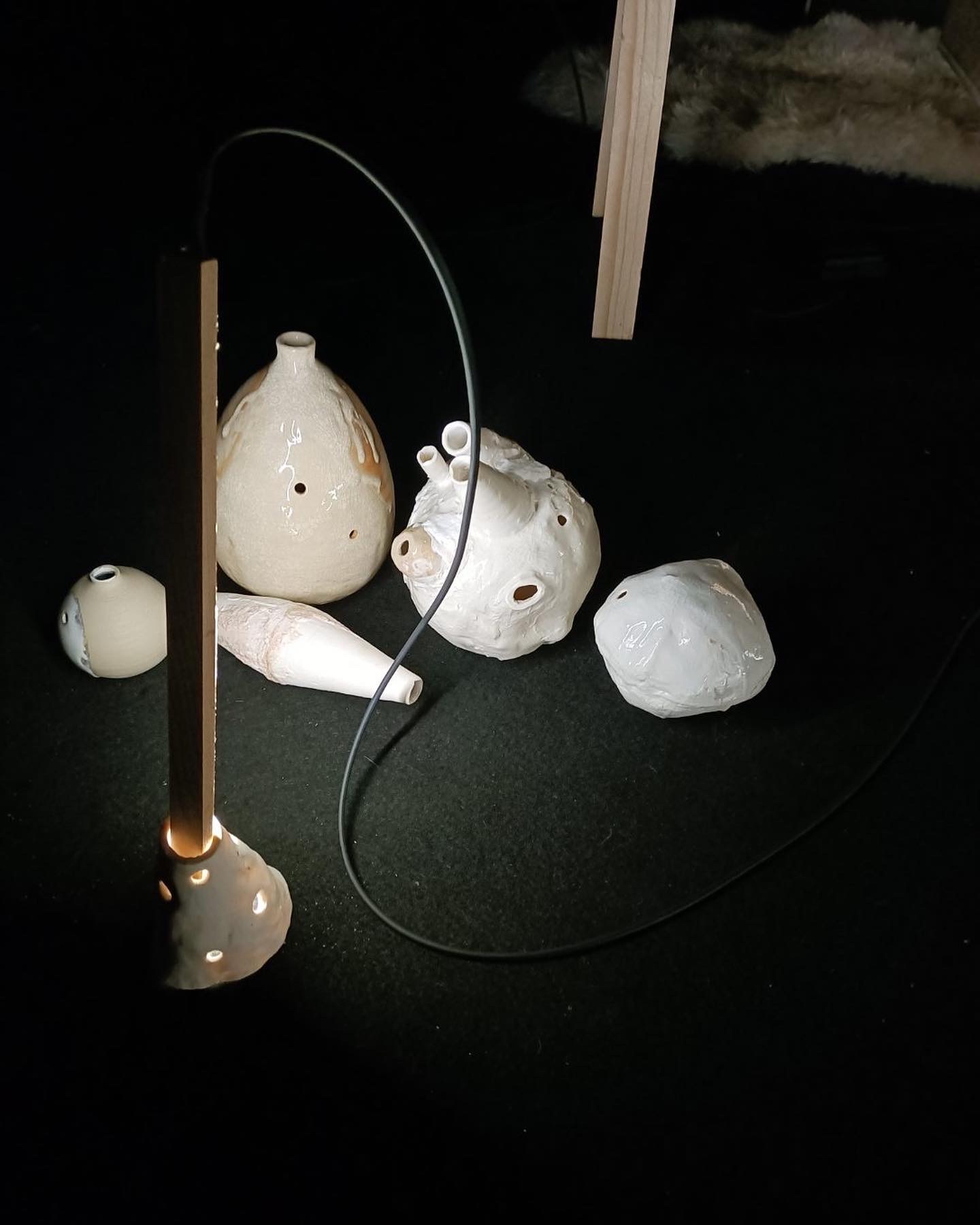
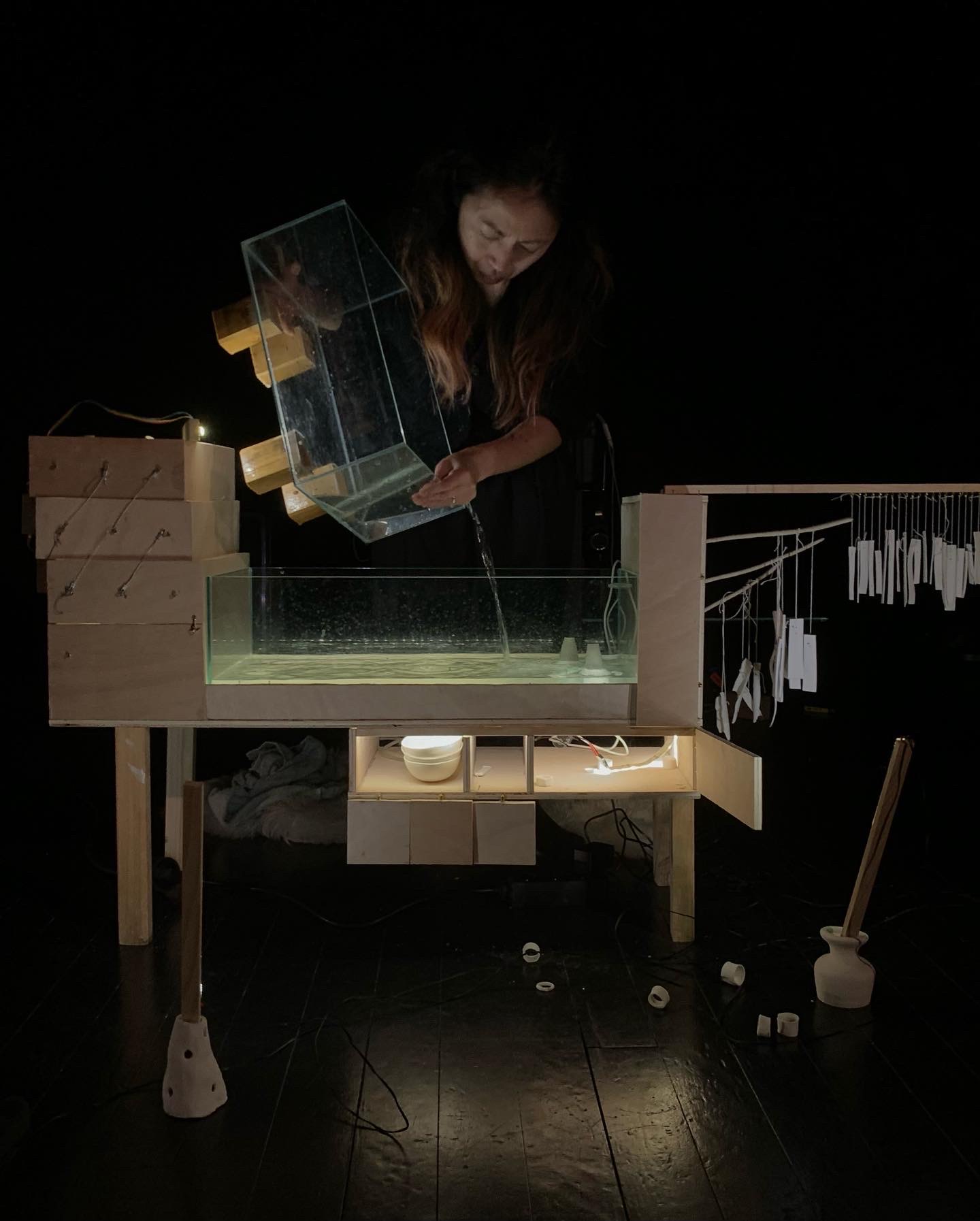
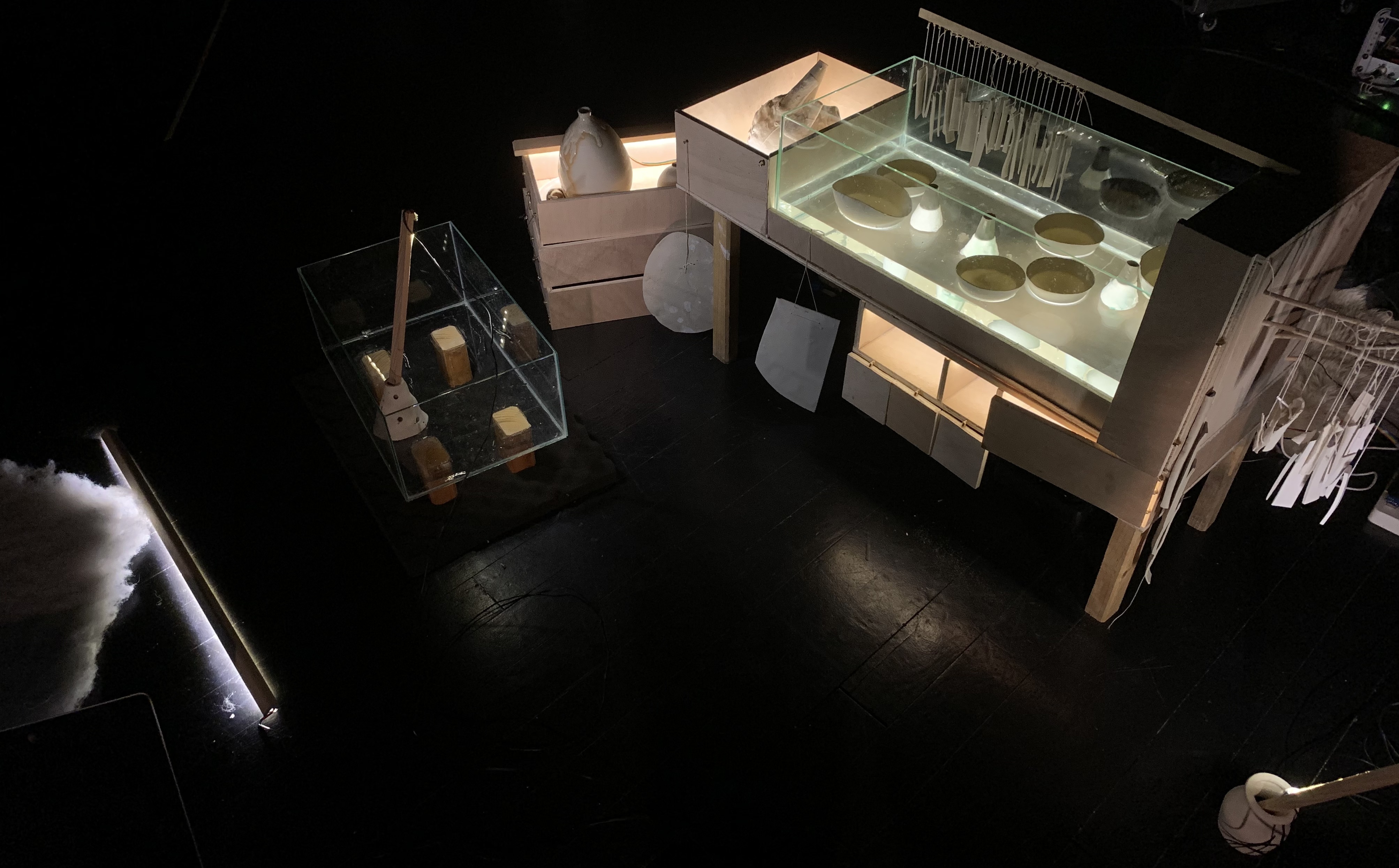
Pttkt, object and music theatre in collaboration with HanatsuMiroir, Ole Hübner
[2023, Espace Django, Espace K, upcoming tour in Japan and Chilie]
stage director, set designer, sound objects creator
Object- and music-theatre piece created in collaboration with HanatsuMiroir and composer Eloian Lovis Hubner, originally commissioned as an “opera for babies.” Developed with early-childhood psychologist Estelle Galati Oliveri, it became a multisensory perception experience for “babies of all ages” (with no age limit), exploring how humans—especially very young audiences—listen, watch, and make meaning.
THEALOGY
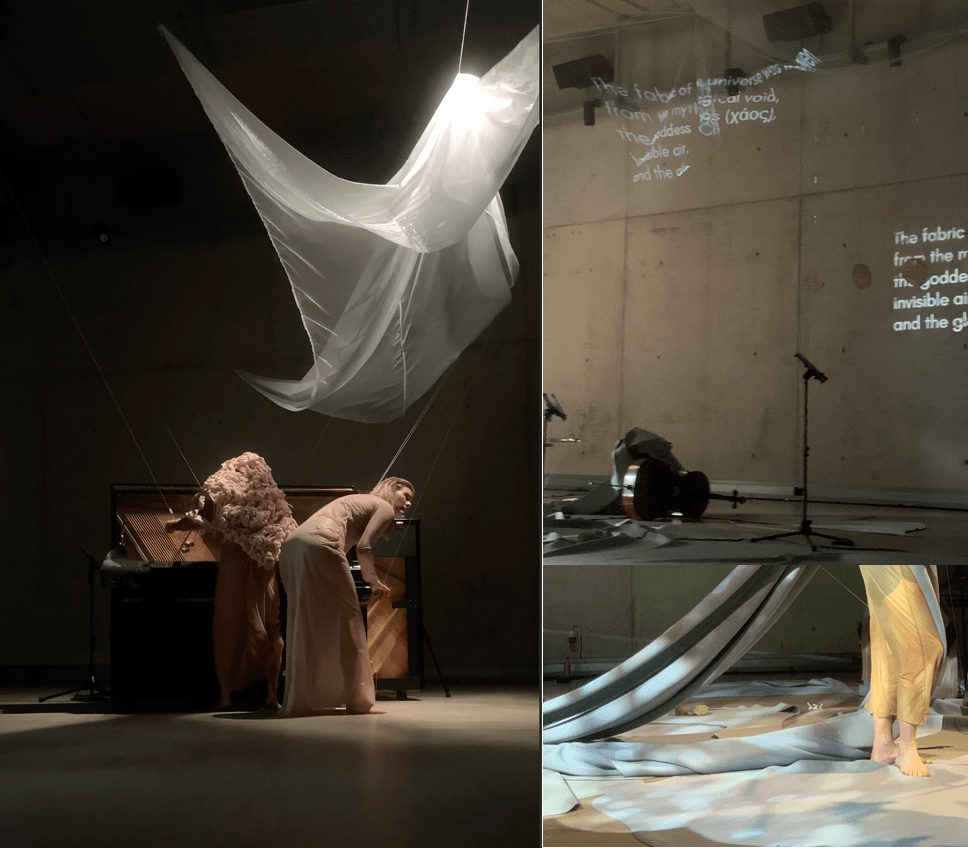
Thealogy is musical theatre based on three pieces by Huihui Cheng (Pandora Box, Tides of Soul, Messenger)
[24 May 2024, Cloth 104, Cologne]
set design, directing, dramaturgy
In THEaLOGY, the concepts of anarcho-feminism and ecofeminism are of great interest, and can be understood as the connection between women and nature and the abolition of all forms of domination. Following the structuralist path of comparative religion and mythology (the comparison of myths and religions from different cultures in order to identify common themes and characteristics, showing how religions and myths circulate across cultures and eras), stage director Kapitolina Tsvetkova creates in THEaLOGY a divine ‘vivarium’ with four goddesses.
She develops a gentle, situational utopia, told in a non-linear way: a voyeuristic cartography of the lives of four sister-goddesses. They communicate in an auxiliary language, inhabiting their strange divine lives according to a logic of their own, while recounting the story of creation, the artistic gesture, and expression.
KASSANDRA
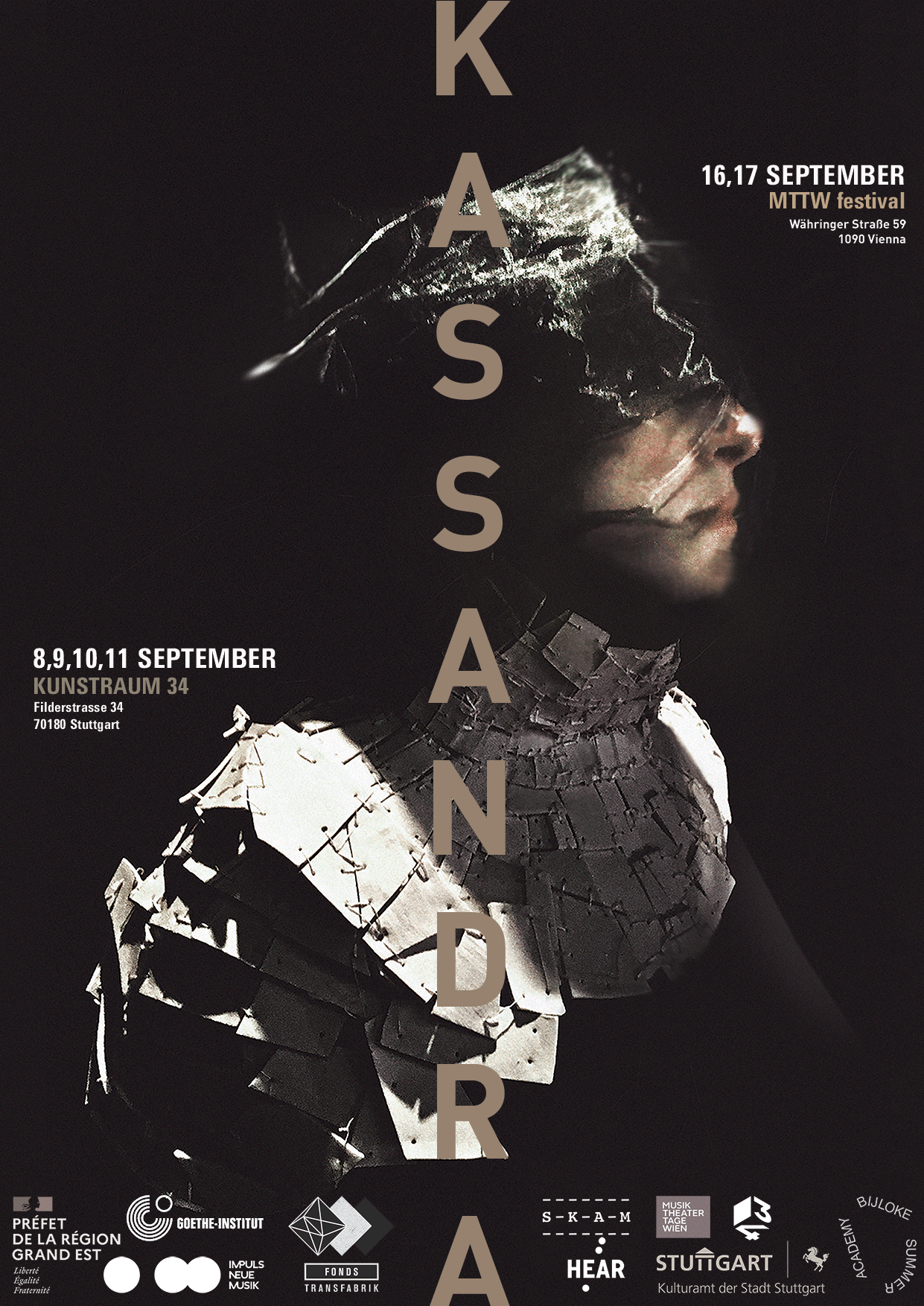
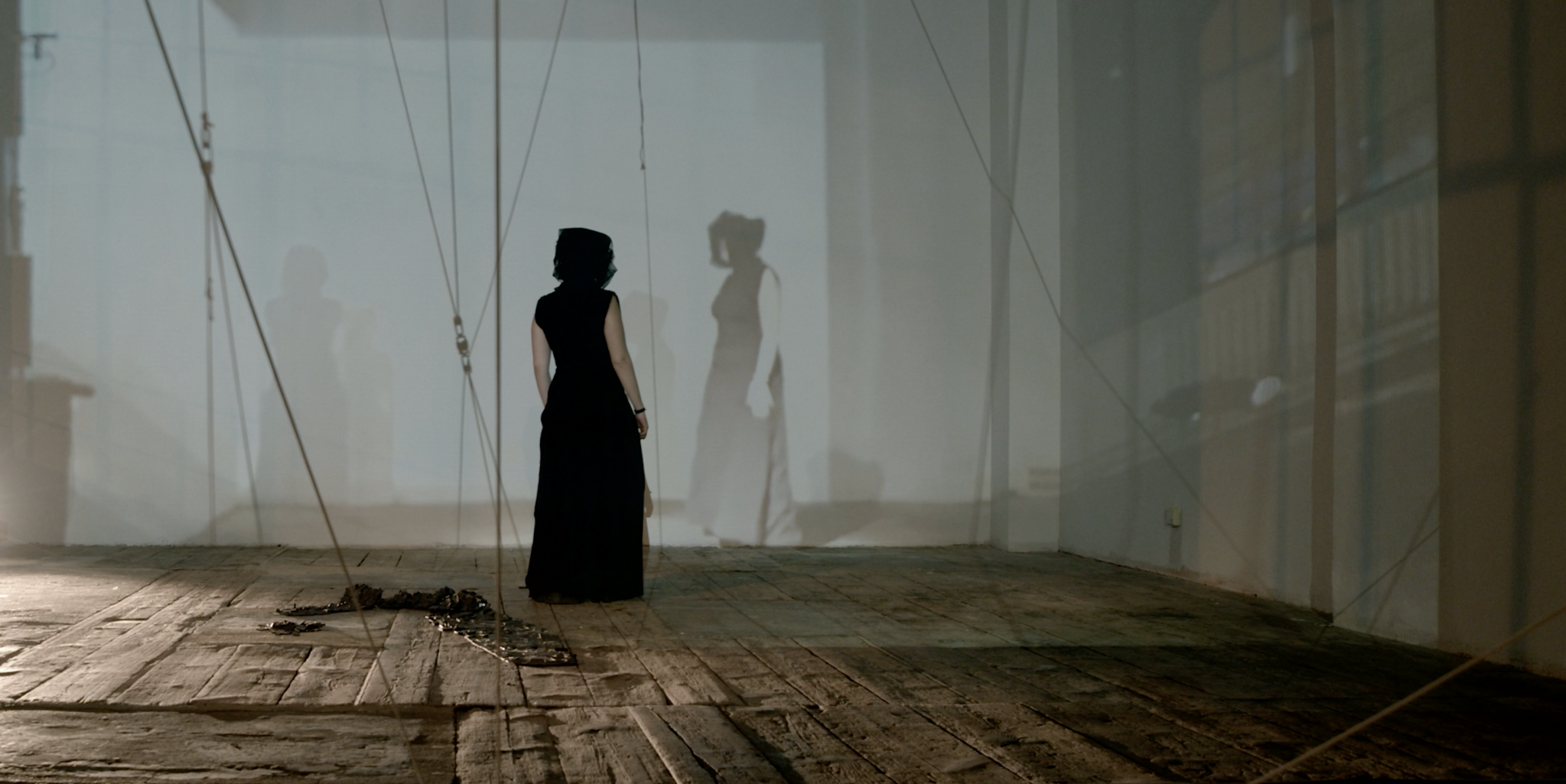
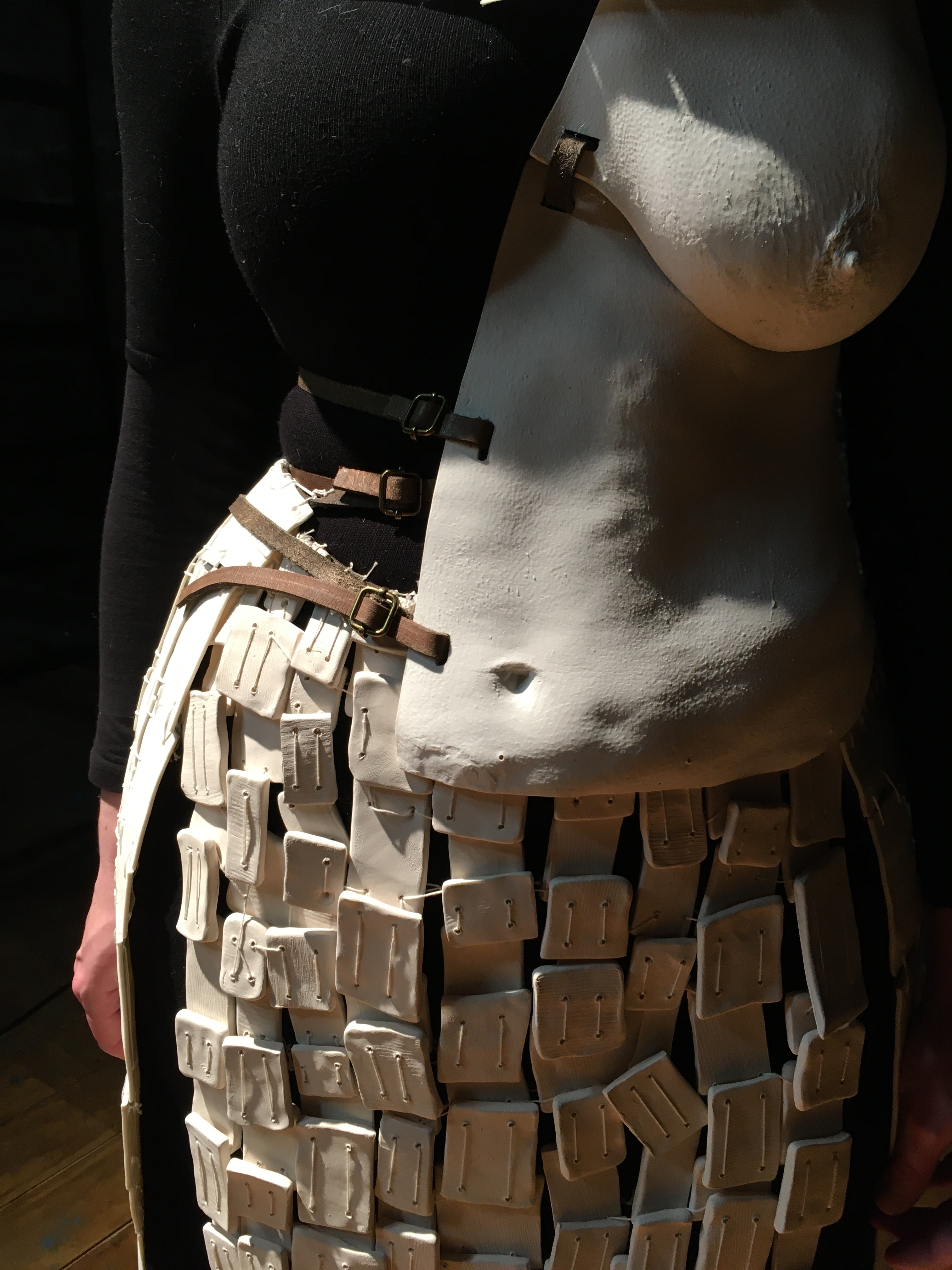
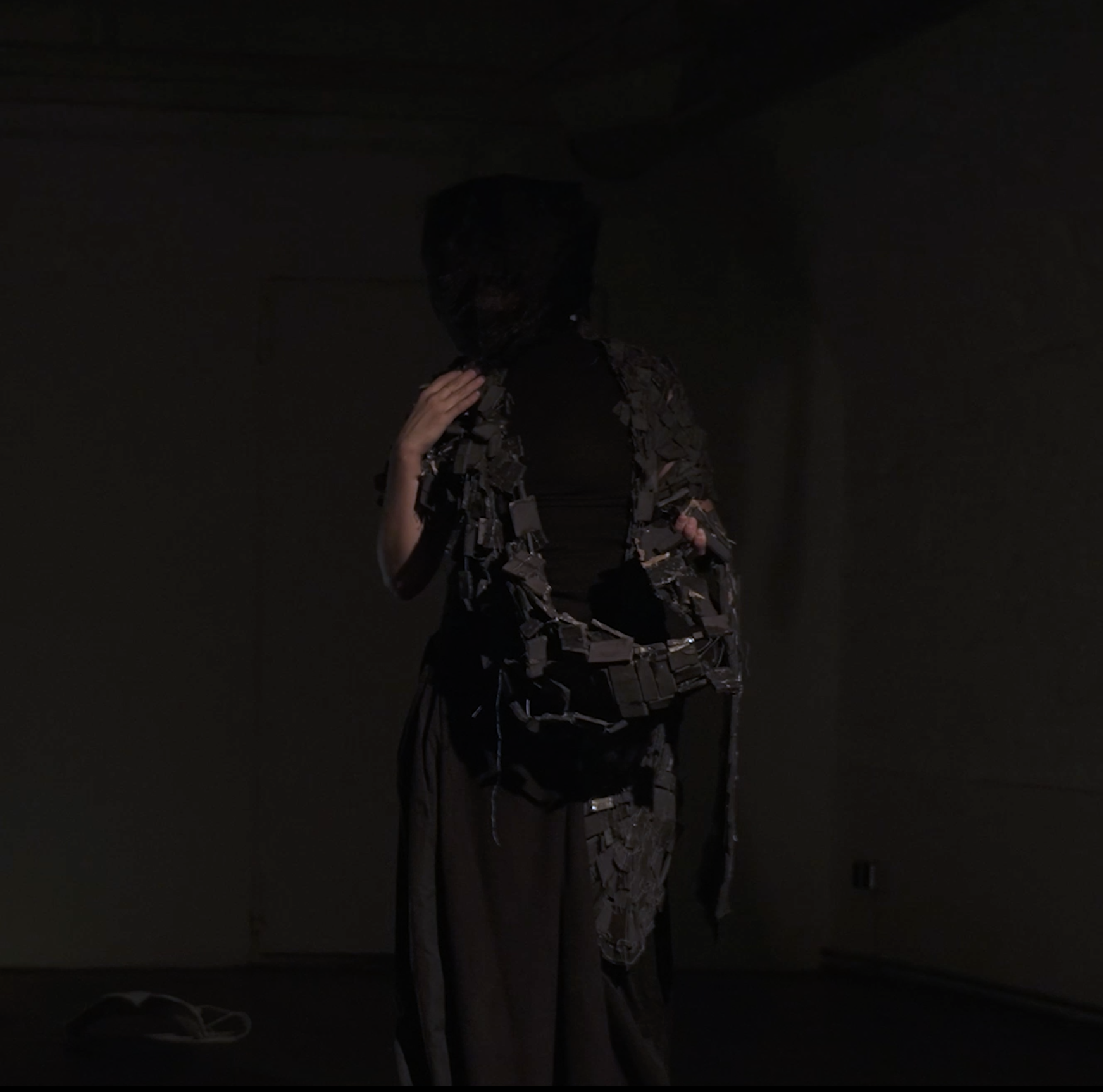
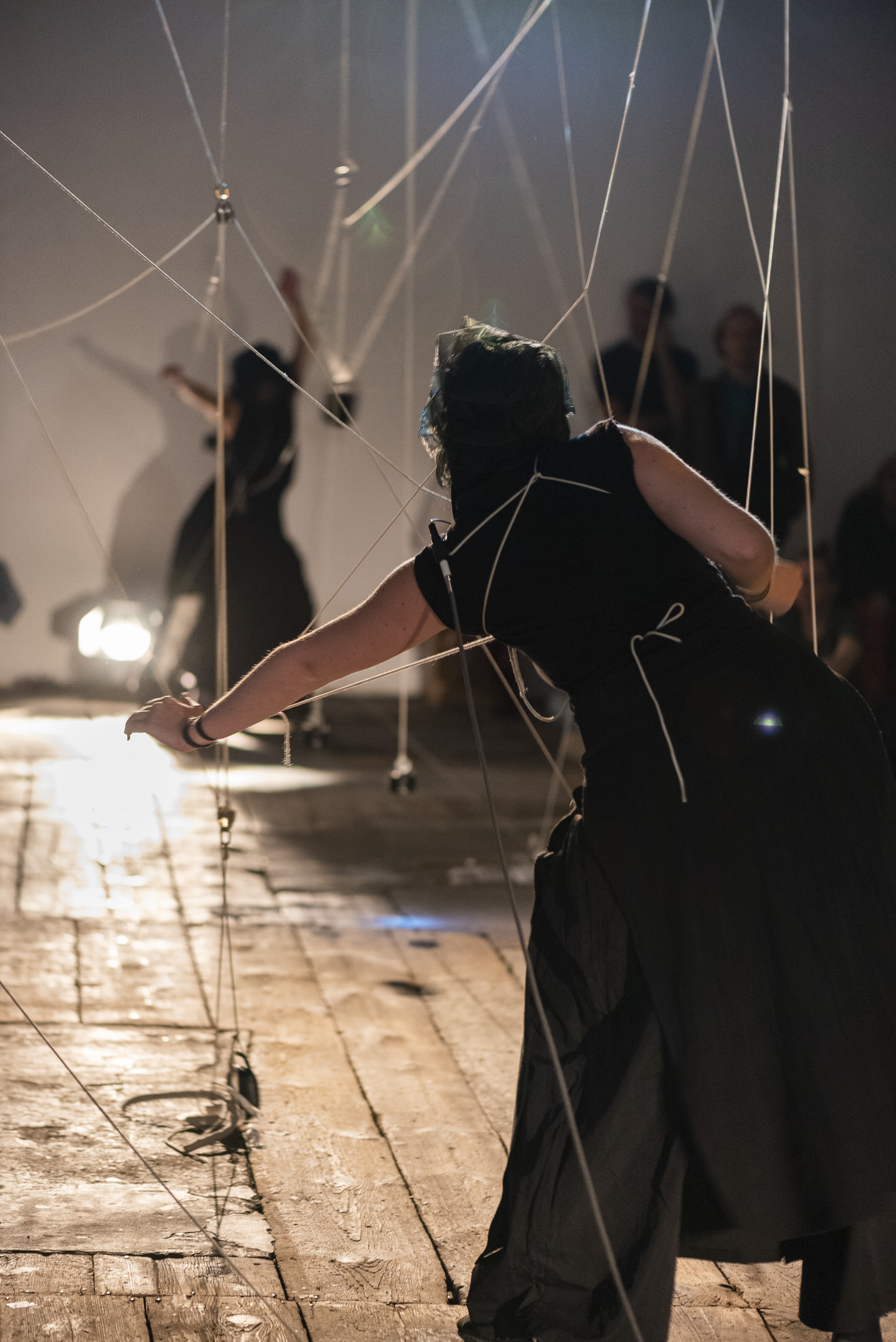

Kassandra, opera by Huihui Cheng, Anna Korsun and Katharina Roth
[Bijloke Summer Academy 13-22 December 2021; premieres: Stuttgart – Kunstraum 34 8-11 September 2022; Vienna – MTTW, 16-17 September 2022; Graz – Oper!NOW, 3-4 December 2022]
stage design, stage directing, creation of sound objects
kassandracollective.com
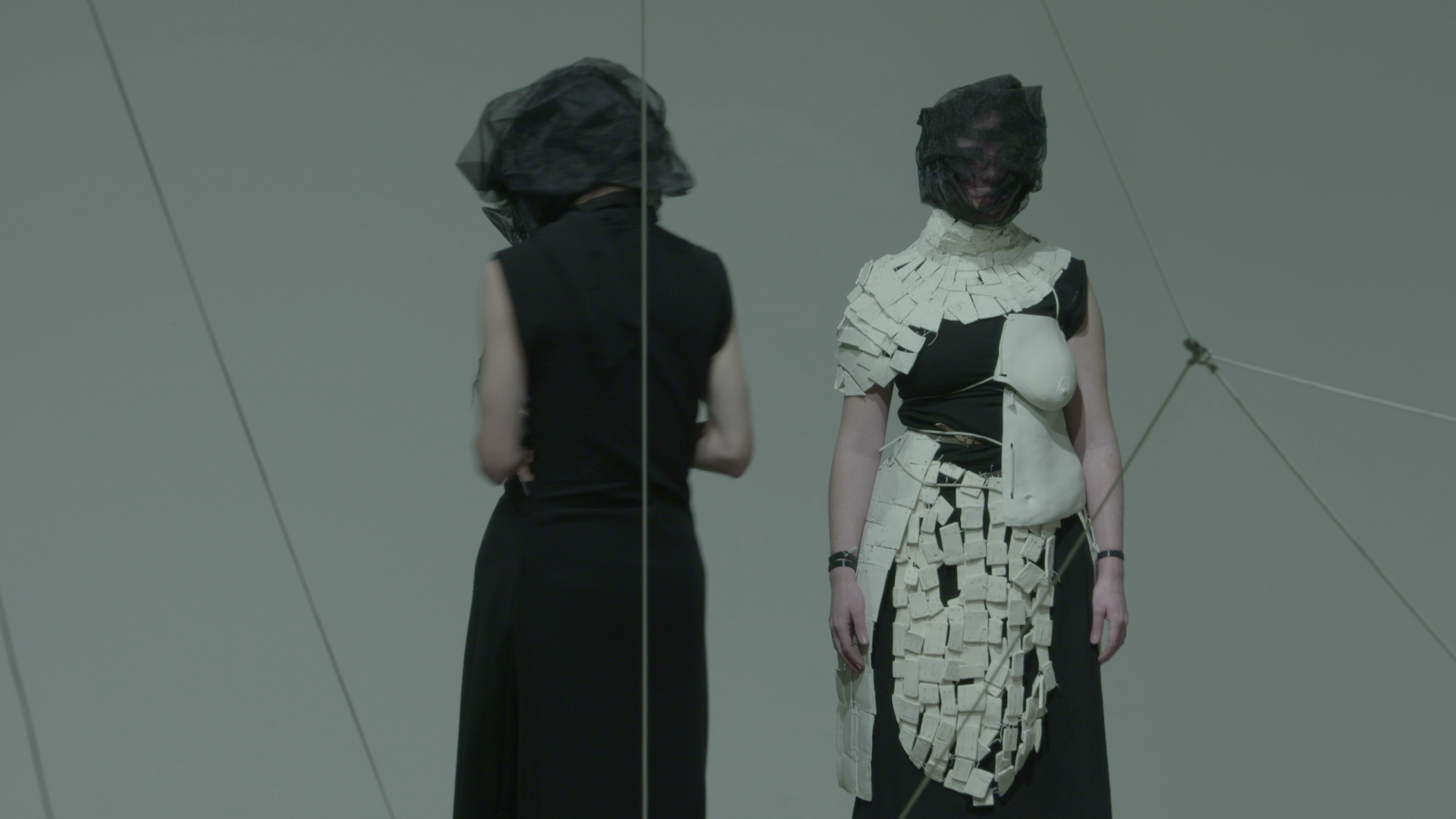
Inspired by the mythological figure of Kassandra, the Trojan seer whose predictions were accurate but not believed, our performance tackles contemporary issues such as gender inequality and wilful ignorance.
Visual art, music, sculpture, theatre, ritual and installation intertwine in a collective interdisciplinary work.
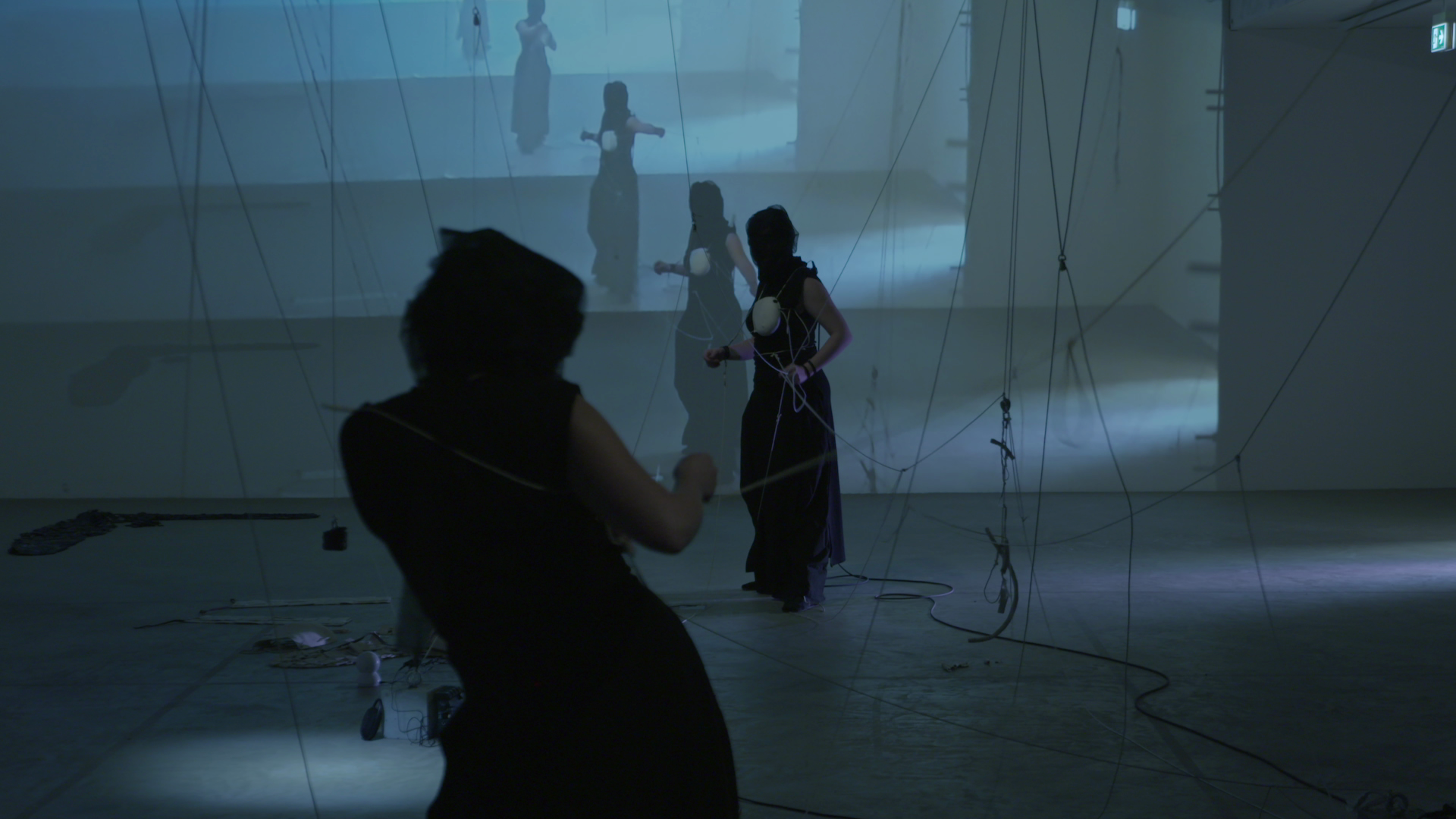
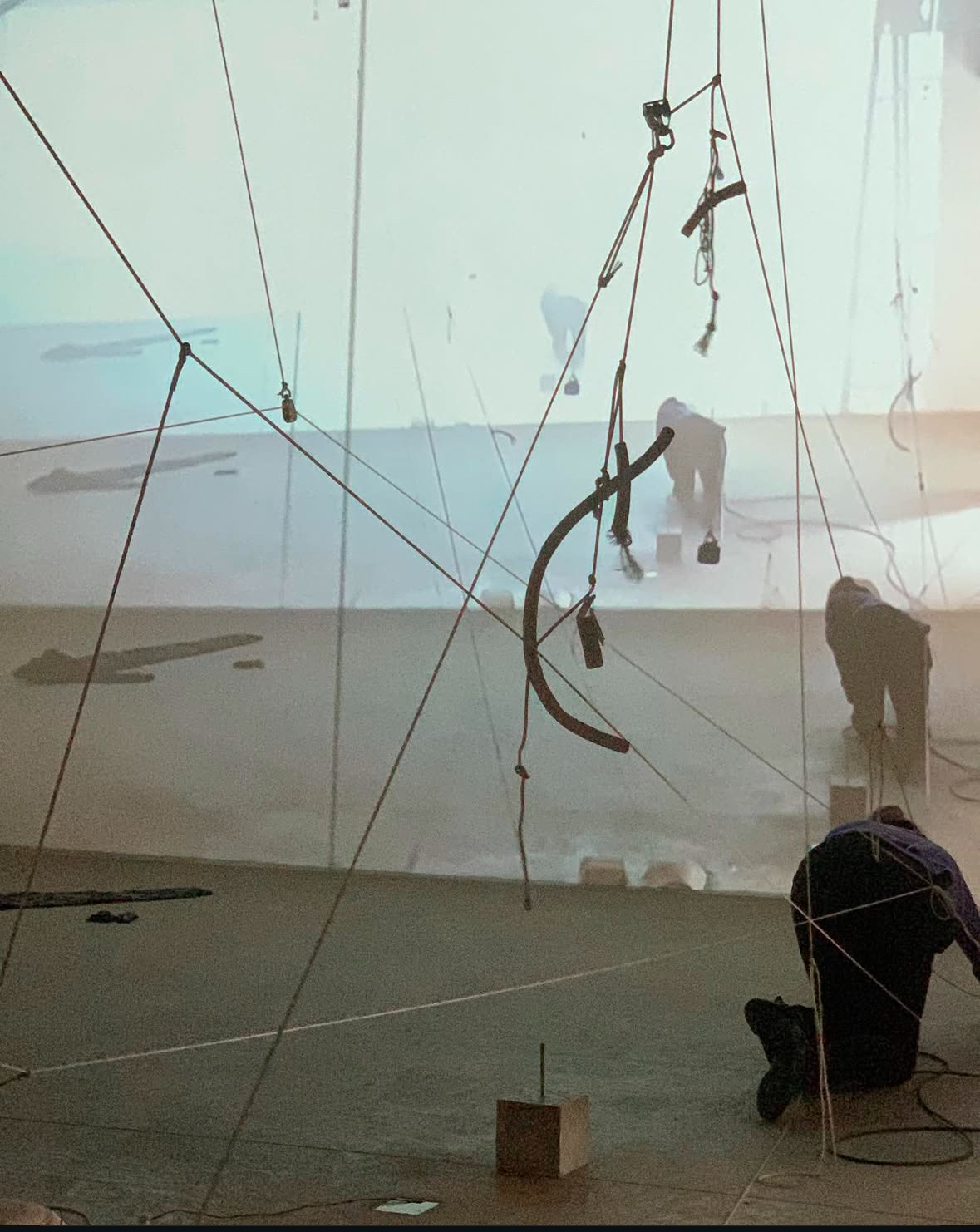
The entire piece is centred on the literal and metaphorical idea of a woman’s body and voice, derived from the central figure of Kassandra, her movements, actions and song. As a result, each object, costume and installation is connected to the performer’s body, serving as a musical instrument controlled by the body that accompanies the voices in the black void.
This idea is symbolically materialised through the use of porcelain, a unique, precious, fragile yet resistant material whose rich potential for sound is in dialogue with the human voice.
The three composers (Huihui Cheng, Anna Korsun and Katharina Roth) bring their diverse artistic approaches to working with voice, space, objects and electronics to the project, providing three different perspectives on Kassandra’s multi-layered personality.
RECITATIONS
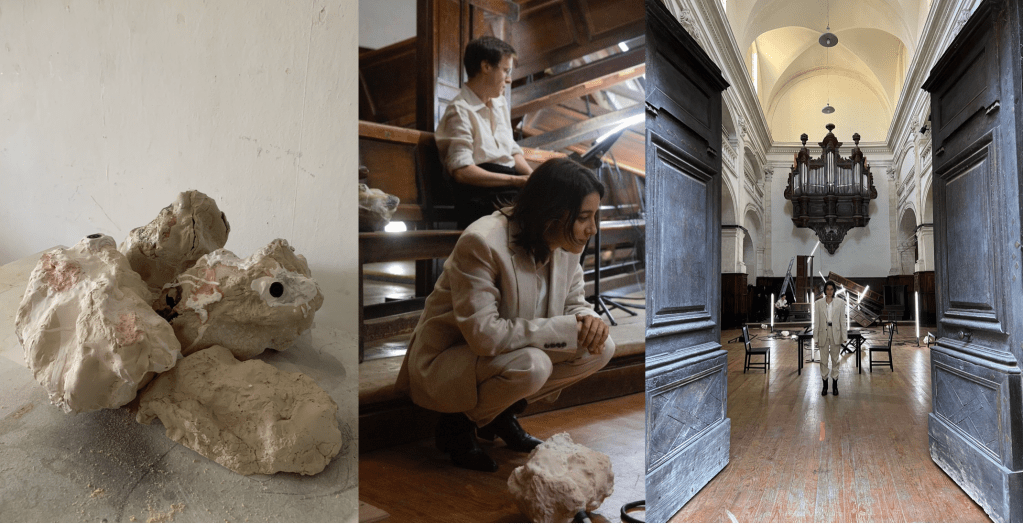
Recitations, G.Aperghis (1978)
[13, 14 mai 2022, Académie T&M, Le Petit Temple – Nîmes]
stage design, stage directing, creation of sound objects in duo with Clément Debras
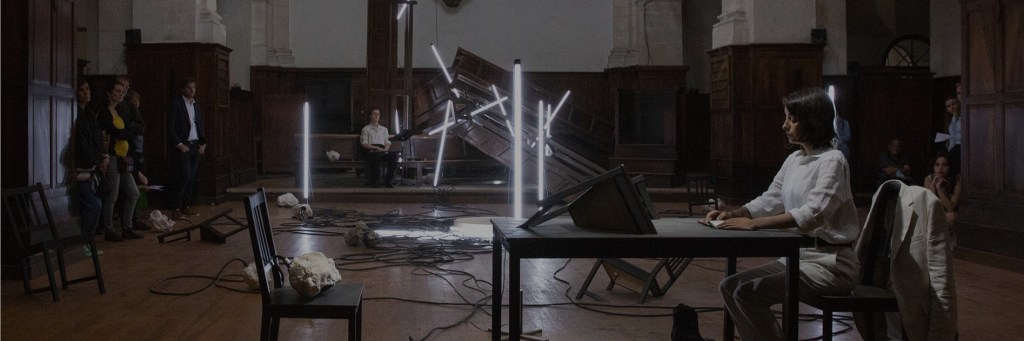
Récitations is an immersive, deambulatory performance-installation inspired by Georges Aperghis, asking one central question: what is a voice? A pure phonetic material, a symbolic presence, a political force, a tool for communication—and a place to find (or lose) your own voice. Across shifting protocols (installations, repeated actions, one-to-one encounters), the voice is stretched, sampled, filtered, and sometimes displaced into machines or voiceless partners (wired clay stones), so that listening itself becomes the main scene.
Raquel Camarinha (soprano), Yoan Héreau (échantillonneur)
PLANT OPERA
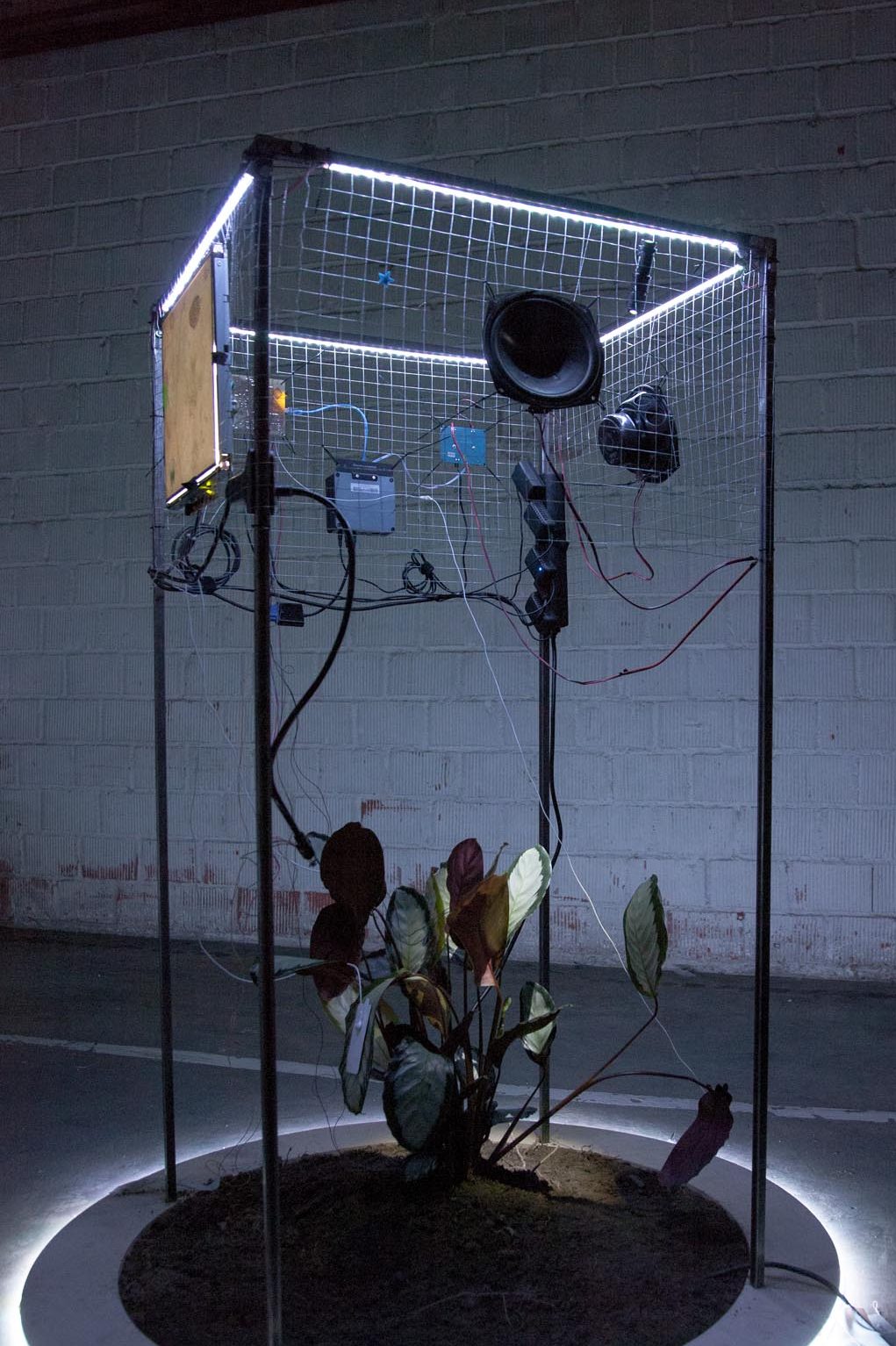
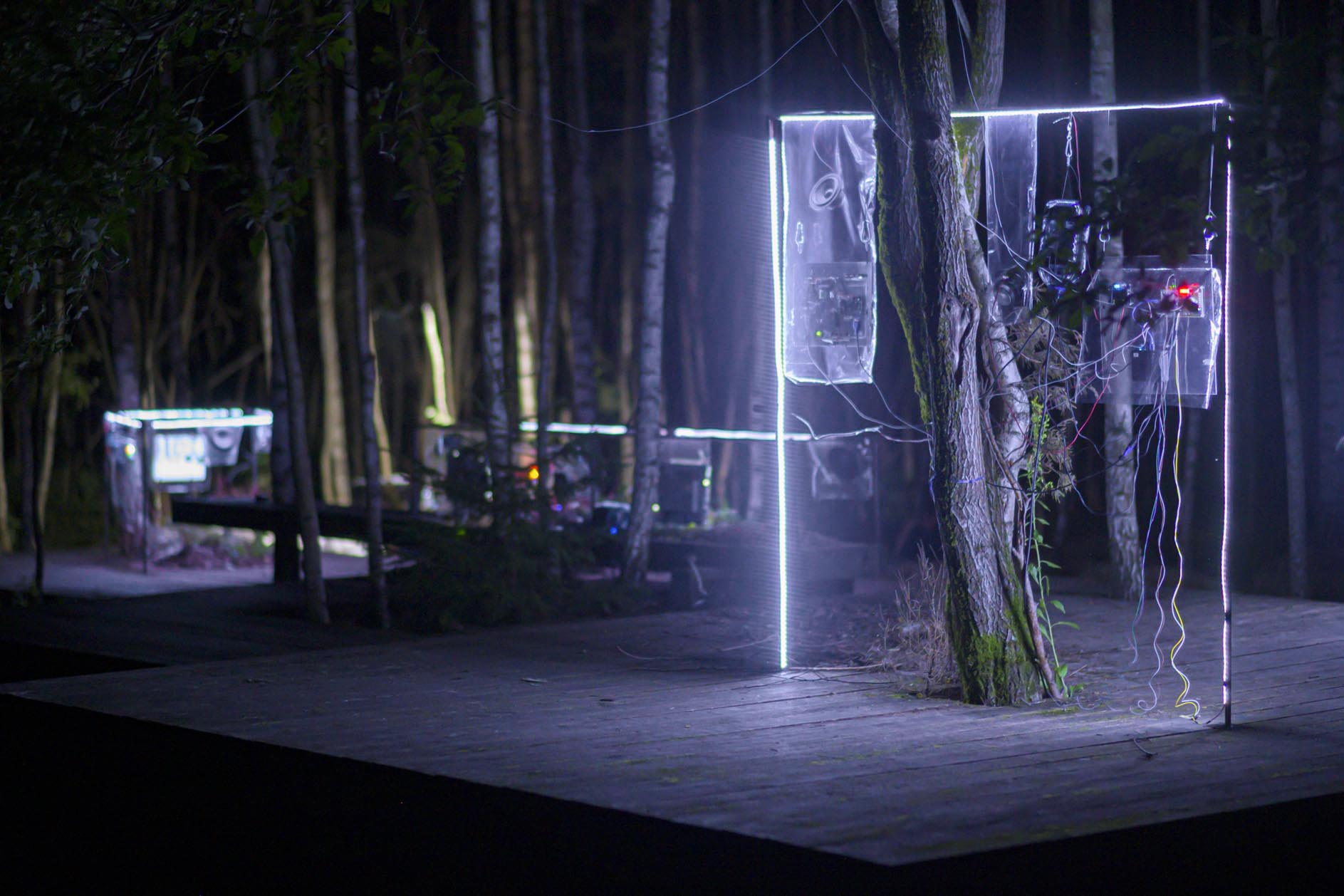
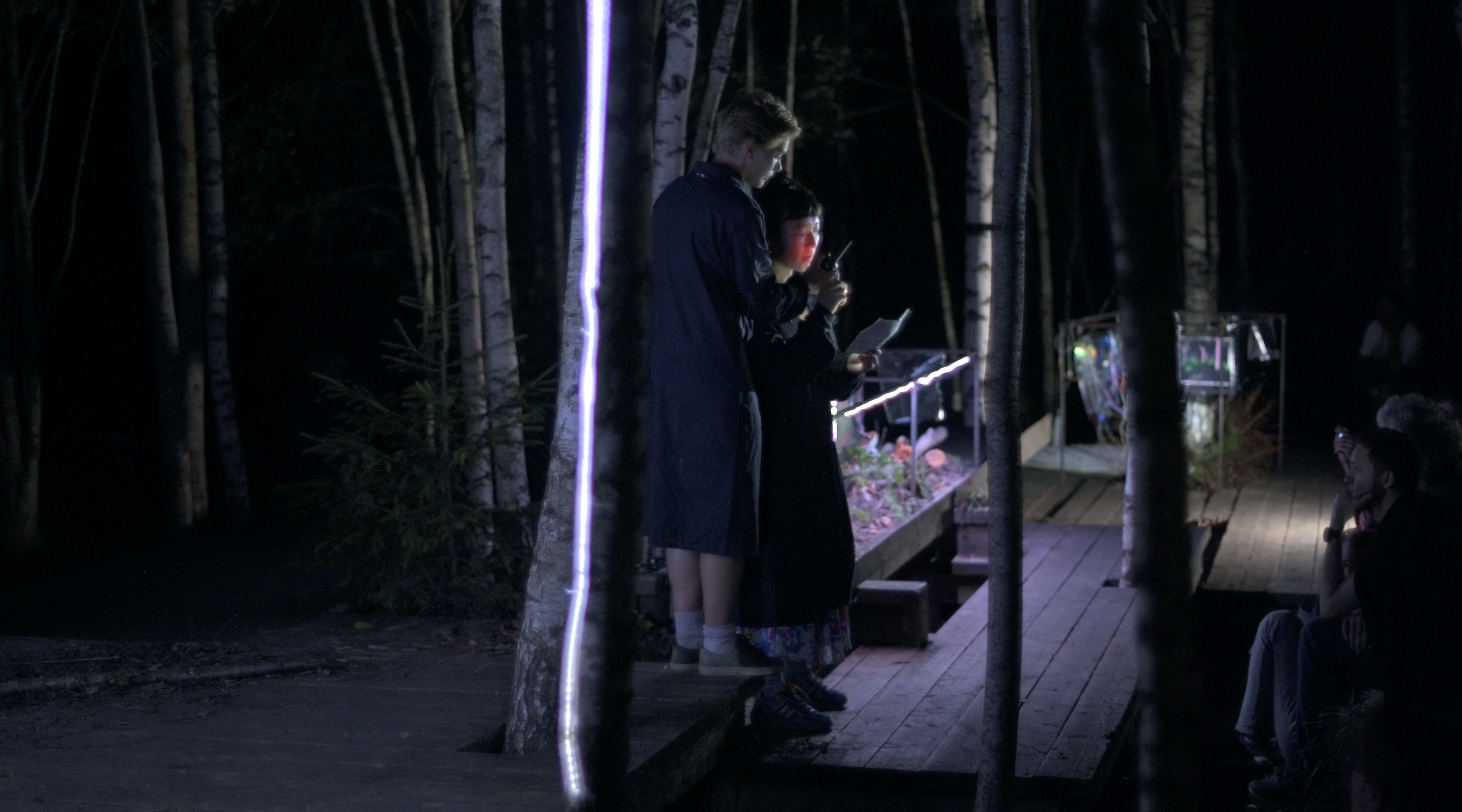

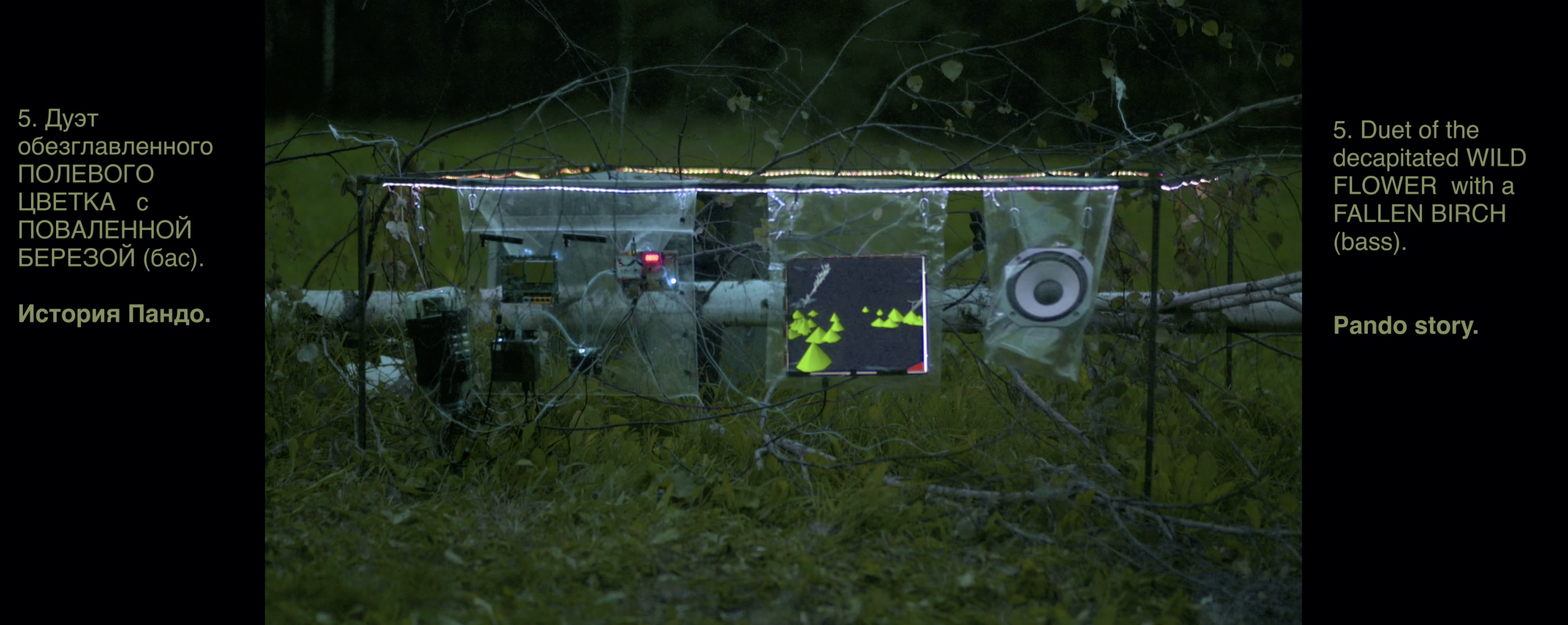
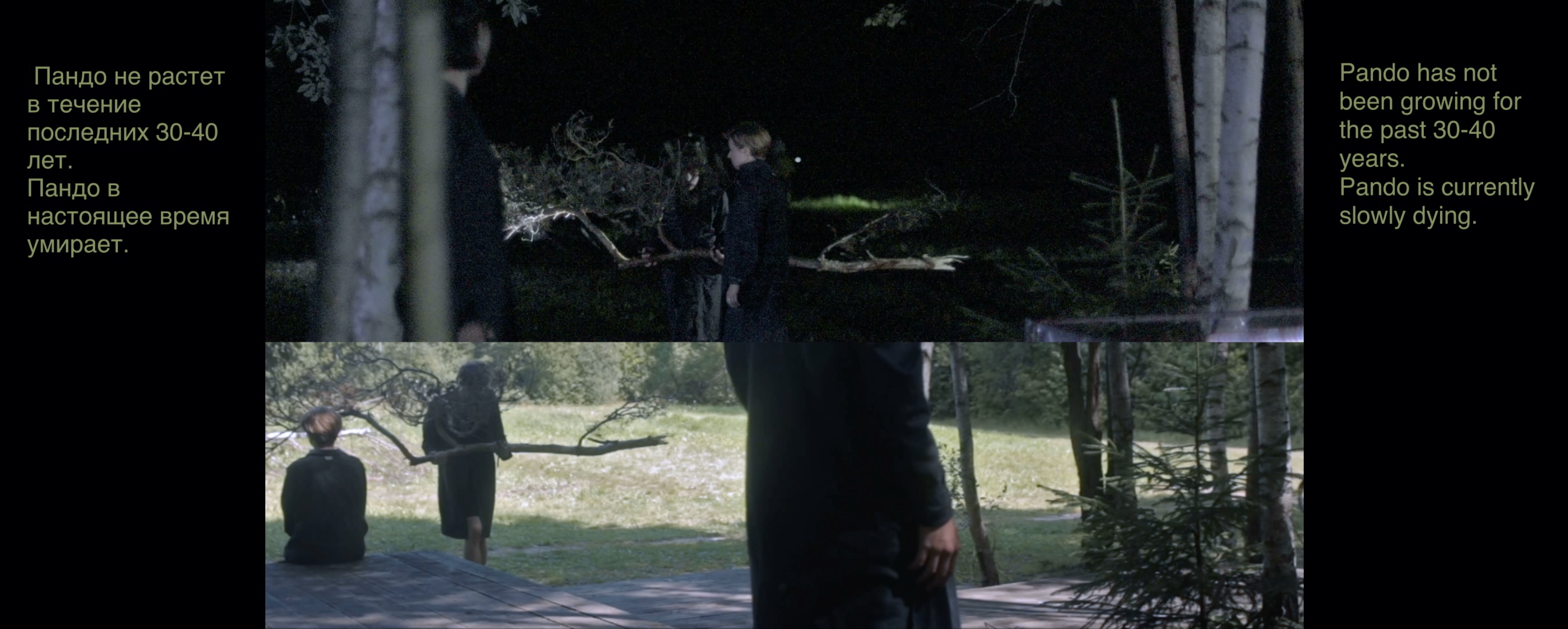
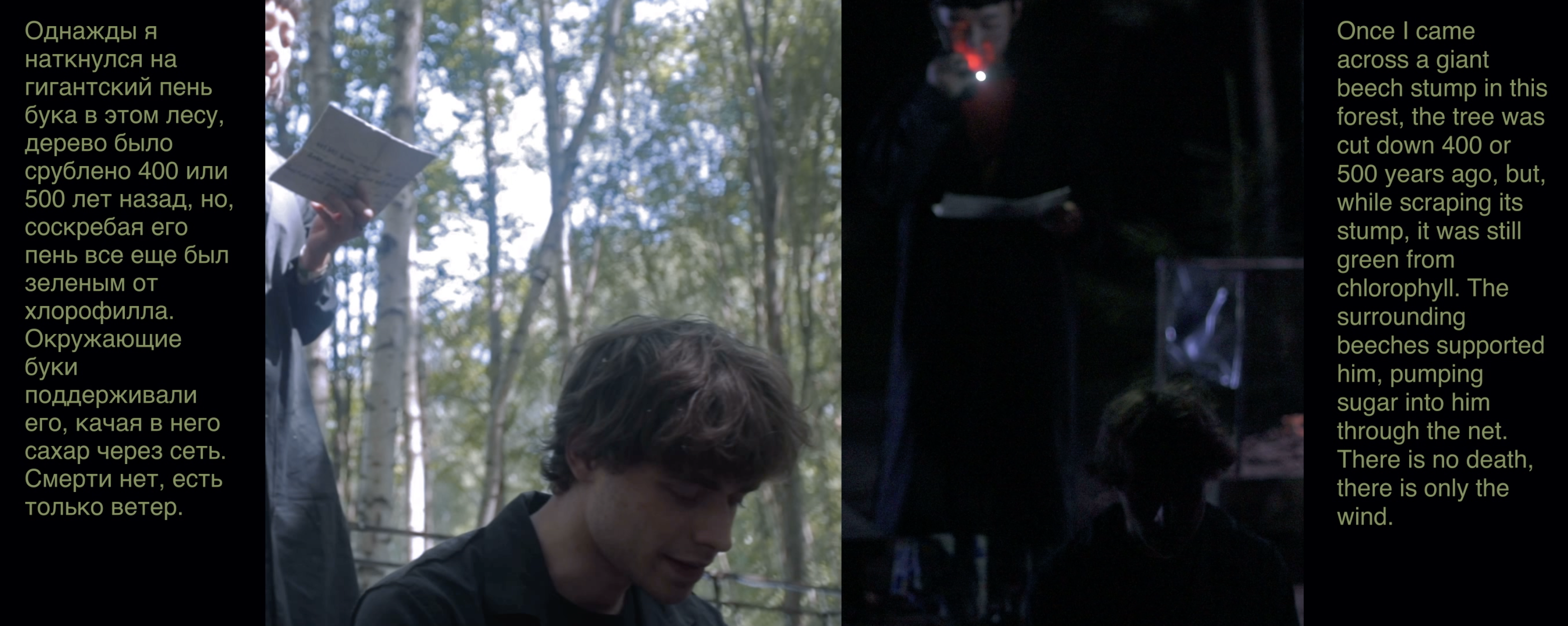

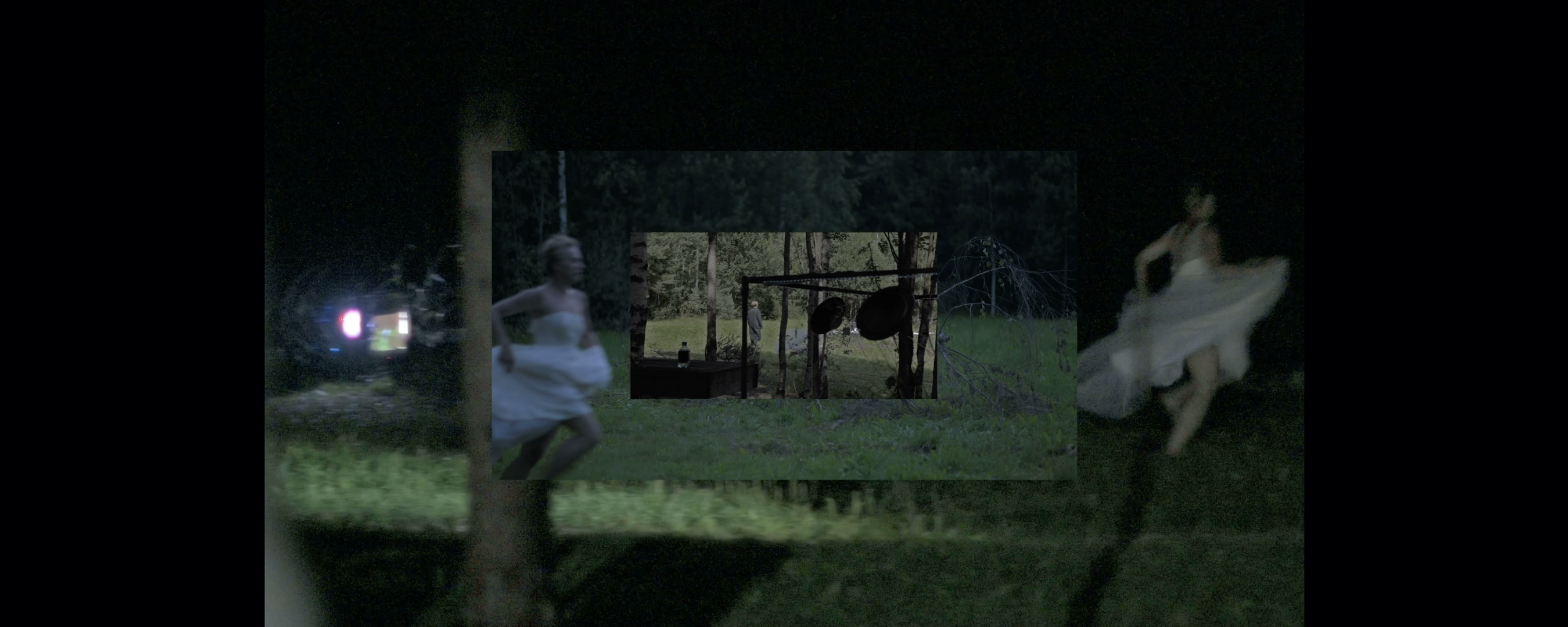
Plant opera, transdisciplinary transfloristic project taking form of performance and installation
[2019, Russia/France]
collaboration as stage director, designer, concept creator
plant-opera.com
An interdisciplinary science-art project that believes in transflorism (analogy to transhumanism).
We are translating plants, giving them voice, ability to write and even create images.
1st edition – Kalt Strasbourg prototype
2d edition – Opera of/for plants, Moscow
3d edition – Tree opera (speed dating) plant-opera.com
ALICE

Alice
[2021, opera by Eloian Lovis Hubner, Jürgen Genuit and Kapitolina Tsvetkova]
stage design, stage direction, creation of scenic installation / musical instrument
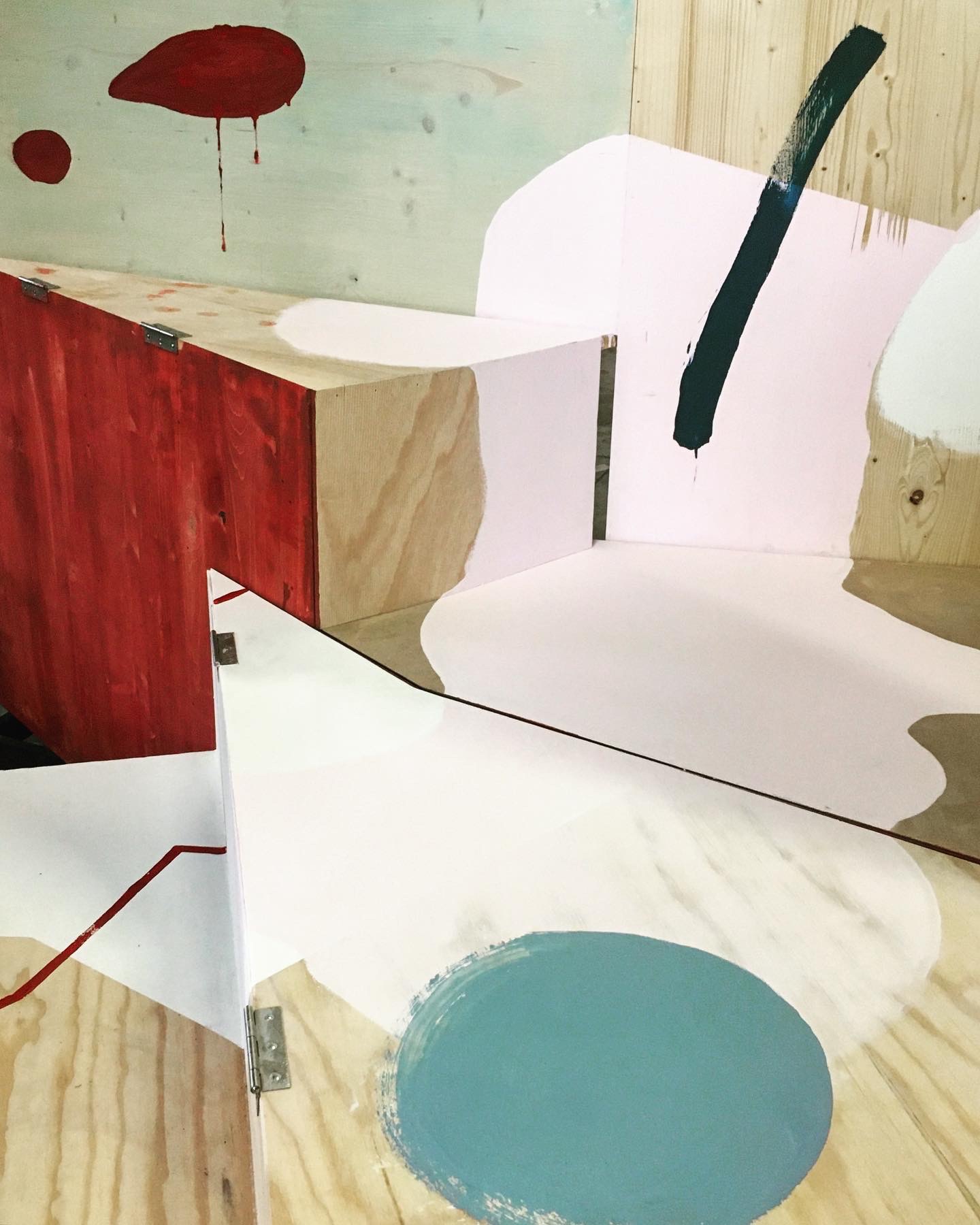
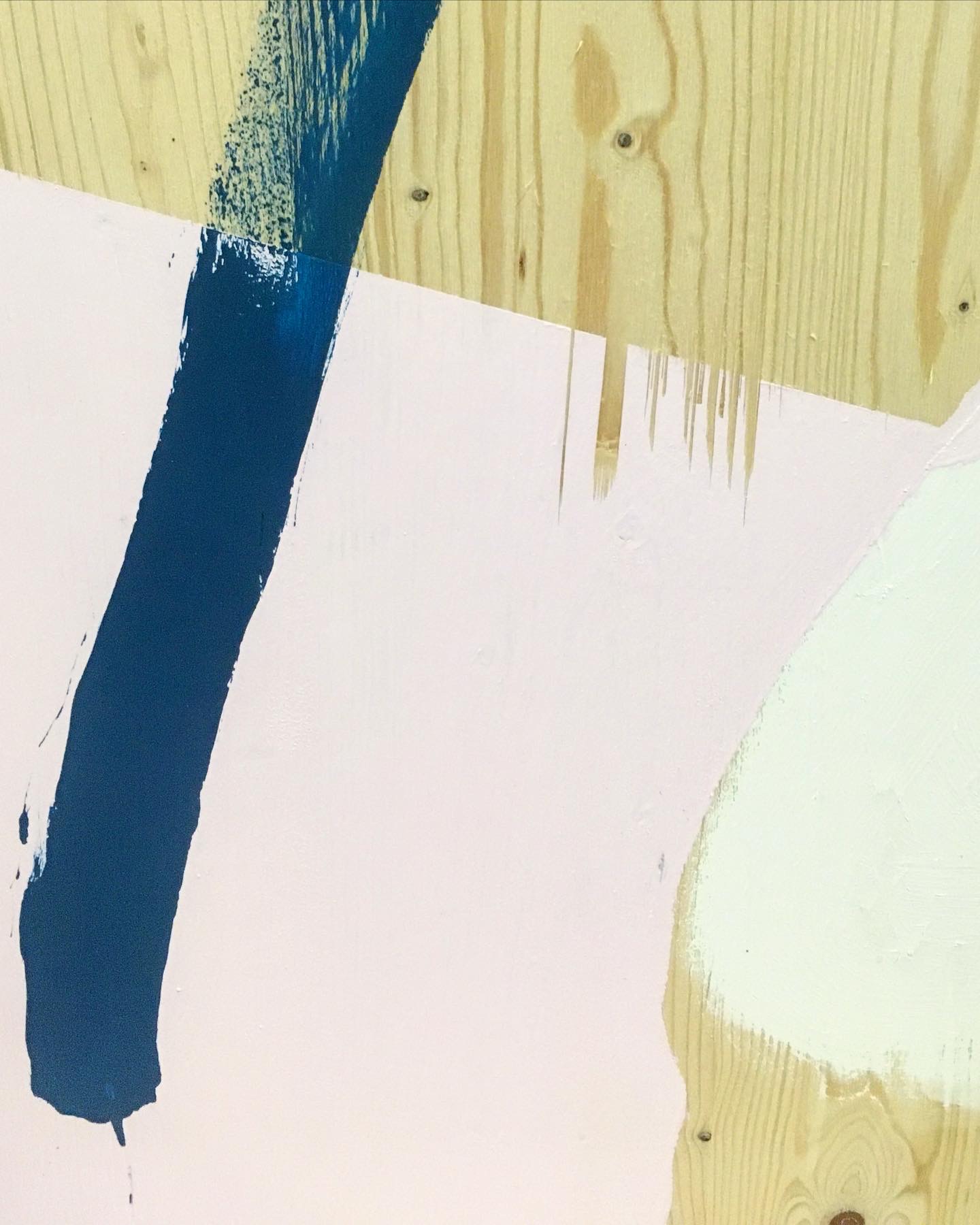
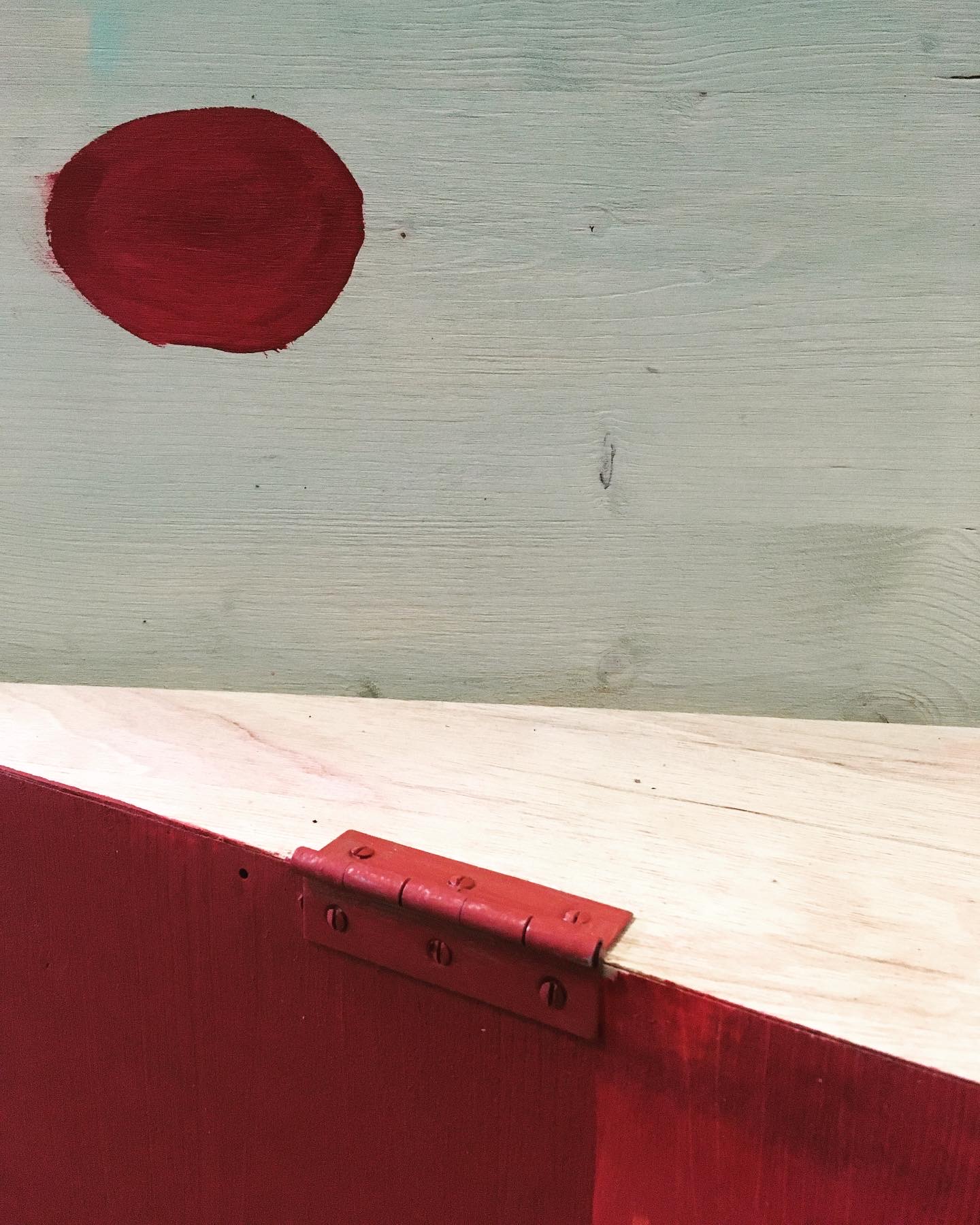
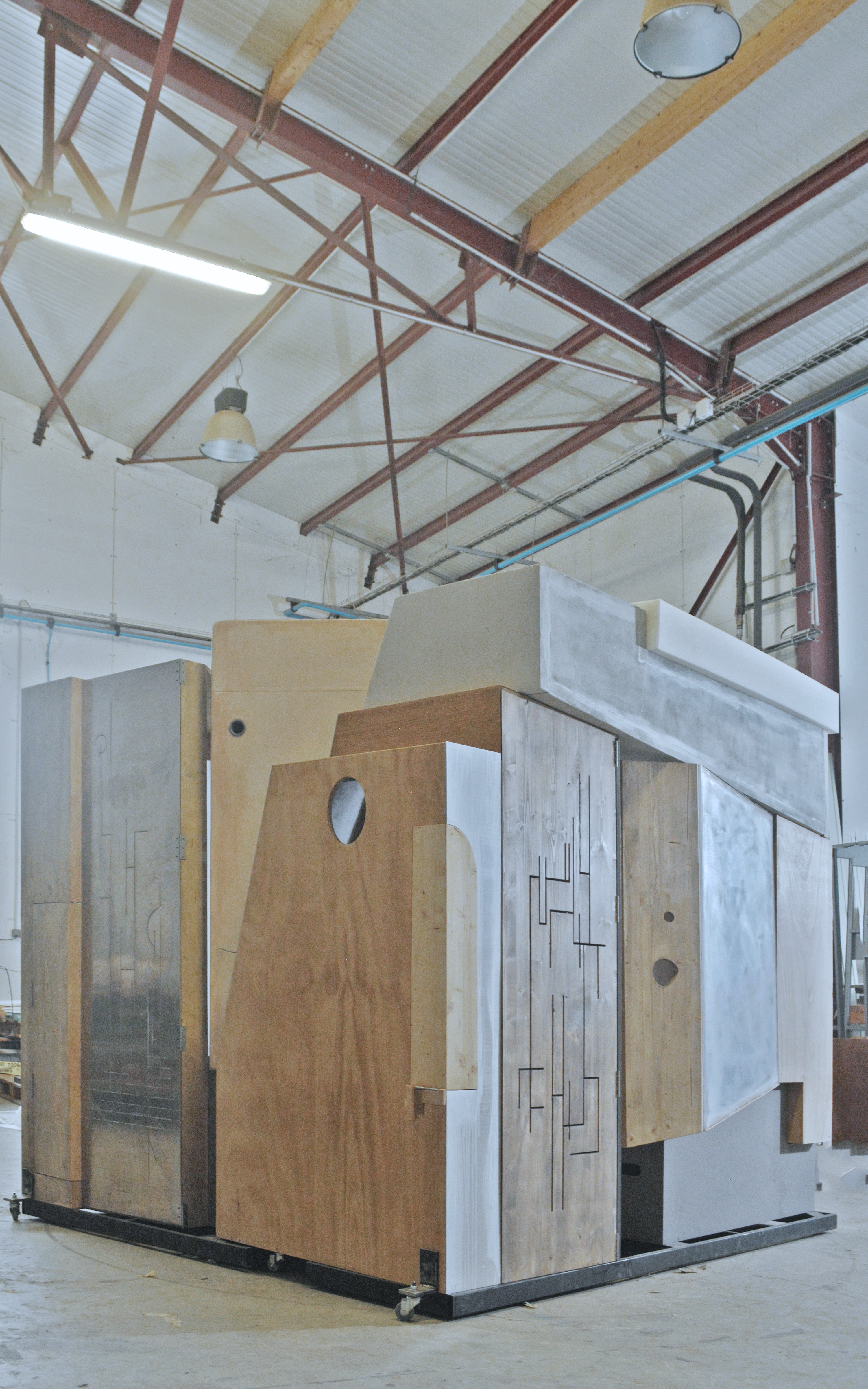
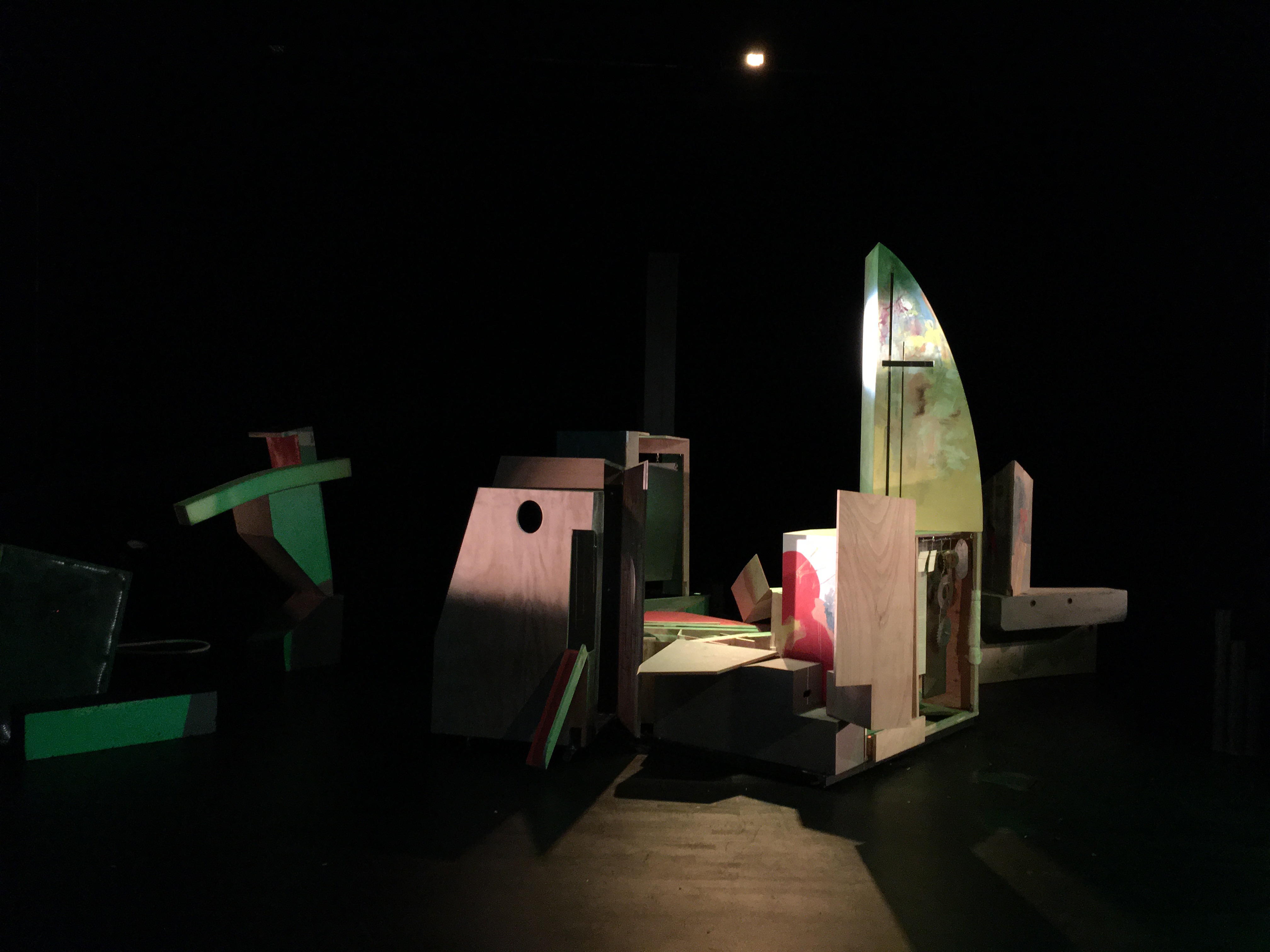
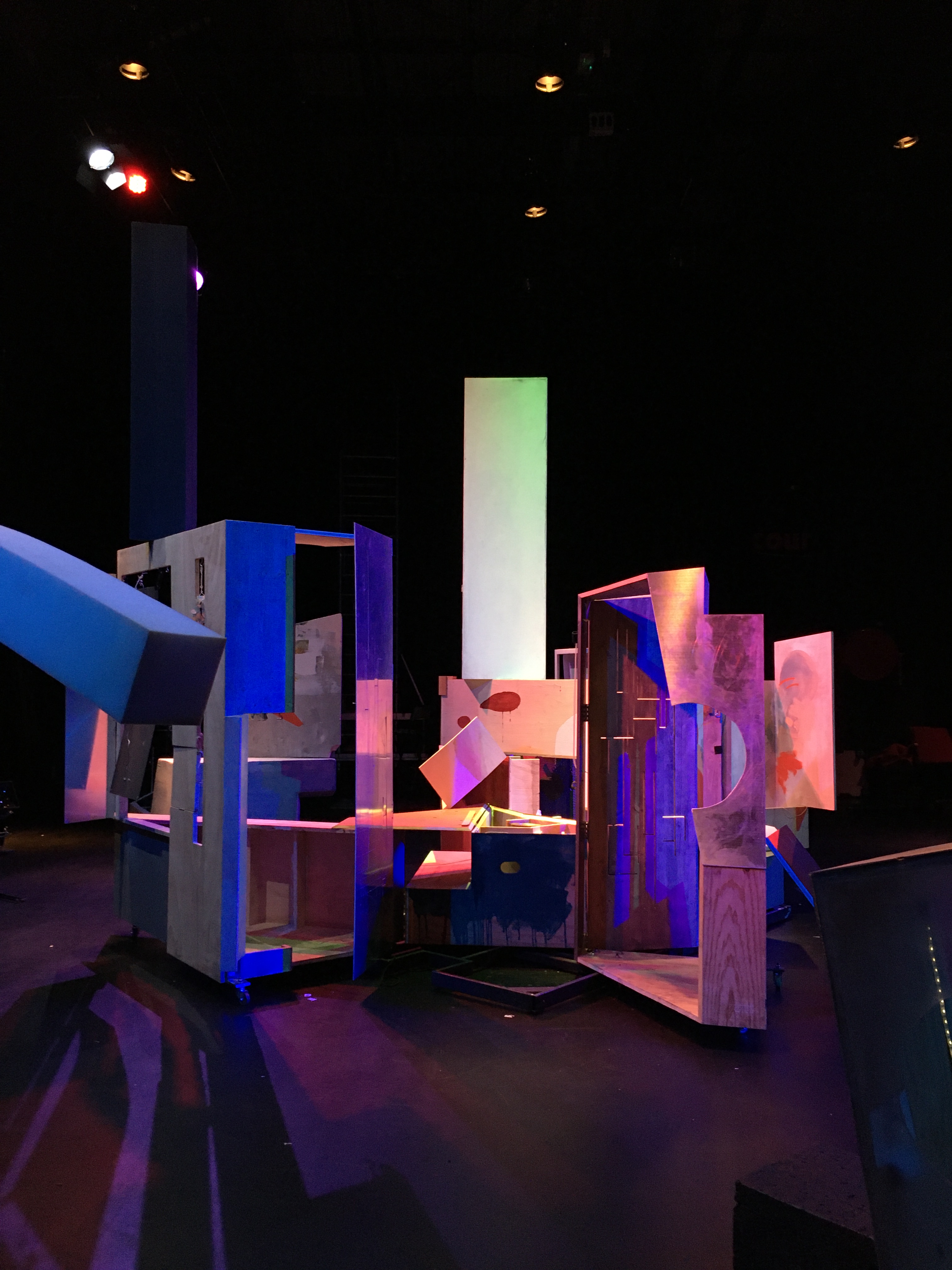
2m * 2m * 2m cube composed of multiple complex materials chosen not only by their visual and tactile qualities but mainly acoustic and sonic potential. The form unravels into a grand installation that is an instrument for an ensemble, costume, stage, character and space itself at the same time.
Commission of Hanatsu Miroir with support for Lumideco and Impuls festival.
The turn of the screw
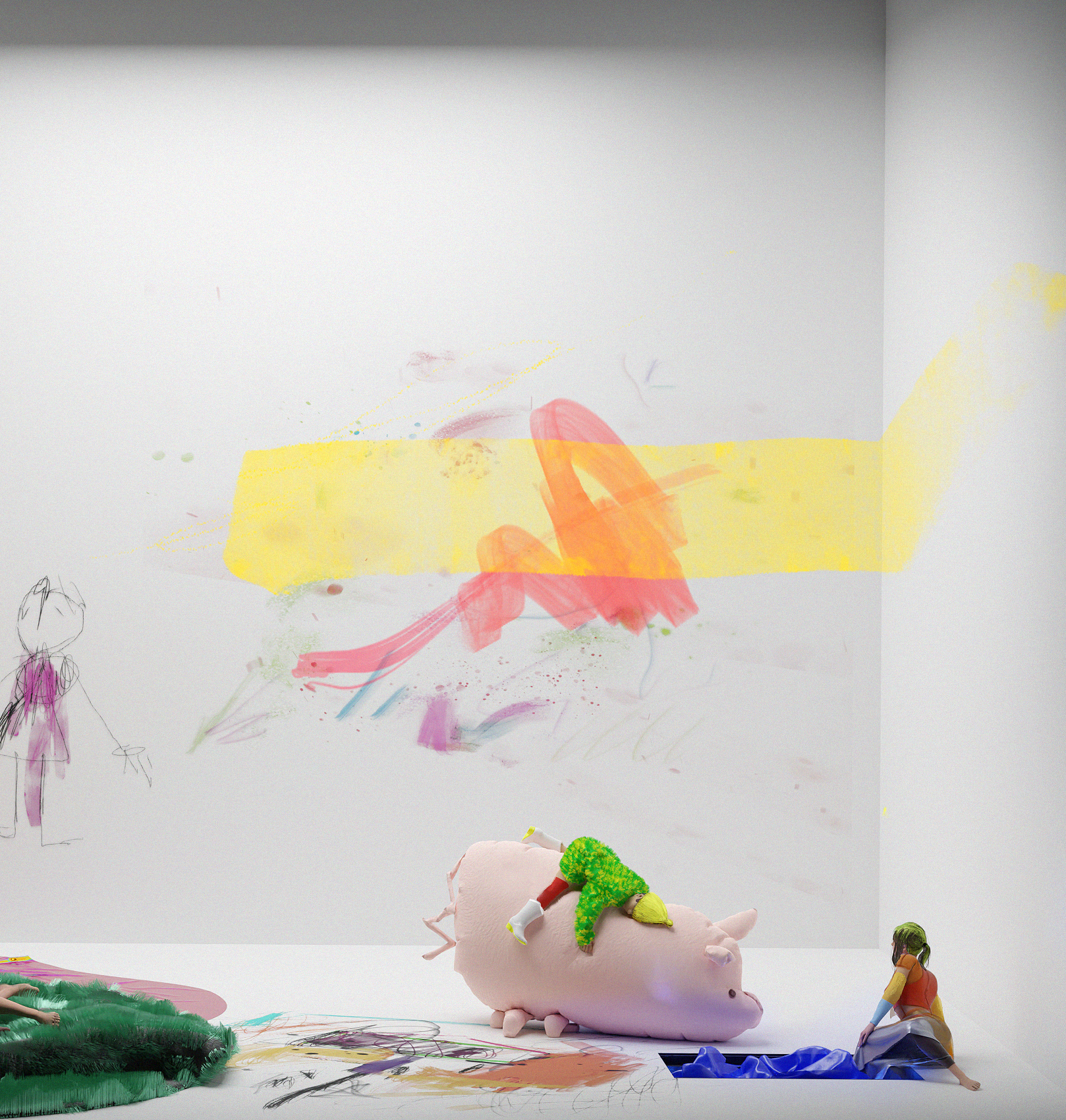
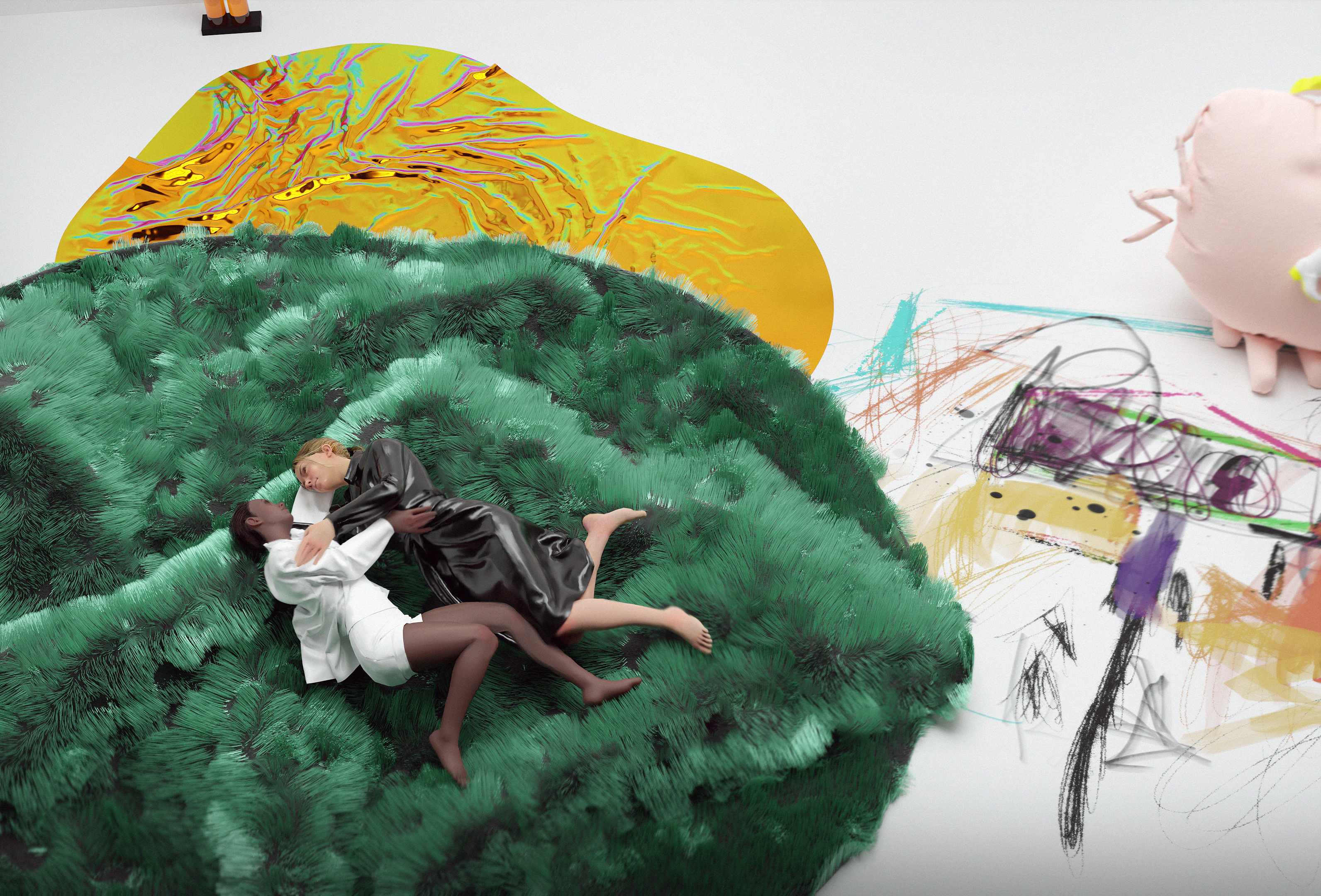
[scenography and staging concept for “The turn of the screw” by B.Britten; visualized by L.Rowell]
The notion of fear and dread has shifted in our new society post-war, post #metoo, post #blacklivesmatter, post covid19 and facing the truth turns out to be scarier than any mysterious ghostly legend like that of the turn of the screw. The truth that speaks of inequalities, social pressure, abuse and issues of juvenile jurisdiction.
She wonders about the way in which the psychology of children evolves under the pressure of contemporary society and the decisions of adults. How it abuses them, deforms them, irreversibly hurts them and ultimately destroys them. They enter the machine of the system which ends up consuming them completely.
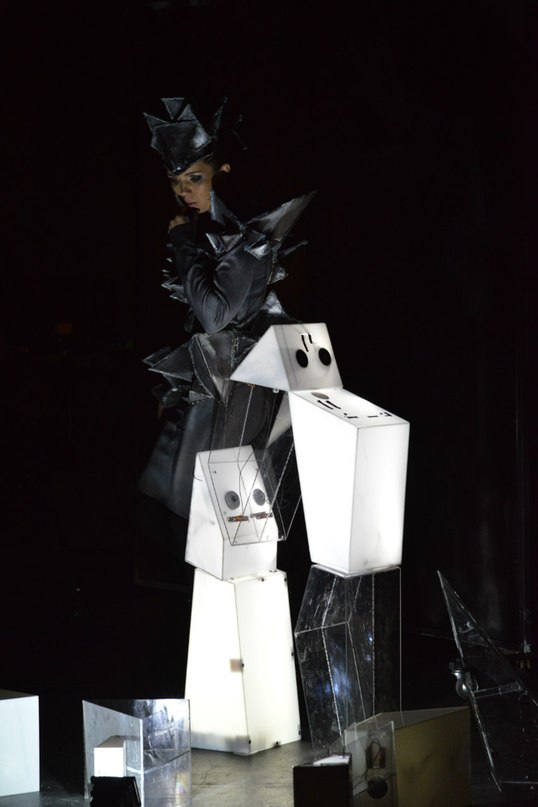
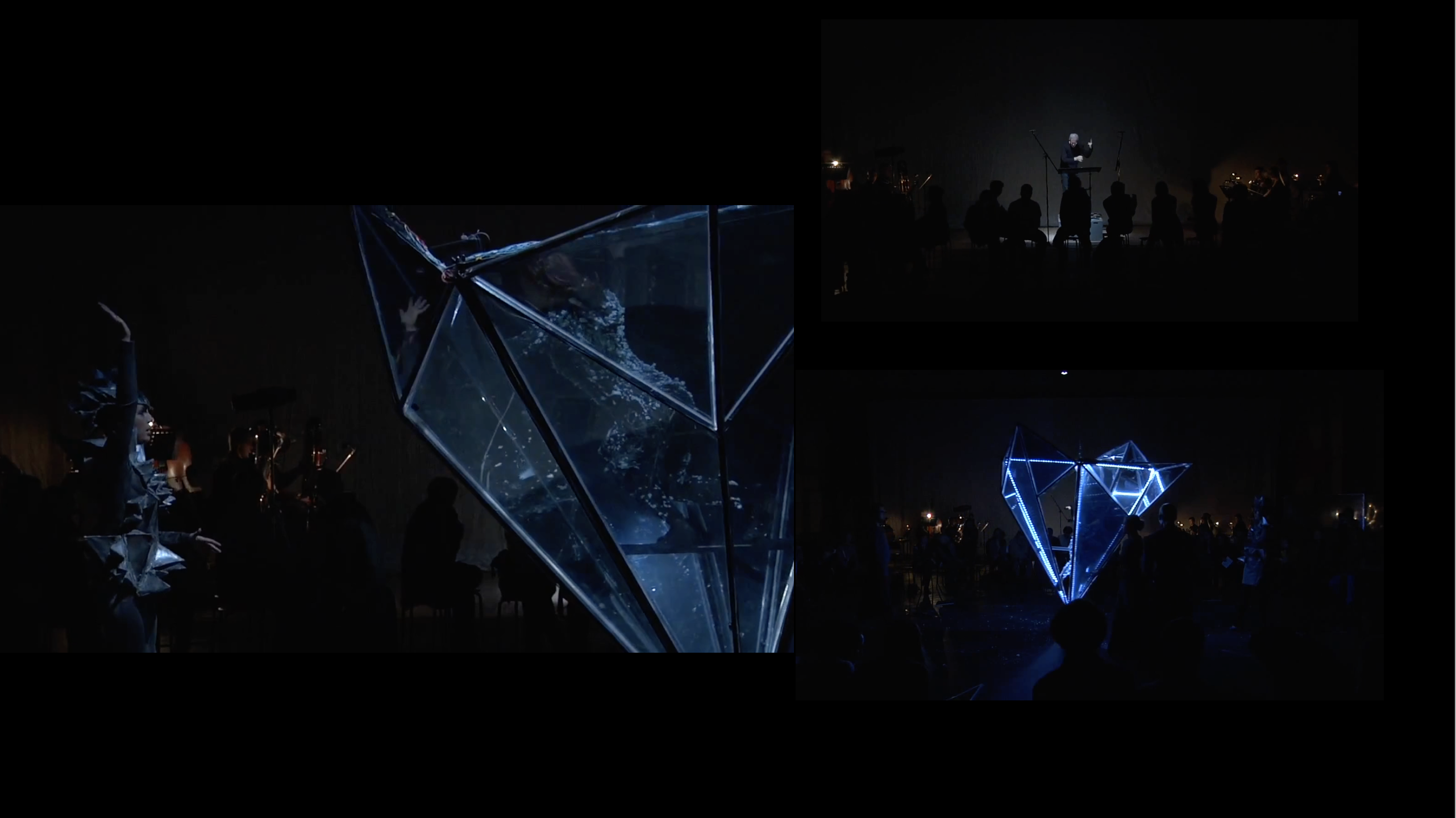
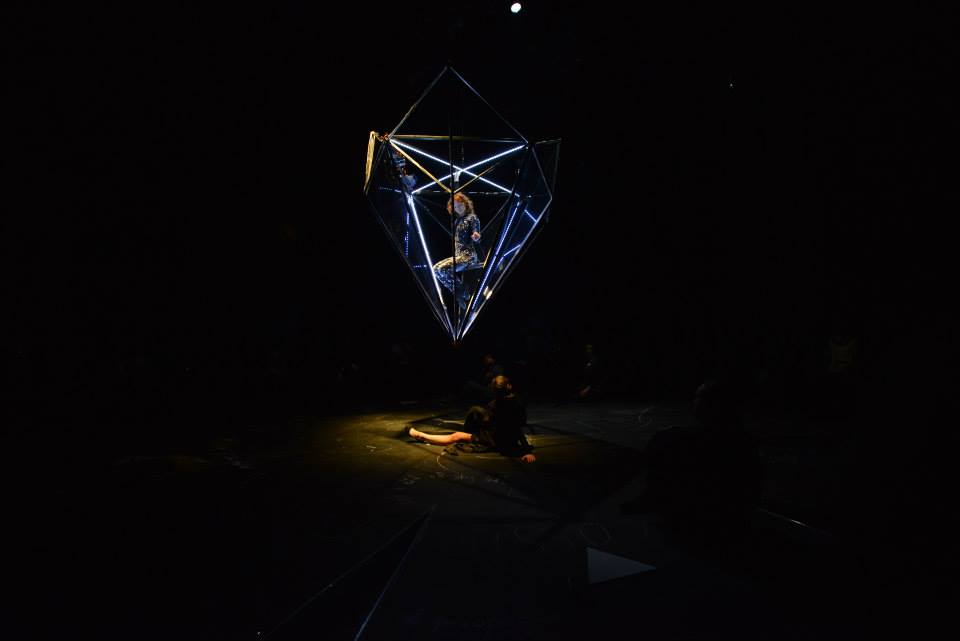
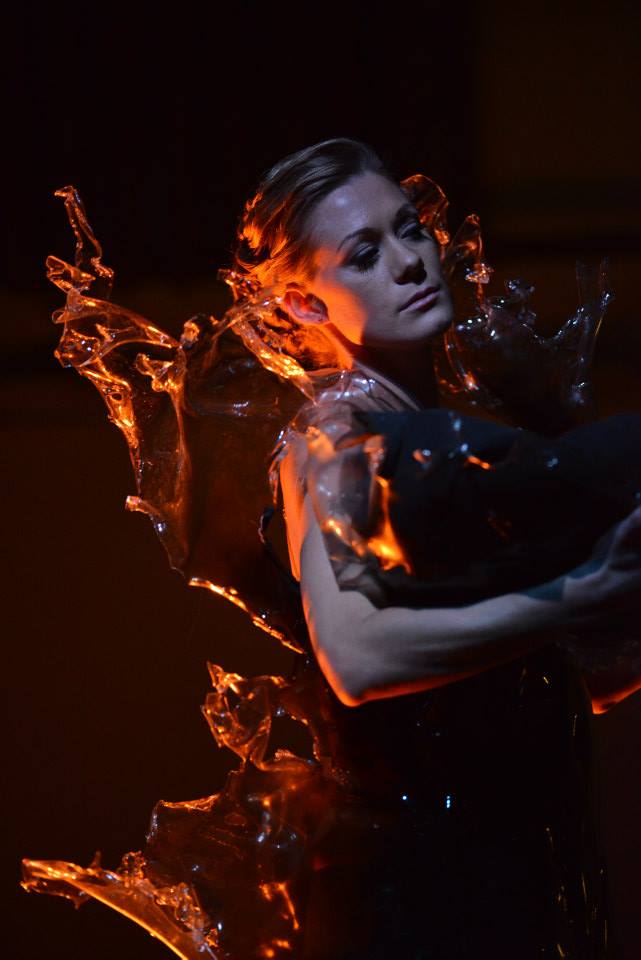
ASTEROID 62
WUP4

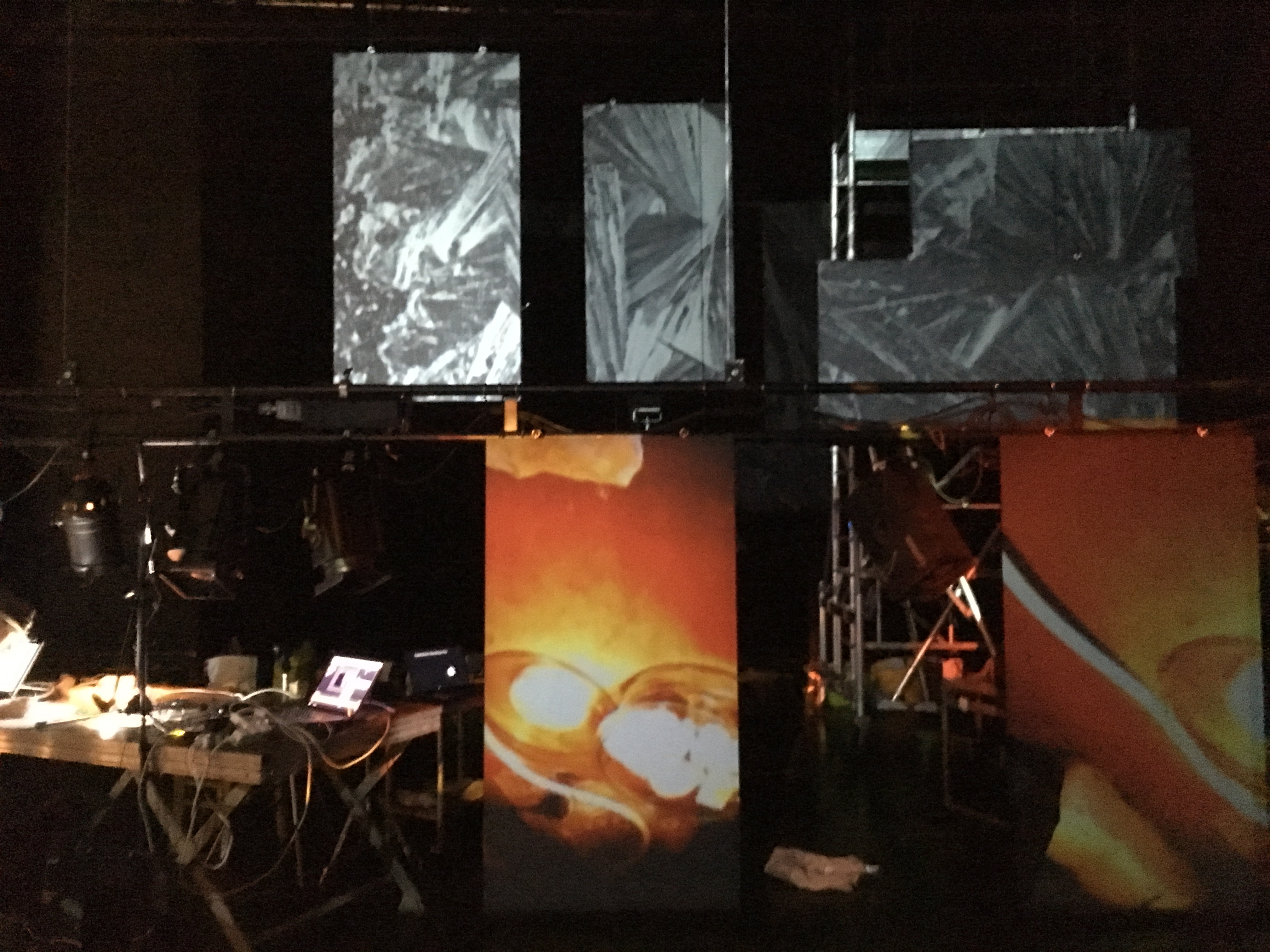
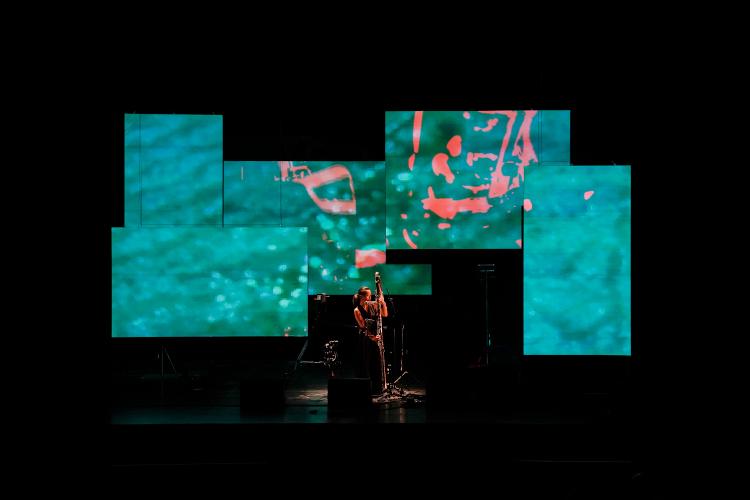
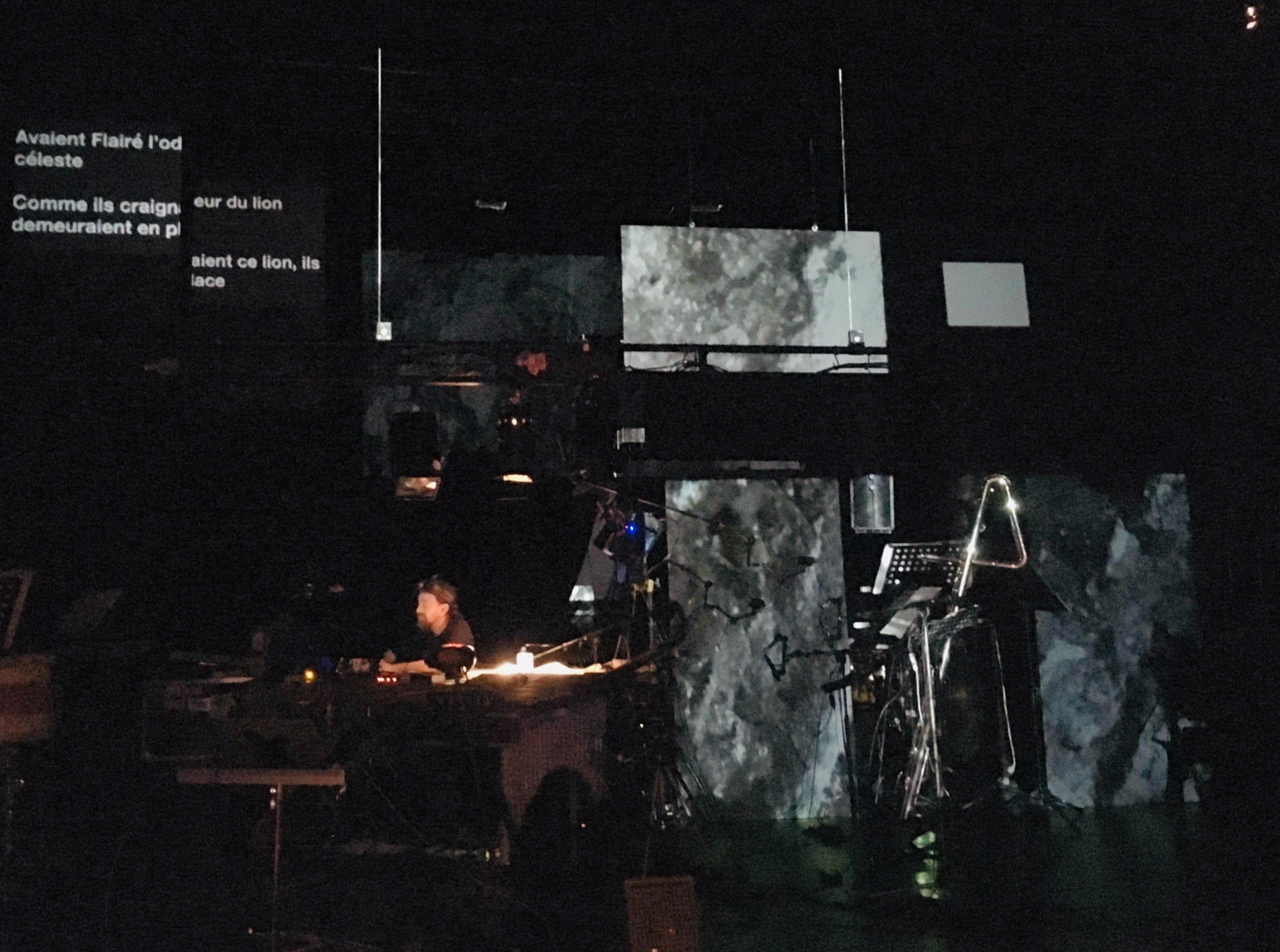
WUP4, music theatre performance
[2019, Space K, Strasbourg]
set design, video
Moving screen panels form different shapes and spaces for each part of the performance. On the stage are openly installed the light control, show call and chemical laboratory, running the show live in front of the spectator. Each piece is associated with one Petri dish that is turning to a complex and massive world through numerous live cameras and microscopes.
Collaboration with HANATSU mirror ensemble.
OBJECTARIUM

Objectarium, a musical theatre of objects by Michael Maierhof
[2015, OperaLab Berlin]
stage director, stage designer
Anthropologists believe that the decisive step in the evolution of man took place when our ape ancestors began to use tools. At that moment, a new era dawned: the era of material things. But what if we give these things up? And what about music, our beloved form of expression, created by using things as well? What can happen without it? Phantom syndrome of object dependency and acknowledgement of actual relationships with the objects. Based on compositions by Michael Maierhof.
More on the page of the OperaLab Berlin
KOLODETZ
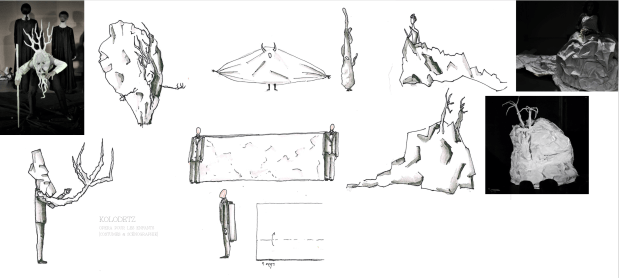
Kolodetz
[2016, Mariinsky theatre, St.Petersbourg]
stage director, stage designer
Opera by Svetlana Nesterova is based on a Ural legend about the magical lady Sinushka giving riches. The production was echoing the social and political situation of governmental corruption in Russia, terroristic attacks during the production period, as well as the structural and bureaucratic and corruption situation inside the Mariinsky theatre structure. Production was forbidden in the way it was staged by the theatre direction before its premiere.
FISH AND BOAR
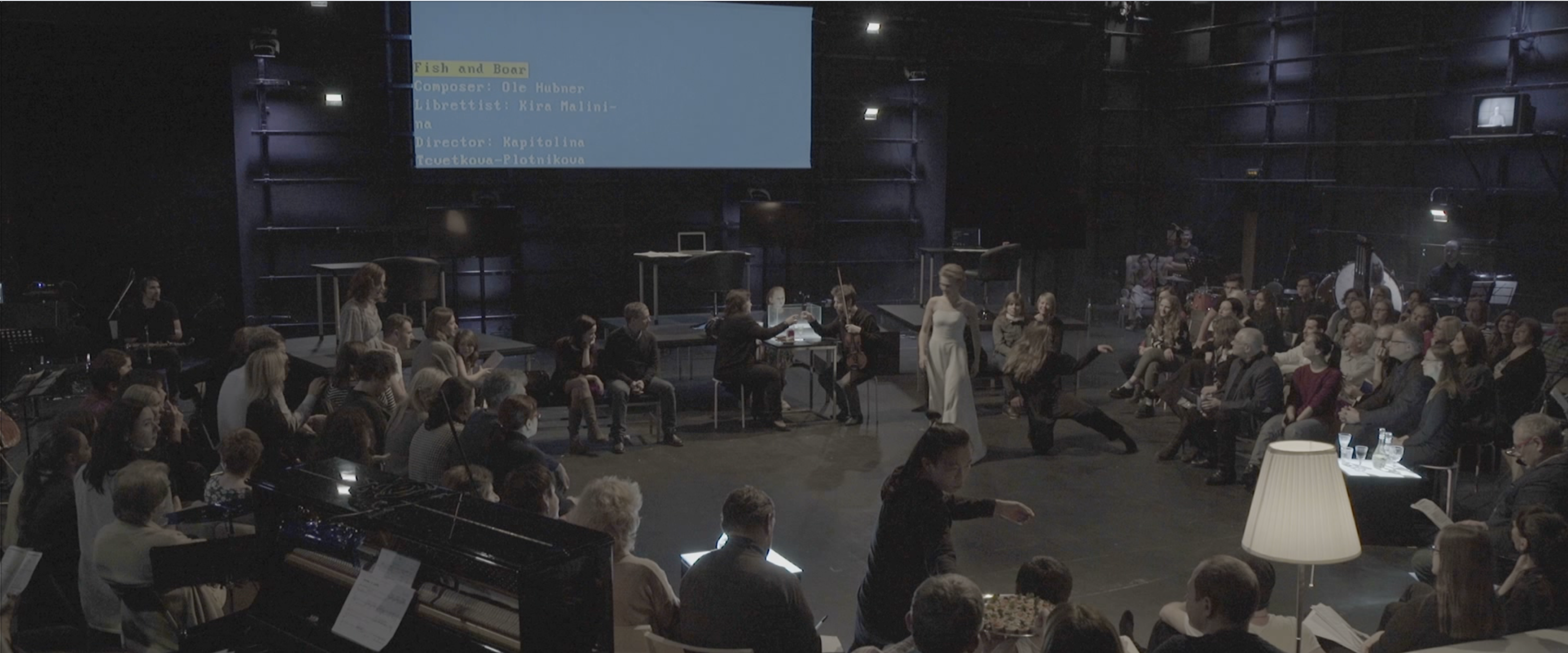
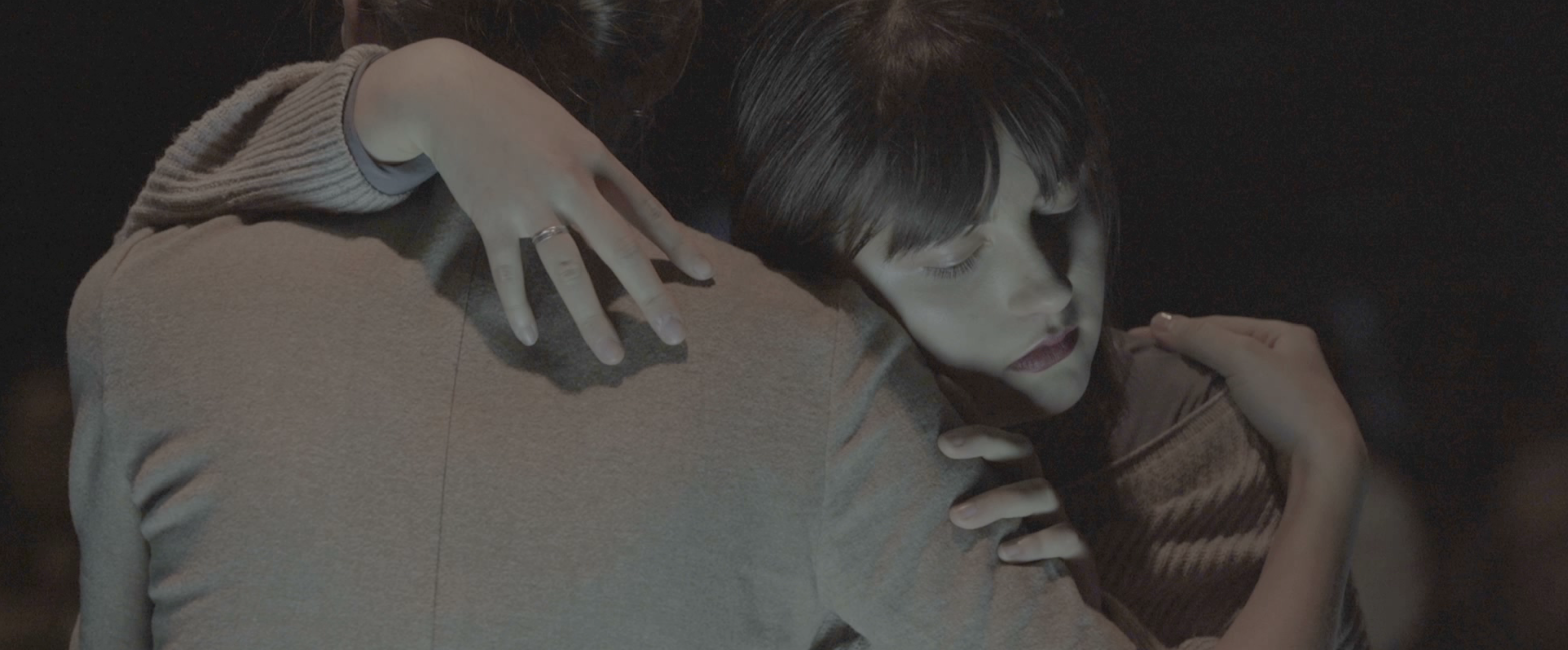

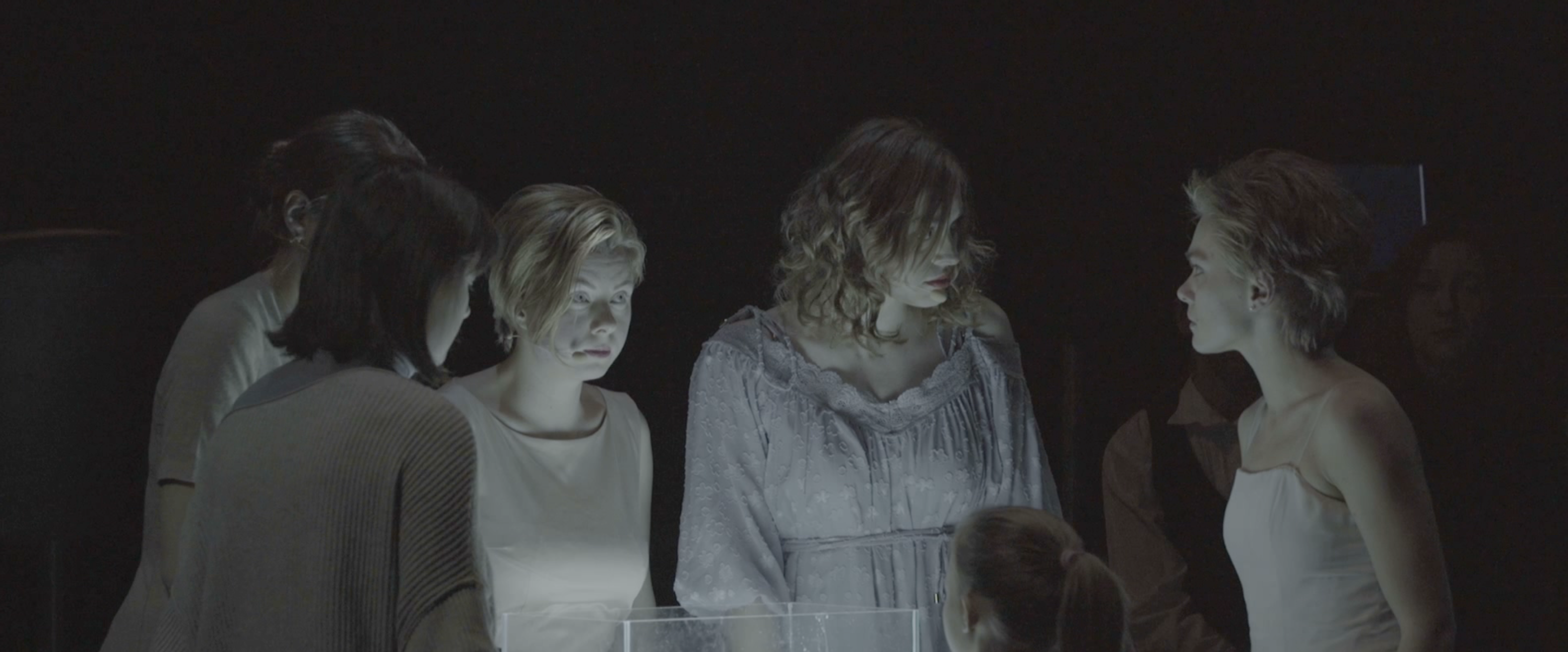
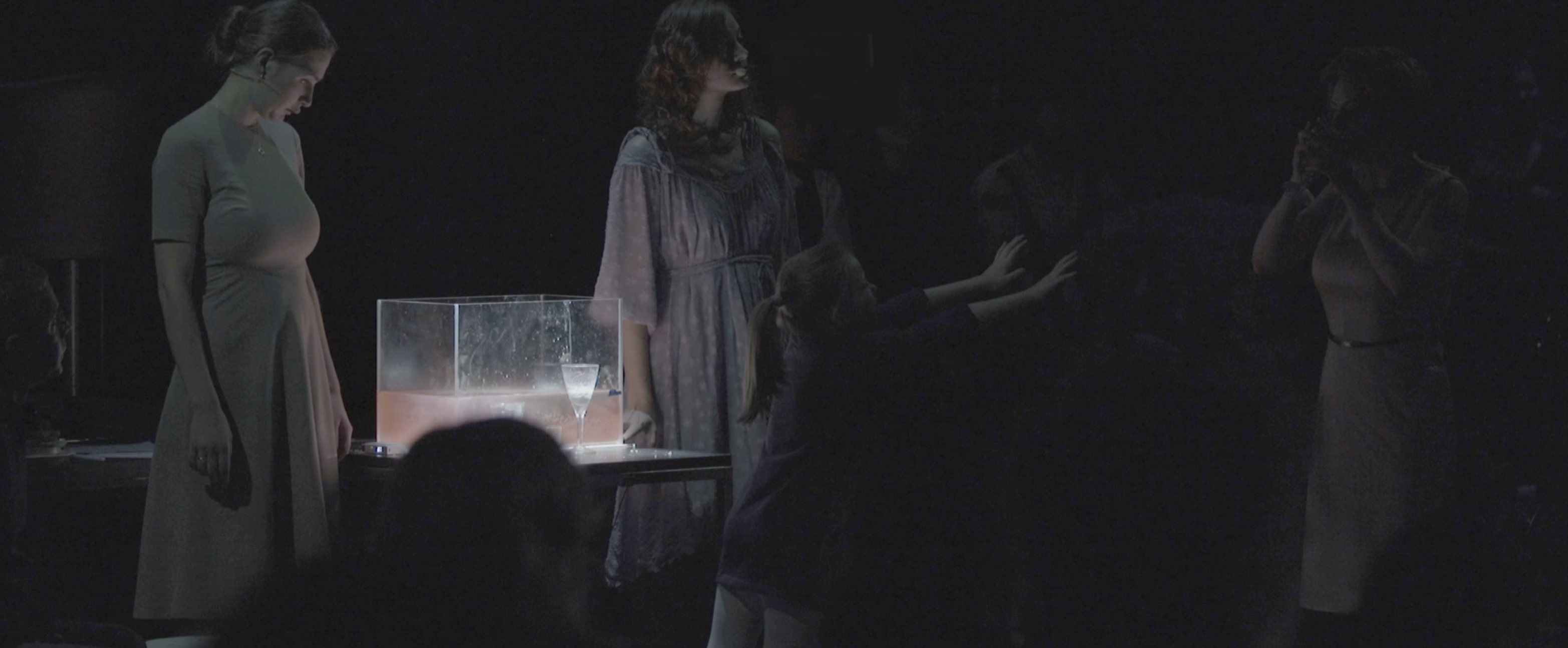
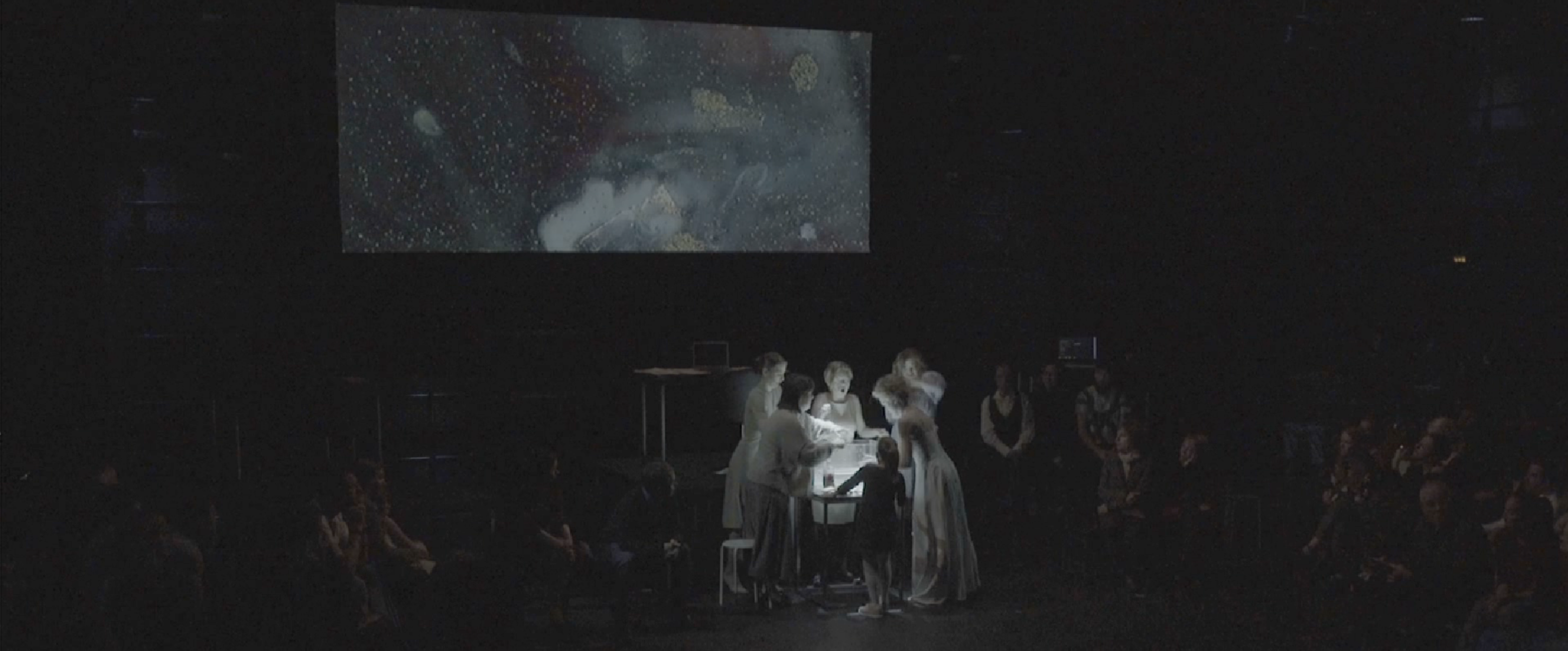
Fish and boar, opera by Ole Hübner, Kira Malinina and Kapitolina Tsvetkova for 4 non-genderized voices
[2018, Moscow State Stanislavsky Music Theatre]
stage director, set designer
Distance as a contemporary plague. Psychological, physical, linguistic, (senti-)mental, temporal gaps. It’s a phenomenon of intervals that keep us apart but paradoxically tie us together, creating volumes in between and relationships.
Distance is like water – an invisible volume separating us, but at the same time binding and embracing. It is crucial and essential to any object, being, space or relative. But, just as a line in Euclidean space, it can’t exist without at least two points. We are three points of many lines – here are our three distances.
LA VOIX HUMAINE
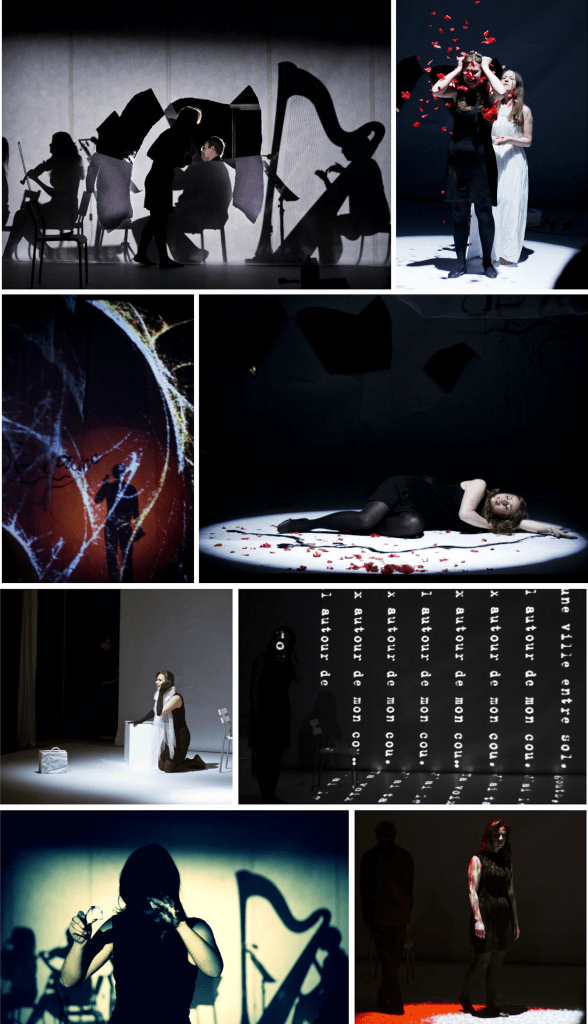
Voix humaine, F. Poulenc
[2012, PLATFORMA, Moscow, SKOROKHOD, St.Petersbourg]
stage director, set design
Human Voice was created in a way that allowed it to be performed in varying ‘non-operatic’ spaces, such as rooftops, exhibition spaces, or factories, in order to bring opera to the masses, and connect with the origins of public, current, and modern synthetic art.
Each show was unique for it’s setting. The premiere was performed on the roof of the Saint-Petersburg State Conservatory.
3d mapping / real-time cameras on radio helicopters and cars / 200 meters of paper / 3 kg of paint / orchestra / 1 singer / 3 actors, tonnes of team members, and lots of smiles
Talking of loneliness in the crowd, full privacy transparency this show is an hour-long solo of the performer founding herself one to one with her psychological problems and insecurities in front of a public and musicians.
Live spy cameras, shadow illusions, hallucinations, the story starts as a new white sheet of paper and ends in full saturation and destruction of the illusion world.
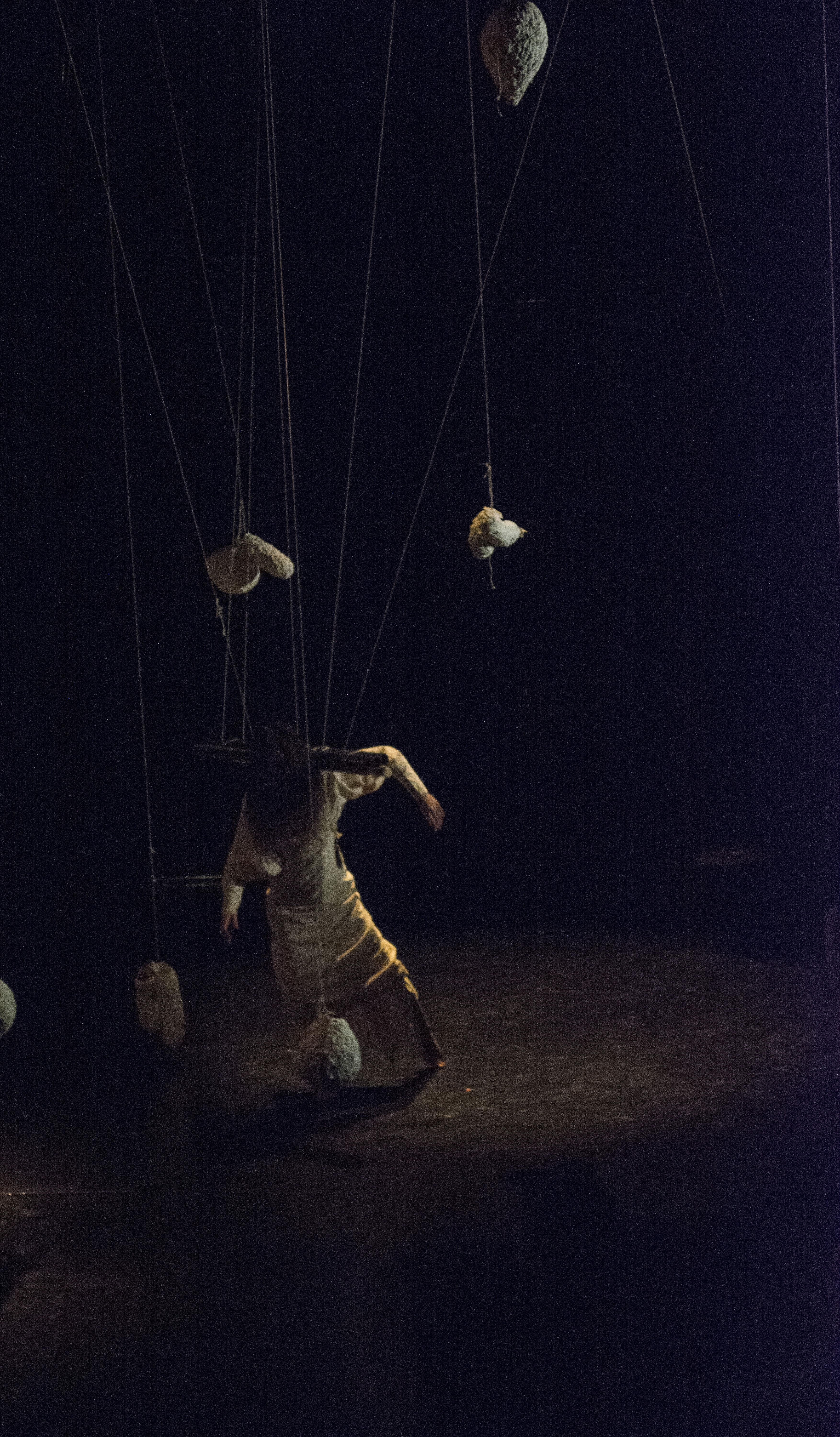
SA 4
[2019, Strasbourg, performance]
stage director, set design, olfactory objects, concept
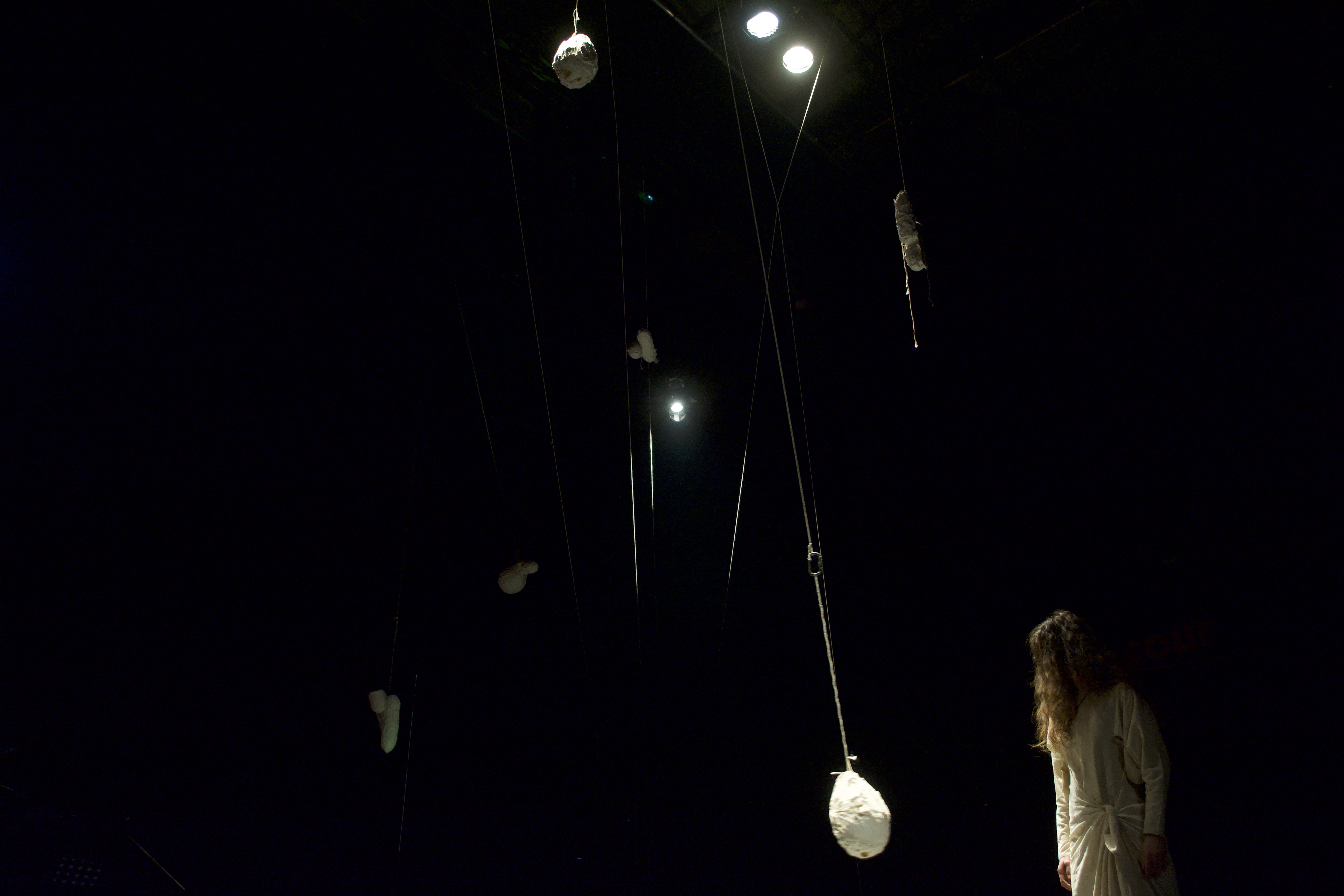
A performance created in collaboration with Hanatsu miroir and 4 Iranian con- temporary composers. A female performer comes as an odd ensemble member and becomes with her body language a speechless soloist, speaking of corporal suppression. The olfactory sense takes part of the narrative: the rainbow-like reflection overlaps with the smell of petrol and suspended objects fall-ing, creating explosions of smells, releasing symbolic Iranian olfactory references: spices, flowers, incenses, strengthened by heat of projectors.
She colours herself in red of saffron – scent of freedom and colour of courage.
La Serva Padrona, J.B. Pergolesi
[2011, St.Petersbourg]
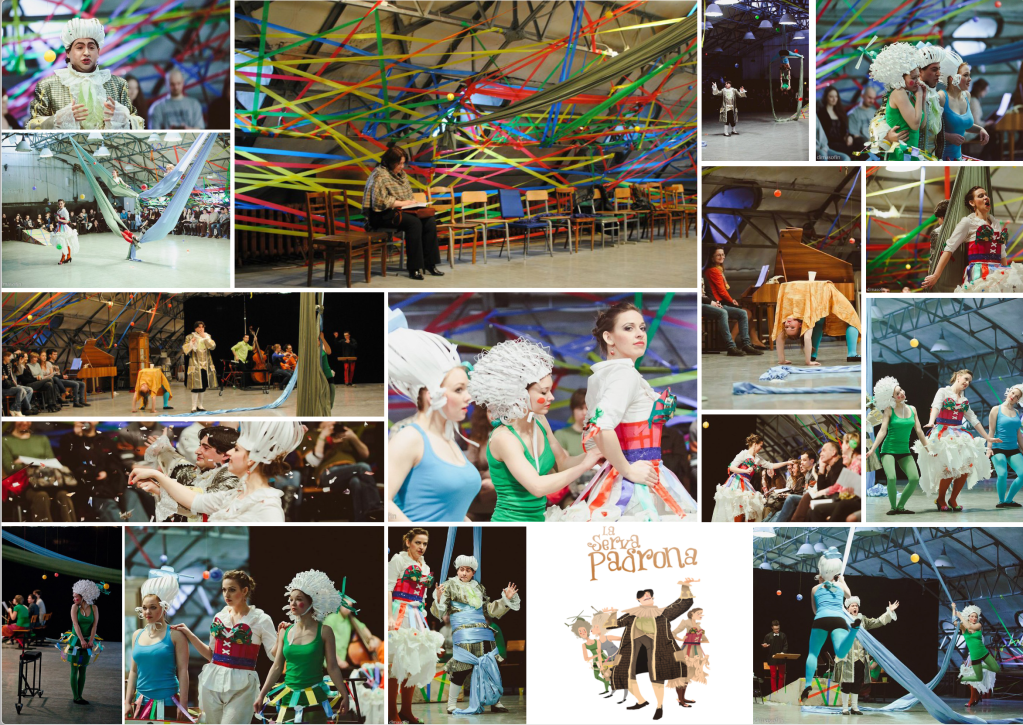
stage director, set design
Performed by Sofia Nekrasova (St.Petersburg Opera / Санктъ-Петербургъ Опера), Giovanni Romeo (Accademia Teatro alla Scala)
In collaboration with the circus company, this project was a deambulatory “recycling” theatre piece that was adjustable for various spaces and forms and was a contemporary revision of the principles of Comedia del Arte.

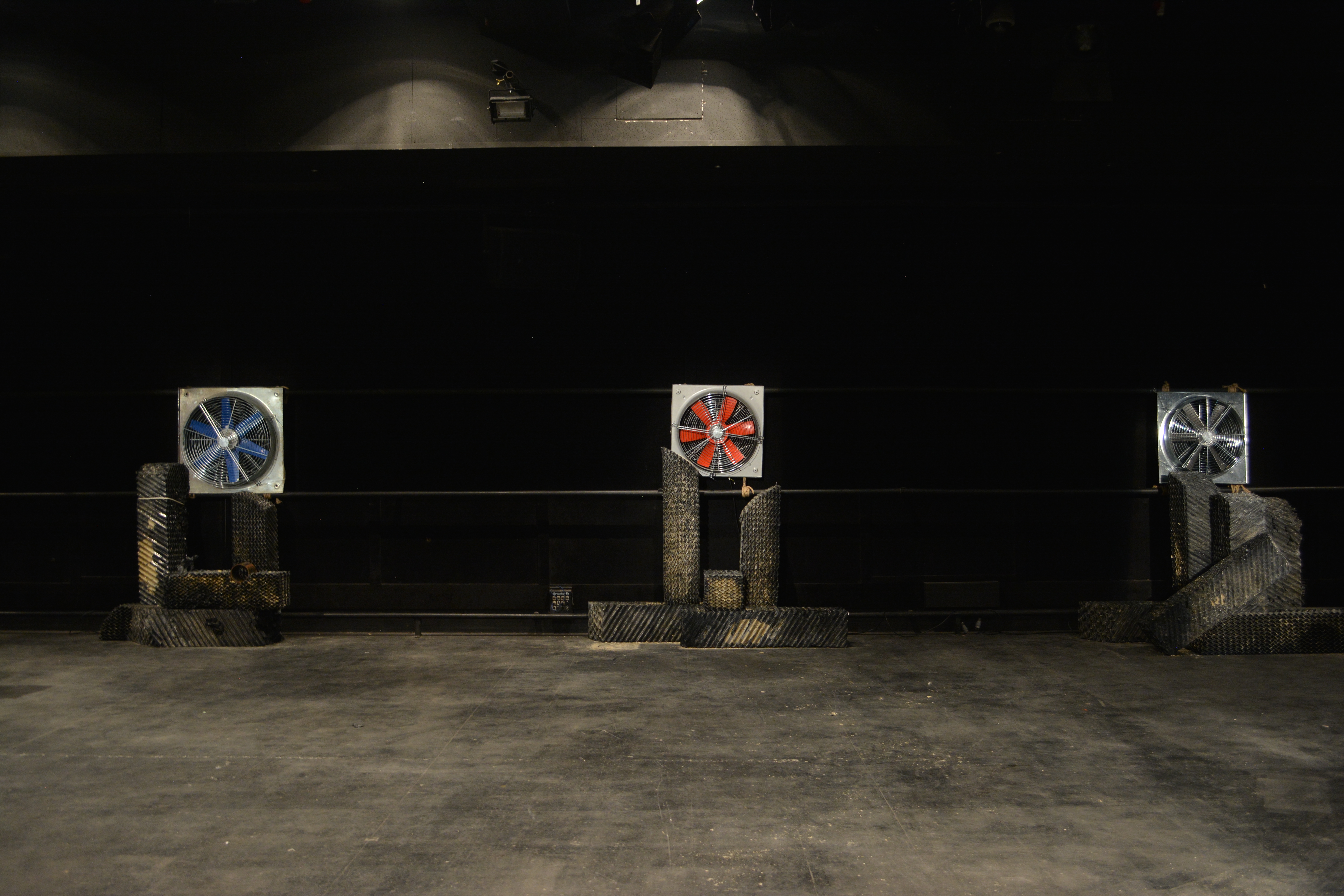
Public body
[2018, interactive performance, IIUTF 21th Iran International University Theatre Festival, Tehran, IRAN]
set design, performer
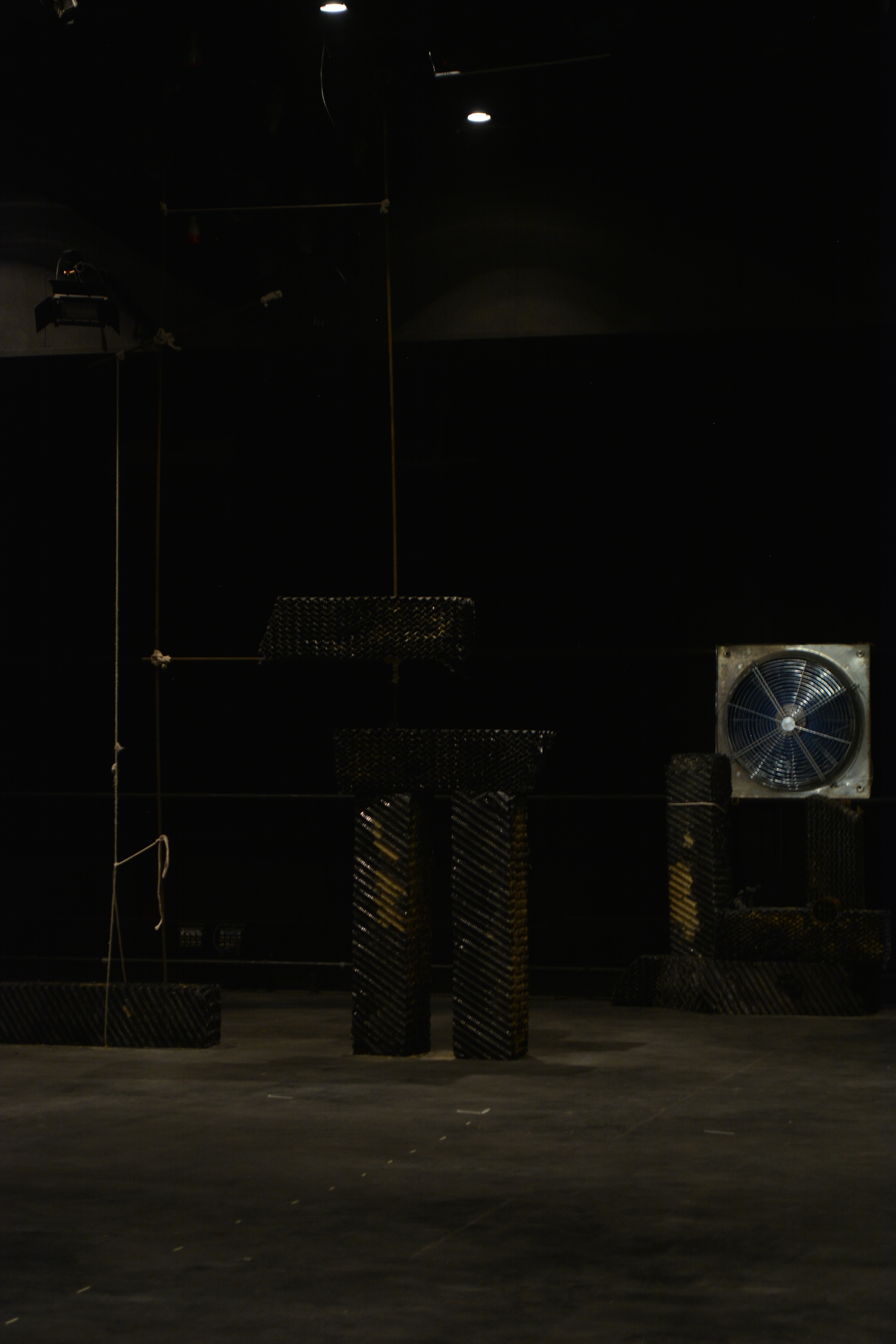
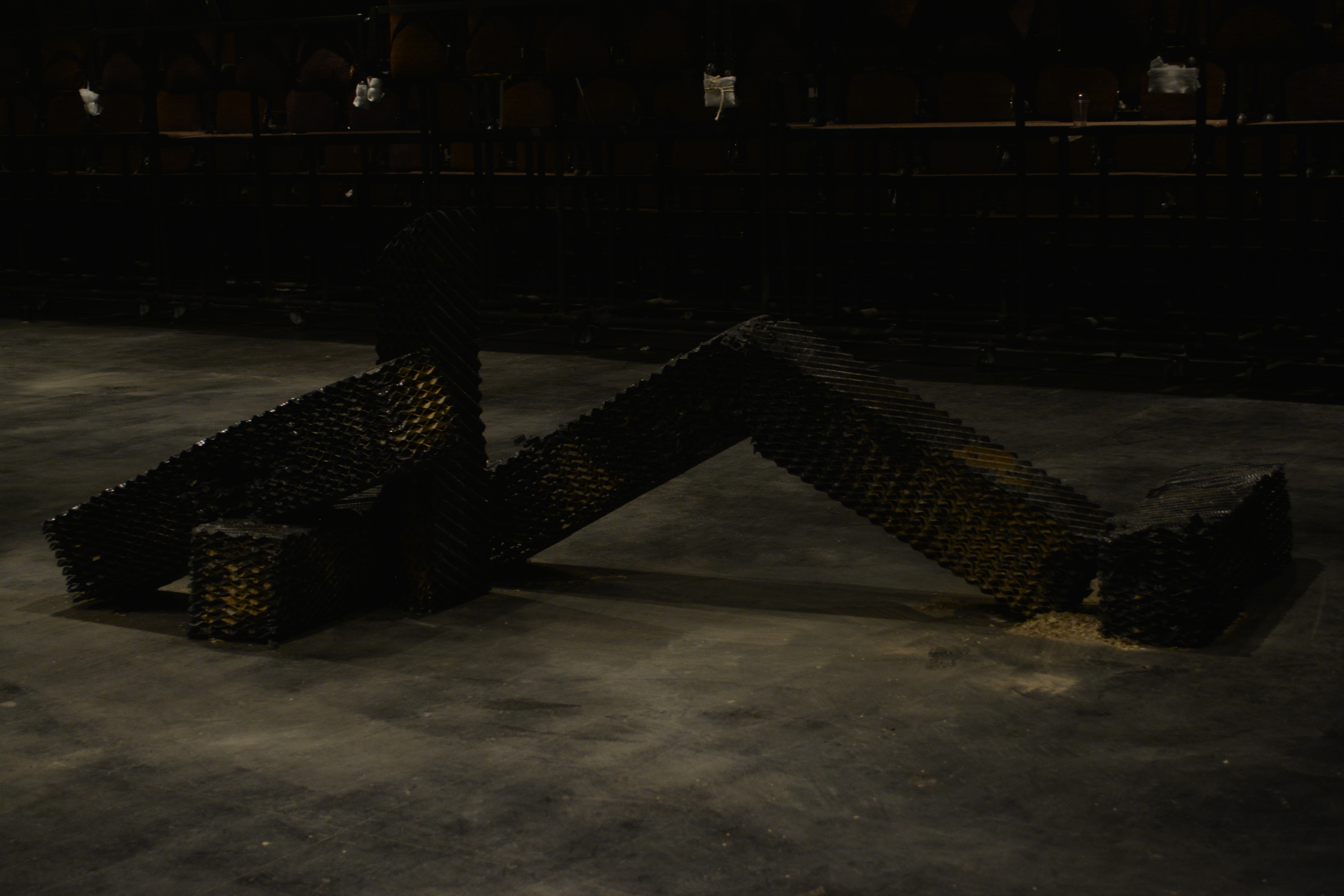
Following a 10-day workshop on attitudes and interactions of bodies in public space, we presented a performance bringing together all the participants. Hidden among the spectators, the performers allowed by their presence and actions to further blur the boundaries between public and private inducing or soliciting the reaction or even the participation of the spectators.
For theatre company Des châteaux en l’air.
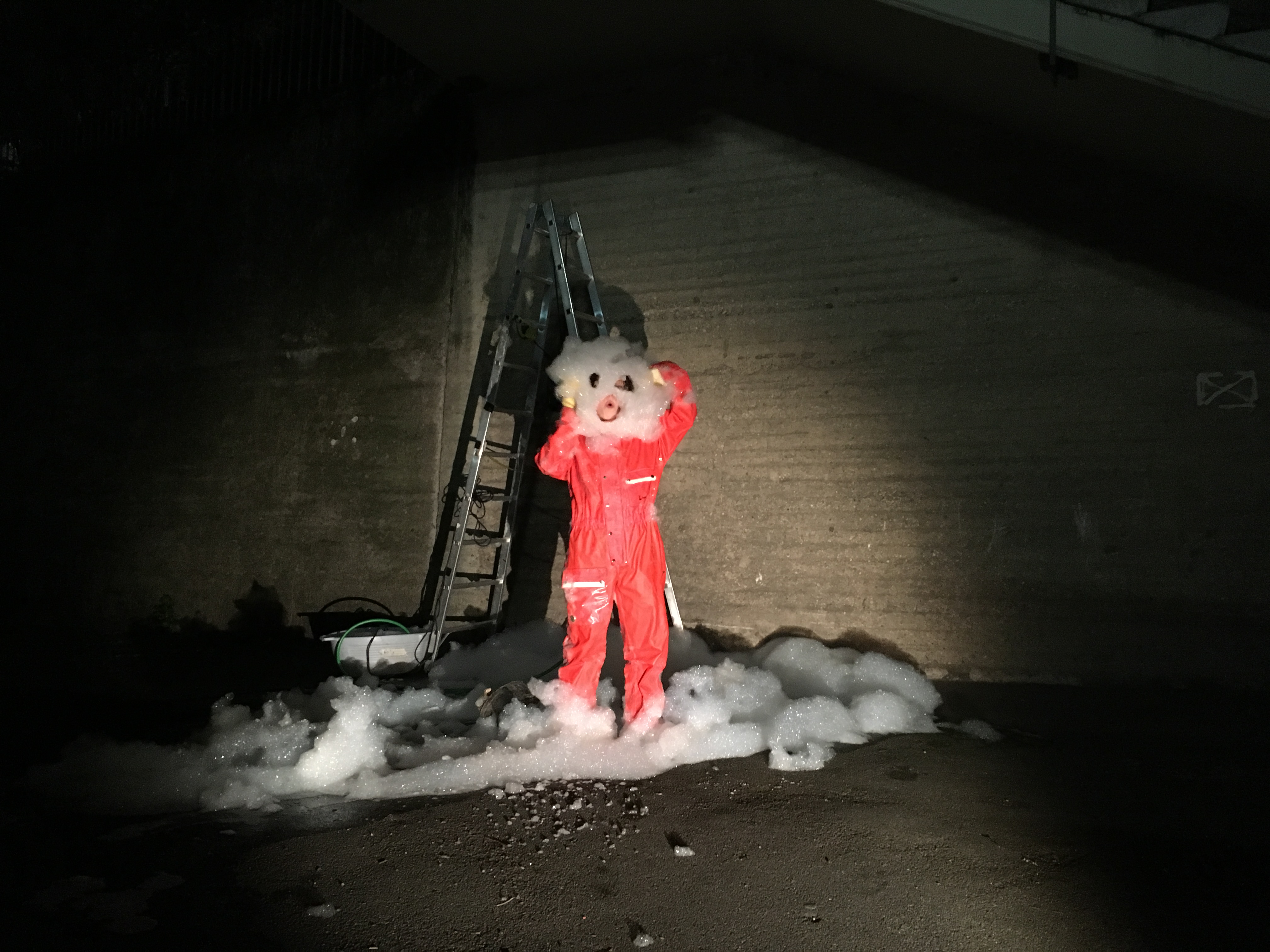

Nothing lasts forever
[2019, Stuttgart; performance/installation]
stage director, set designer
Organically mixing with urban space the common object creates uncommon magic. Metaphors and allusions coming in our head from various colours, shapes, qualities that ordinary foam takes are appearing as fast as vanishing/morphing to a new state.
Collaboration with Stuttgart Figurentheater Studiengang, Laura Boser.
 Filipp Kapa